The United States and Iran entered a second consecutive day of direct military exchanges on Tuesday, with Tehran launching retaliatory strikes after explosions were reported across multiple cities in southern Iran. The escalation — the most serious since the conflict began — has left at least 14 people dead, according to Iran’s health ministry, and raised fears of an uncontrollable regional war.
Explosions reported across southern Iran after US strikes 90 targets
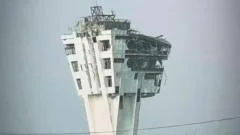
Explosions were reported in several major Iranian cities, including Tehran, Isfahan, Karaj, Qom, Bushehr, Chabahar, Khorramabad, and Kermanshah. The southern port city of Sirik, near the strategic Strait of Hormuz, was among the areas hit hardest, with six projectiles reportedly landing in the vicinity. US Central Command confirmed it struck 90 Iranian targets in the latest round of operations, describing them as military sites linked to Iran’s missile and drone capabilities.
Why this escalation matters for the region and the world
The second day of direct US-Iran military exchanges marks a dangerous turning point. The Strait of Hormuz — through which about 20% of the world’s oil passes — is now a potential flashpoint. For ordinary Iranians, the strikes mean disrupted daily life, power outages in affected areas, and the psychological toll of living under sustained bombardment. For global markets, oil prices have already spiked, and shipping insurance rates are rising. The risk of the conflict drawing in other regional actors — including Hezbollah, Yemen’s Houthis, and Iraqi militias — is now higher than at any point in recent years.
How the situation escalated from Tuesday to Wednesday
The current round of hostilities began on Tuesday when the US launched what it described as “precision strikes” against Iranian military infrastructure. Iran responded within hours by targeting US military sites in the region, though details of those strikes remain unclear. By Wednesday morning, the US had expanded its target list to 90 sites, and Tehran had retaliated with its own barrage. The back-and-forth has unfolded with alarming speed, leaving little room for diplomatic intervention.
The human cost: 14 dead, families displaced, cities on edge
Iran’s health ministry confirmed that 14 people have been killed since Tuesday, though the actual number may be higher as rescue operations continue in affected areas. Hospitals in southern cities are reportedly overwhelmed, with casualties including civilians caught in the strikes. In Tehran, residents described hearing loud explosions and seeing flashes in the sky. Schools and government offices have been closed in several provinces, and internet services have been disrupted in some regions. For millions of Iranians, the war has suddenly become a daily reality.
US Central Command defends strikes as ‘defensive’
US Central Command (Centcom) said the strikes targeted “Iranian military infrastructure used to launch attacks against US forces and allies.” In a statement, Centcom described the operation as “defensive” and said it was aimed at degrading Iran’s ability to conduct further strikes. The US has not confirmed any casualties from Iranian retaliatory fire, but officials acknowledged that the situation remains fluid. The Pentagon has declined to comment on whether further strikes are planned.
What is driving the escalation: a deeper look at the conflict
The current escalation is rooted in a long-running shadow war between the US and Iran, which has intensified since the collapse of the nuclear deal and the reimposition of sanctions. Iran has built up a network of proxies across the region, while the US has maintained a military presence in the Gulf. The trigger for the current round of strikes appears to be an Iranian attack on US positions in Iraq and Syria last week, which Washington blamed on Tehran-backed militias. The US response has been far larger than previous retaliatory strikes, signaling a shift in strategy toward direct confrontation.
Confirmed facts vs what remains unclear
Confirmed: US Centcom struck 90 Iranian targets. Iran’s health ministry reported 14 deaths. Explosions were heard in at least eight Iranian cities. Iran launched retaliatory strikes. Unclear: The exact number of Iranian casualties from US strikes. Whether US military personnel were killed or injured in Iranian retaliatory fire. The full extent of damage to Iranian military infrastructure. Whether diplomatic channels remain open. Speculation: Some analysts suggest the US may be preparing for a broader campaign, but this has not been confirmed by any official source.
Iran’s military capabilities: what makes its retaliation significant
Iran’s ability to strike back despite sustained US bombardment highlights its military resilience. The country has invested heavily in missile technology, drone warfare, and proxy networks. Its ballistic missile arsenal — including the Shahab and Emad systems — can reach targets across the Middle East. Iran has also developed a fleet of one-way attack drones, which have been used effectively by its proxies in Yemen and Iraq. While US strikes may degrade some of these capabilities, Iran’s decentralized command structure and underground facilities make a complete neutralization difficult.
Risks and balanced view: the dangers of a prolonged conflict
The escalation carries significant risks for both sides. For the US, a prolonged campaign could draw American forces into a costly and open-ended conflict, with no clear exit strategy. For Iran, continued strikes risk further economic damage, civilian casualties, and internal instability. Critics of the US strategy argue that the strikes may strengthen hardliners in Tehran and reduce the chances of any future diplomatic resolution. Supporters of the US action say that a strong military response is necessary to deter further Iranian aggression. The humanitarian cost — already visible in the 14 confirmed deaths — is likely to rise if the conflict continues.
Wider regional pattern: from shadow war to open confrontation
The US-Iran conflict has moved from a covert, proxy-based struggle to direct military exchanges. This shift mirrors a broader pattern across the Middle East, where traditional deterrence has broken down and state-on-state conflict has become more common. The involvement of the Strait of Hormuz — a chokepoint for global oil supplies — raises the stakes for the entire international community. Other Gulf states, including Bahrain and Kuwait, have reported increased military activity near their borders, though they have not been directly targeted.
What should readers and affected communities do now
For those in affected areas, safety remains the top priority. Follow local civil defense instructions, avoid areas where explosions have been reported, and keep emergency supplies ready. For international readers, monitor official travel advisories from your government. For investors, the oil price spike and shipping disruptions are likely to continue — consider reviewing exposure to energy and logistics sectors. For anyone seeking reliable information, stick to verified news sources and avoid unconfirmed social media posts that may spread panic or misinformation.
What could happen next: possible scenarios
Several scenarios are possible. The most optimistic is that both sides de-escalate after the current round of strikes, perhaps through backchannel mediation by Qatar or Oman. A more likely scenario is that the US and Iran continue exchanging strikes at a lower intensity, with neither side willing to back down. The worst-case scenario involves a full-scale war, potentially drawing in Iran’s proxies and other regional powers. The coming days will be critical in determining which path the conflict takes.
Our Take
This escalation is not a surprise to those who have watched the US-Iran shadow war intensify over the past year. But the speed and scale of the current exchanges are alarming. The decision to strike 90 targets in a single round signals that Washington is willing to use overwhelming force — but it also risks triggering a cycle of retaliation that neither side can easily control. For Iran, the strikes are a test of its military resilience and political unity. For the US, the challenge will be to achieve its military objectives without getting drawn into a quagmire. The human cost — 14 dead and counting — is already too high. The priority now must be to prevent further escalation and reopen diplomatic channels before the conflict spirals beyond control.
Frequently Asked Questions
Why did the US strike 90 targets in Iran?
US Central Command said the strikes targeted Iranian military infrastructure used to launch attacks against US forces and allies. The operation was described as defensive and aimed at degrading Iran’s ability to conduct further strikes.
How many people have been killed in the US strikes on Iran?
Iran’s health ministry reported 14 people killed since Tuesday. The actual number may be higher as rescue operations continue in affected areas.
Which cities in Iran were hit by explosions?
Explosions were reported in Tehran, Isfahan, Karaj, Qom, Bushehr, Chabahar, Khorramabad, and Kermanshah. The southern port city of Sirik near the Strait of Hormuz was among the areas hit hardest.
Is the Strait of Hormuz at risk of being closed?
The Strait of Hormuz is a potential flashpoint given its strategic importance for global oil shipments. While it has not been closed, shipping insurance rates are rising and oil prices have spiked due to the escalation.