The United States launched a new wave of strikes against Iran on Wednesday, following through on President Donald Trump's promise to 'hit them hard' after declaring a fragile ceasefire effectively dead. Iranian state media immediately reported explosions in parts of the country's south, signaling a dramatic and dangerous escalation in the conflict between the two nations.
US confirms new strikes, cites Iranian 'aggression'
US Central Command (CENTCOM) confirmed the latest military action, stating the strikes were launched "in response to Iran's unwarranted and continued aggression." The statement did not immediately detail specific targets, but described them as aimed at degrading Iran's ability to threaten US forces and interests in the region. This marks the second major wave of US strikes in as many days.
Why the ceasefire collapsed — and what 'hit them hard' means
The strikes come after President Trump declared the ceasefire "over" on Tuesday, accusing Iran of violating its terms. In a statement, he vowed to respond with overwhelming force. For millions of people in the region and around the world, this collapse of diplomacy raises the immediate and terrifying prospect of a wider war. The phrase 'hit them hard' signals a shift from a strategy of calibrated deterrence to one of punitive escalation.
Timeline of a rapidly unraveling truce
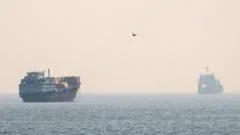
The ceasefire, which was brokered earlier this year, had been under severe strain for days. The US accused Iran of launching attacks on commercial shipping and targeting US assets. On Tuesday, the US military carried out initial strikes against Iranian targets. Wednesday's wave represents a significant intensification, suggesting the US is no longer seeking to preserve the truce but to impose a new military reality.
Explosions in southern Iran — what we know
Iranian state media reported hearing loud explosions in several locations across southern Iran. The reports were initially vague, but confirmed that the blasts were linked to the US military action. For ordinary Iranians, the sound of explosions brings back the trauma of previous conflicts and raises immediate fears for their safety and the stability of their daily lives. Independent verification of the scale and precise locations of the strikes is still pending.
White House and Pentagon respond
President Trump, in a brief statement, said the US would continue to strike Iran "until they stop their aggression." The Pentagon has not provided a timeline for the current operation, but officials have indicated that further strikes are possible. "We will not allow Iran to attack our people or our interests with impunity," a senior defense official said, speaking on condition of anonymity.
What is driving this escalation?
The current escalation appears to be a direct result of the breakdown of the ceasefire, which was never formalized into a lasting agreement. Analysts point to a cycle of attack and retaliation that has been building for weeks. The US administration's stated goal is to deter future Iranian aggression, but critics warn that the heavy-handed approach risks triggering a broader conflict that could engulf the entire Persian Gulf region.
Confirmed facts vs what remains unclear
Confirmed: The US launched a new wave of strikes against Iran on Wednesday. President Trump vowed to 'hit them hard.' Iranian state media reported explosions in southern Iran. The US military stated the strikes were a response to Iranian aggression.
Unclear: The exact number and type of targets hit. The extent of casualties or damage in Iran. Iran's immediate military or diplomatic response. Whether this represents the start of a sustained campaign or a single, punitive operation. The status of any remaining diplomatic channels.
Risks of a wider regional war
The most immediate risk is a direct military confrontation between the US and Iran that could draw in regional proxies and allies. Iran has previously threatened to close the Strait of Hormuz, a vital chokepoint for global oil supplies. Any such move would send shockwaves through the global economy. There are also concerns that the conflict could destabilize neighboring Iraq and Afghanistan, where both the US and Iran have significant influence.
The pattern of US-Iran conflict
This latest escalation fits a long and tragic pattern of US-Iran tensions that have periodically erupted into open confrontation. From the 1979 hostage crisis to the tanker wars of the 1980s, the 2020 assassination of General Qasem Soleimani, and the ongoing shadow war, the relationship has been defined by deep mistrust and periodic violence. This current crisis is the most serious direct military engagement between the two nations in decades.
What should you do if you are in the region?
For US citizens and others in Iran or the wider Gulf region, the US State Department has issued repeated warnings to avoid travel to Iran and to maintain a low profile. Those in affected areas should monitor local news, follow the instructions of local authorities, and have an emergency plan. The situation can change with little warning.
What happens next?
The immediate future depends on Iran's response. If Iran chooses to retaliate directly, the US is likely to strike again, leading to a cycle of escalation. If Iran chooses to absorb the strikes and seek a new diplomatic off-ramp, the crisis could de-escalate. However, given the strong rhetoric from both sides, the most likely scenario is continued volatility and a high risk of further military action.
Our Take
This is a dangerous moment. The collapse of the ceasefire and the US decision to launch a new wave of strikes represents a failure of diplomacy and a gamble on military force. While the US has a right to defend itself, the strategy of 'hitting them hard' carries immense risks. The human cost — for Iranians, for Americans in the region, and for global stability — could be catastrophic. The world is watching, hoping that this escalation does not spiral into an uncontrollable war.
Frequently Asked Questions
Why did the US launch new strikes against Iran?
The US stated the strikes were a response to "Iran's unwarranted and continued aggression," including attacks on commercial shipping and US assets. President Trump declared the ceasefire "over" and vowed to 'hit them hard.'
Where did the explosions occur in Iran?
Iranian state media reported explosions in parts of southern Iran. The exact locations and extent of damage have not been independently confirmed.
Is the US at war with Iran?
The US and Iran are engaged in direct military conflict, but a formal declaration of war has not been made. The situation is best described as a major military escalation with a high risk of further conflict.
What is the status of the ceasefire?
The ceasefire is effectively over. President Trump declared it "over" on Tuesday, and the new wave of strikes confirms its collapse.