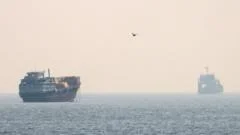
The night sky over southern Iran lit up with explosions for a second consecutive evening as the United States launched a fresh wave of strikes, escalating a conflict that now threatens to engulf the entire Gulf region. President Donald Trump confirmed the attacks, calling them "retribution" for Iran's bombing of US ships a day earlier.
Second Night of Strikes: 90 Targets Hit
The US military said it struck approximately 90 targets in the latest operation, focusing on areas along Iran's southern coastline and Iranian-controlled islands in the Persian Gulf. Iranian state media reported that explosions were heard in multiple locations, with residents describing a series of loud blasts that shook buildings.
Why This Escalation Matters for the Gulf
The strikes mark a dangerous new phase in US-Iran hostilities. For ordinary people in the Gulf, the conflict is no longer distant — it is now being fought on their doorstep. Iran's retaliation, targeting US bases in Kuwait, Bahrain, and Qatar, has turned allied nations into potential battlegrounds, raising fears of civilian casualties and economic disruption.
Timeline of a Rapidly Escalating Conflict
The first night of US strikes came after Iran bombed US ships in the Gulf, an attack that Trump described as an act of war. Iran had warned of "strong retaliation" if the US responded. Within hours, the US launched its first wave of strikes. By the second night, the cycle of retaliation had deepened, with both sides locked in a pattern of attack and counterattack.
Human Toll: 14 Dead, Families in Fear
Iran's health ministry confirmed that at least 14 people have been killed over the past two nights. The dead include military personnel and civilians, though exact figures remain unclear. Hospitals in southern Iran have been placed on high alert, and residents in coastal areas have been urged to seek shelter. Across the Gulf, families in Kuwait, Bahrain, and Qatar are also on edge, as Iranian missiles have targeted US military installations in those countries.
Trump's Justification: 'Retribution' for Ship Bombing
President Trump framed the strikes as a direct response to Iran's attack on US naval vessels. "This is retribution for yesterday's bombing of ships by Iran," he said in a statement. The administration has not ruled out further action, with officials warning that the US will continue to defend its interests and allies. Iran's leadership, meanwhile, has vowed to "make the enemy regret" its aggression.
What This Means: A Regional War in the Making?
The speed and scale of the escalation have caught many analysts off guard. What began as a maritime incident has spiraled into a multi-front confrontation involving several Gulf states. The US strikes on Iranian soil and Iran's attacks on US bases in allied nations represent a significant breach of previous red lines. Experts warn that without immediate de-escalation, the conflict could draw in other regional powers and disrupt global oil supplies.
Confirmed Facts vs What Remains Unclear
Confirmed: The US launched a second night of strikes hitting around 90 targets. Explosions were reported in southern Iran and on Iranian-controlled islands. Iran retaliated by targeting US bases in Kuwait, Bahrain, and Qatar. At least 14 people have been killed. Unclear: The exact number of casualties on both sides. Whether the US plans further strikes. The full extent of damage to Iranian military infrastructure. Whether Iran will escalate further by targeting civilian infrastructure or oil tankers.
Risks and Balanced View: The Danger of a Wider War
The current trajectory is deeply concerning. Each round of strikes risks miscalculation — a missile hitting a civilian area, a US base suffering heavy casualties, or Iran deciding to block the Strait of Hormuz. Critics of the US approach argue that the strikes are disproportionate and risk dragging America into a prolonged conflict. Supporters say the US had no choice after Iran attacked its ships. The truth likely lies somewhere in between, but the immediate cost is being paid by civilians on both sides.
Wider Pattern: A New Era of Middle East Conflict
This escalation fits a broader pattern of rising tensions in the Middle East. The US has increasingly used direct military force against Iran, moving away from proxy conflicts. Iran, in turn, has shown a willingness to strike US allies directly. The result is a more volatile region where the line between retaliation and all-out war is dangerously thin.
What Should Gulf Residents and Travelers Do Now
For those in the affected regions, safety is the priority. Follow local authorities' instructions, avoid areas near military installations, and keep emergency supplies ready. Travelers should check with their airlines and embassies for updates. Investors should monitor oil prices, which are likely to spike. Diplomats and international organizations should push for an immediate ceasefire before the conflict spirals further.
Future Outlook: What Could Happen Next
The immediate future depends on whether either side chooses to de-escalate. If the US halts further strikes and Iran refrains from additional attacks, a fragile calm could return. However, both leaders have staked their credibility on a强硬 stance, making a quick resolution difficult. The most likely scenario is continued tit-for-tat strikes, with the risk of a major incident that triggers a full-scale war.
Our Take
This is not just another round of US-Iran tensions. The strikes on Iranian soil and Iran's direct attacks on US bases in allied Gulf states represent a dangerous escalation that could reshape the region. The human cost — 14 dead and counting — is already too high. Both sides need to step back, but pride and politics make that difficult. For now, the world watches and hopes that this does not become the spark that ignites a wider war.
Frequently Asked Questions
Why did the US launch a second night of strikes on Iran?
The US said the strikes were "retribution" for Iran's bombing of US ships a day earlier. President Trump framed the attacks as a direct response to Iranian aggression.
Where were the explosions reported in Iran?
Explosions were reported in areas along Iran's southern coast and on Iranian-controlled islands in the Persian Gulf. Iranian state media confirmed the blasts.
How many people have been killed in the US strikes on Iran?
Iran's health ministry says at least 14 people have been killed over the past two nights. The exact number of casualties remains unclear.
Did Iran retaliate against the US strikes?
Yes, Iran targeted US bases in Kuwait, Bahrain, and Qatar, according to reports from several Gulf nations. Tehran had earlier promised strong retaliation.