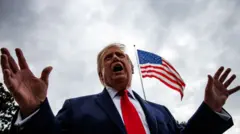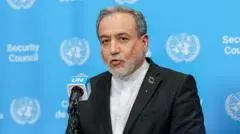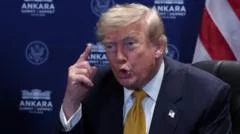
The fragile US-Iran ceasefire has collapsed. President Donald Trump declared it "over" on Wednesday at the NATO summit in Ankara, Turkey, hours after the United States launched retaliatory strikes against Iranian targets. The announcement signals a dramatic escalation in one of the world's most volatile conflicts.
What Trump said at the NATO summit
Speaking to reporters on the second day of the summit, Trump was blunt. "I think it's over. I don't want to deal with them anymore," he said, referring to the ceasefire agreement that had tentatively held for weeks. He went further, calling Iranian leaders "scum" and "sick people" who are "led by sick people."
Trump added that US negotiators could continue talking with Iran "if they want," but he believes "they're wasting their time." The remarks, captured on video and widely circulated, represent a sharp departure from any diplomatic path.
Why the ceasefire collapsed
The ceasefire had been under strain for days. Both the US and Iran accused each other of violating the terms. The immediate trigger for Trump's declaration was a series of US retaliatory strikes against Iran, launched after what the Pentagon described as Iranian aggression. Iran, in turn, claimed the US had broken the ceasefire first.
The collapse is not just diplomatic theater. It has real consequences for millions of people across the Middle East and for global energy markets. The Strait of Hormuz, a critical chokepoint for oil shipments, has been a flashpoint in the conflict.
Timeline: How the ceasefire unravelled
The tentative ceasefire was brokered after months of escalating tensions, including direct US strikes on Iranian targets and Iranian retaliation against US assets and allies. For a brief period, both sides appeared to step back. But the peace was always fragile, built on mutual distrust and without a formal framework.
In recent days, skirmishes resumed. The US launched what it called "retaliatory strikes" after an attack on US personnel or interests. Iran responded with its own strikes. By the time Trump arrived in Ankara for the NATO summit, the ceasefire was already in name only.
Who is affected by the escalation
The immediate human impact falls on civilians in both countries and the wider region. Iranian citizens face the prospect of renewed US bombing campaigns. US military personnel in the Middle East are at heightened risk of attack. Global oil markets are already reacting, with prices expected to spike if the Strait of Hormuz is disrupted.
For ordinary people, this means higher fuel prices, potential supply chain disruptions, and the anxiety of a widening war. The conflict also threatens to draw in other regional powers, including US allies and Iran's proxies.
NATO and international reaction
Trump made his remarks at the NATO summit in Ankara, alongside Turkish President Recep Tayyip Erdogan and NATO Secretary General Mark Rutte. The setting was significant: NATO allies have been wary of being dragged into a US-Iran conflict. Turkey, which shares a border with Iran, has a particularly delicate position.
NATO officials have not yet issued a formal response to Trump's declaration. But the alliance's collective defense clause does not automatically apply to conflicts initiated by a member state. European allies are likely to urge restraint, though Trump's tone suggests he is not seeking diplomatic input.
What Trump's language reveals
Trump's choice of words — "scum," "sick people," "I don't want to deal with them" — is not accidental. It signals a personalization of the conflict, framing it as a battle between good and evil rather than a geopolitical dispute. This rhetoric makes de-escalation harder, as it closes off face-saving options for both sides.
Analysts note that Trump's threat to "hit them hard tonight" is deliberately vague. It could mean a single retaliatory strike or the beginning of a sustained bombing campaign. The ambiguity keeps Iran guessing and maximizes psychological pressure.
Confirmed facts vs what remains unclear
Confirmed: Trump declared the ceasefire over. He called Iranian leaders "scum." He threatened further strikes "tonight." The US had already launched retaliatory strikes before his remarks. Both sides accuse each other of violating the ceasefire.
Unclear: The exact nature and scale of the planned US strikes. Whether Iran will retaliate immediately or wait. The position of NATO allies, particularly Turkey. Whether any diplomatic backchannel remains open. The full extent of damage from the initial US strikes.
Risks and balanced view
The collapse of the ceasefire carries enormous risks. A full-scale US-Iran war would be catastrophic for the region, causing mass casualties, destabilizing governments, and disrupting global oil supplies. Iran has the capability to strike US allies, including Israel and Saudi Arabia, and to disrupt shipping in the Gulf.
Critics of Trump's approach argue that his maximalist rhetoric and willingness to walk away from diplomacy make conflict more likely. Supporters counter that only strength and unpredictability can deter Iran, which they accuse of using ceasefires to regroup and rearm. Both perspectives have merit, but the immediate trajectory is toward escalation.
Wider pattern: US-Iran relations under Trump
This is not the first time a US-Iran ceasefire has collapsed. Trump's "maximum pressure" campaign, including the withdrawal from the nuclear deal and the killing of General Qasem Soleimani, set the stage for repeated cycles of escalation and fragile truces. Each collapse leaves both sides more entrenched and less willing to compromise.
The pattern is dangerous: a strike, a retaliation, a ceasefire, a violation, another strike. Without a fundamental shift in strategy, the region may be locked into this cycle for years.
What this means for global oil markets
The Strait of Hormuz is the world's most important oil chokepoint. Any disruption there sends shockwaves through global energy markets. Traders are already pricing in a risk premium. If the US launches sustained strikes or Iran retaliates by mining the strait, oil prices could spike dramatically, affecting everything from petrol prices to inflation in India and other importing nations.
What should readers watch for
In the next 24 to 48 hours, watch for: whether the US carries out the threatened strikes; Iran's response, if any; statements from NATO allies, particularly Turkey; oil price movements; and any signs of diplomatic intervention from Russia, China, or the UN. For Indian readers, the impact on fuel prices and the safety of Indian nationals in the region are key concerns.
Future outlook
The most likely scenario is further escalation. Trump has signaled he is not interested in diplomacy. Iran's leadership, publicly humiliated, may feel compelled to respond forcefully. A wider war is not inevitable, but the path to de-escalation is narrow and getting narrower. The next few days will determine whether this is a temporary spike or the beginning of a sustained conflict.
Our Take
This is a dangerous moment. Trump's declaration that the ceasefire is "over" is not just rhetoric — it is a policy statement that closes off diplomatic options and invites military escalation. The language of "scum" and "sick people" makes compromise politically toxic for both sides. While the US has legitimate security concerns, the absence of a credible off-ramp raises the risk of a war that no one wants but everyone may stumble into. The world is watching Ankara, and the stakes could not be higher.
Frequently Asked Questions
Did Trump officially end the US-Iran ceasefire?
Yes. President Trump declared the ceasefire "over" during the NATO summit in Ankara, saying he no longer wants to deal with Iranian leaders. This effectively ends the tentative truce that had been in place.
Why did the ceasefire collapse?
Both the US and Iran accused each other of violating the ceasefire. The US launched retaliatory strikes against Iranian targets, and Iran responded with its own strikes. Trump's declaration formalized the collapse.
Will the US attack Iran again?
Trump has threatened to "hit them hard tonight" and said the US will "very probably" attack again. The timing and scale of any further strikes remain unclear.
How will this affect oil prices and India?
The conflict threatens the Strait of Hormuz, a critical oil shipping route. If disruptions occur, oil prices could spike, directly impacting India's fuel costs and inflation. The Indian government is likely monitoring the situation closely.