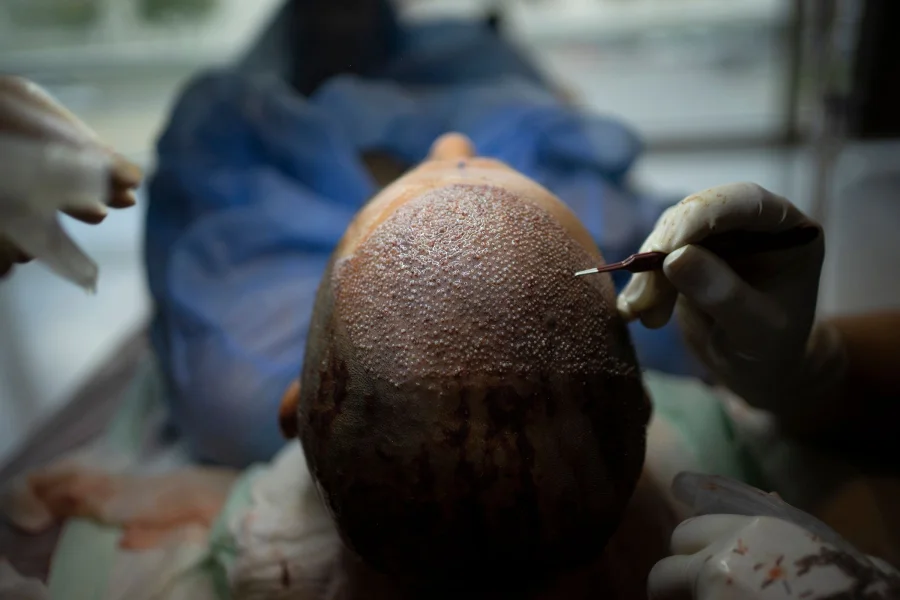
For years, the global perception of Turkey’s hair transplant industry was simple: cheap flights, bargain procedures, and a booming medical tourism trade. But that story is outdated. Today, Turkey has quietly engineered something far more sophisticated — a billion-dollar industry built not on low prices, but on relentless innovation. From specialized motors that extract follicles with surgical precision to machine learning algorithms that map the perfect hairline, Turkey has effectively hacked the hair transplant game. And the rest of the world is only now starting to understand how.
The Innovation Engine Behind Turkey’s Hair Transplant Dominance
Most experts agree that Turkey's strategy for success in hair transplantation no longer relies on low prices or volume. Instead, it hinges on creating an unshakable brand value through innovation, purpose-built technological equipment, and medical expertise that has proven itself on a global scale. This is not a story of cutting corners — it’s a story of engineering a better mousetrap.
Why This Matters Right Now
This matters because the hair transplant industry is no longer a niche medical procedure. It’s a global, multi-billion-dollar market where patient expectations are higher than ever. Turkey’s ability to dominate this space has implications for medical tourism, global healthcare economics, and the future of cosmetic surgery. For patients, it means access to world-class technology at a fraction of the cost. For competitors, it’s a wake-up call that innovation, not price, is the new battleground.
How Turkey Hacked the Industry: Specialized Motors and Machine Learning
The core of Turkey’s innovation lies in two key areas: specialized motors and machine learning algorithms. The motors, designed specifically for hair transplantation, allow for faster, more precise extraction of hair follicles. This reduces the time a patient spends under the knife and minimizes trauma to the scalp. Meanwhile, machine learning algorithms are used to analyze a patient’s scalp, predict hair growth patterns, and design a natural-looking hairline. This combination of mechanical precision and data-driven planning has set a new standard for the industry.
Who Is Affected and What Experts Are Saying
The primary beneficiaries are patients — millions of men and women who travel to Turkey each year for the procedure. They receive high-quality results at prices that are often 50-70% lower than in the US or Europe. But the impact extends to the Turkish economy, which has seen a surge in medical tourism revenue. Experts quoted in the industry note that Turkey’s success is now a case study in how to build a globally competitive medical sector through innovation and branding.
What We Know So Far — and What Remains Unclear
What we know is that Turkey’s hair transplant industry is built on a foundation of purpose-built technology and medical expertise. The use of specialized motors and machine learning is well-documented. What remains less clear is how sustainable this model is. Can Turkey maintain its edge as other countries begin to adopt similar technologies? And how will the industry evolve as AI and robotics continue to advance?
Risks, Concerns, and the Balanced View
While the innovation story is compelling, there are risks. The rapid growth of the industry has led to concerns about quality control and regulation. Not all clinics in Turkey meet the same high standards, and patients must do their due diligence. There is also the risk of over-reliance on technology — if the algorithms or motors fail, the consequences for a patient could be serious. A balanced view acknowledges that while Turkey has hacked the system, the system itself is still evolving.
Why Similar Trends Are Growing Globally
Turkey’s success is part of a larger trend in medical tourism, where countries like South Korea, India, and Thailand are also leveraging technology and cost advantages to attract international patients. The hair transplant industry, in particular, is seeing a surge in demand as societal stigma around male baldness decreases and more people seek cosmetic solutions. Turkey’s model is likely to be replicated, but its early mover advantage and deep investment in R&D give it a significant lead.
- Turkey’s hair transplant industry is now a billion-dollar sector.
- Specialized motors and machine learning are key innovations.
- The industry attracts patients from around the world.
- Quality control and regulation remain ongoing concerns.
"Most experts agree that Turkey's strategy for success in hair transplantation no longer relies on low prices or volume; instead, it hinges on creating an unshakable brand value through innovation, purpose-built technological equipment, and medical expertise that has proven itself on a global scale." — WIRED
What Patients and Investors Should Know Now
For patients, the key takeaway is that Turkey offers a high-tech, cost-effective option for hair transplantation, but it’s essential to research clinics thoroughly. Look for facilities that invest in the latest technology and have a track record of successful procedures. For investors, the Turkish hair transplant industry represents a growing market with strong fundamentals, but it’s important to understand the regulatory landscape and the potential for disruption from new technologies.
What Could Happen Next
The future of Turkey’s hair transplant industry will likely involve even greater integration of AI and robotics. We may see fully automated hair transplant procedures, where robots perform the extraction and implantation with minimal human intervention. Turkey is well-positioned to lead this charge, given its existing infrastructure and expertise. However, increased competition from other countries and potential regulatory changes could challenge its dominance.
Our Take: Why This Story Matters Beyond One Industry
Turkey’s success in the hair transplant industry is a powerful example of how innovation can transform a market. It shows that even in a field as personal and delicate as cosmetic surgery, technology and data can create a competitive advantage that goes far beyond price. This story is not just about hair — it’s about how countries can build world-class industries by investing in R&D, embracing new technologies, and creating a brand that stands for quality and trust. It’s a lesson that applies to any industry, anywhere in the world.
FAQs
How did Turkey become a global leader in hair transplants?
Turkey became a global leader by moving beyond low prices and focusing on innovation. The industry now uses specialized motors for precise follicle extraction and machine learning algorithms to design natural hairlines, creating a high-quality, cost-effective solution that attracts patients worldwide.
What technology is used in Turkish hair transplant clinics?
Turkish clinics use purpose-built technological equipment, including specialized motors for follicle extraction and machine learning algorithms for scalp analysis and hairline design. This combination of mechanical precision and data-driven planning sets a new standard for the industry.
Is it safe to get a hair transplant in Turkey?
Safety depends on the clinic. While many Turkish clinics offer world-class care and use advanced technology, the rapid growth of the industry has led to concerns about quality control. Patients should thoroughly research clinics, check credentials, and read reviews before undergoing any procedure.
Why is Turkey cheaper than other countries for hair transplants?
Turkey’s lower costs are due to a combination of factors, including lower labor costs, government support for medical tourism, and a highly competitive market. However, the industry’s focus on innovation and technology means that lower prices do not necessarily mean lower quality — many clinics offer results that rival or exceed those in more expensive countries.