It was around 2.00 pm on 27 May 1964. Suddenly, telephones in government offices across Delhi began ringing frantically. Employees at All India Radio rushed toward their studios. Unease spread through the corridors of Parliament House. Something extraordinary — and tragic — had happened.
Moments later, a solemn voice broke the silence over radio waves across the country: “Prime Minister Pandit Jawaharlal Nehru is no longer amongst us.”
For millions of Indians, that single sentence stopped time. A nation that had grown up under the shadow of one man — its first Prime Minister, its architect of modern India — suddenly felt the ground beneath it disappear. The day India felt orphaned had arrived.
How the Final Hours Unfolded at Teen Murti Bhavan
Earlier that morning, at around 6.20 am, Jawaharlal Nehru had complained of severe back pain to his daughter Indira Gandhi. Soon afterward, in a frail voice, he reportedly whispered, “I think I am finished.”
Senior physicians, including Dr B.N. Chugh and Dr Talwar, rushed to Teen Murti Bhavan. Oxygen cylinders were brought in. Emergency injections were administered. But despite their best efforts, the man who had led India through its formative years was slipping away.
By early afternoon, the news had spread through the capital. The Prime Minister was no more. The man who had shaped India’s destiny for 17 years had left the stage.
Why This Matters Right Now
Nehru’s death was not just the passing of a leader. It was a psychological earthquake for a young republic barely 17 years old. India had lost its founding father figure — the man who had been at the helm since independence in 1947. The political vacuum he left behind created profound uncertainty about the future of the nation.
For ordinary Indians, the grief was deeply personal. Nehru was not just a Prime Minister; he was “Chacha Nehru” — the beloved uncle who had promised a better future for every child. His death felt like losing a family member. The day India felt orphaned was a day of collective mourning that transcended politics.
Who Was Affected and What Officials Said
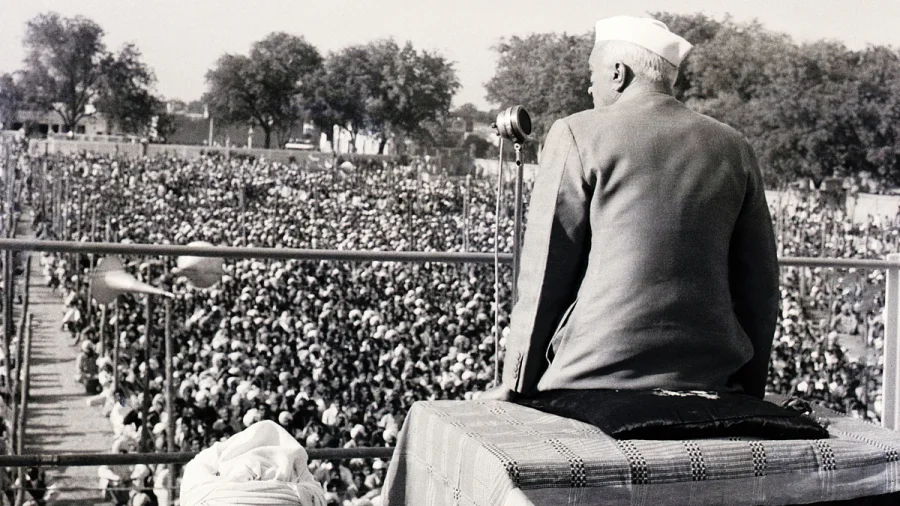
The impact was immediate and nationwide. Schools, colleges, and government offices shut down. Shops pulled down their shutters. In villages and cities alike, people gathered around radios, weeping openly.
President Sarvepalli Radhakrishnan addressed the nation, his voice trembling with emotion. “A great man has fallen,” he said. “We are all orphans today.”
Across the world, leaders expressed their condolences. The United Nations lowered its flag. The Soviet Union declared a day of mourning. But for India, the loss was uniquely personal. The man who had walked with Mahatma Gandhi, who had stood at the Red Fort on every Independence Day, who had promised to wipe every tear from every eye — was gone.
What We Know So Far — and What Remains Unclear
What we know is clear: Nehru died of a sudden health collapse on the morning of 27 May 1964. The official cause was a heart attack, though some accounts mention a severe back pain that may have been a symptom of a larger issue.
What remains unclear is the exact sequence of events in those final hours. Some reports suggest Nehru had been unwell for days, while others indicate the collapse was sudden. The full medical details were never publicly disclosed in great depth, leaving room for historical speculation.
What is certain is the profound emotional and political void his death created. India had not prepared for a post-Nehru era. The transition of power to Lal Bahadur Shastri was smooth, but the psychological adjustment took years.
Risks, Concerns, and the Balanced View
Nehru’s death exposed a critical vulnerability in India’s young democracy: its over-reliance on a single leader. While Nehru had built strong institutions, his personal charisma had become the glue holding the nation together. His absence raised fears of instability, regional fragmentation, and a power vacuum.
Critics of Nehru’s era point out that his economic policies, particularly the focus on heavy industry and state control, had created long-term challenges. But on the day of his death, such debates were silenced by the overwhelming grief. The nation mourned not just a leader, but a symbol of hope and unity.
The balanced view is this: Nehru’s death was a moment of both loss and transition. It forced India to grow up, to find its own feet without the guiding hand of its first Prime Minister. The grief was real, but so was the resilience of the nation he helped build.
Why Similar Moments of National Grief Continue to Resonate
The day India felt orphaned was not the first time the nation had experienced such collective grief. Mahatma Gandhi’s assassination in 1948 had similarly shaken the country. But Nehru’s death was different — it was the loss of the man who had led India through its first steps as a republic.
Since then, India has witnessed other moments of national mourning: the assassination of Indira Gandhi in 1984, the death of Rajiv Gandhi in 1991, and the passing of beloved figures like Dr. A.P.J. Abdul Kalam. Each time, the nation has come together in grief, but the 1964 mourning remains unique in its scale and emotional depth.
- Nehru was the only Prime Minister India had known for 17 years.
- His death marked the end of the “Nehruvian era” of nation-building.
- The transition to Lal Bahadur Shastri was peaceful but marked by uncertainty.
“A great man has fallen. We are all orphans today.” — President Sarvepalli Radhakrishnan, addressing the nation on 27 May 1964.
What Readers Should Know About That Day
For those who lived through it, 27 May 1964 remains etched in memory. For younger generations, it is a reminder of how deeply a leader can shape a nation’s identity. Nehru’s vision of a secular, democratic, and modern India continues to influence the country today.
If you want to understand modern India, you must understand the day it felt orphaned. It was a day of profound loss, but also a day that tested the resilience of a young democracy. India survived, grew, and eventually thrived — but the shadow of that day never fully lifted.
What Could Happen Next
As India continues to evolve, the legacy of Jawaharlal Nehru remains a subject of debate. Some celebrate his contributions to education, science, and democracy. Others criticize his economic policies and handling of conflicts with China and Pakistan.
But on the day of his death, none of that mattered. What mattered was the silence that fell over a nation, the tears that flowed freely, and the collective realization that India would never be the same again. The day India felt orphaned was a turning point — and its echoes are still felt today.
Our Take: Why This Story Matters Beyond One Incident
The day India felt orphaned is not just a historical footnote. It is a story about leadership, grief, and national identity. It reminds us that nations are built not just by policies and institutions, but by the emotional bonds between leaders and citizens.
Nehru’s death forced India to confront its own fragility. But it also revealed its strength. The peaceful transition of power, the resilience of its people, and the continuity of its democratic institutions proved that India was more than one man. It was a nation capable of surviving its greatest losses.
That is why this story matters — not just for historians, but for anyone who wants to understand the soul of modern India.
FAQs
What happened on 27 May 1964 in India?
On 27 May 1964, India's first Prime Minister, Jawaharlal Nehru, died at Teen Murti Bhavan in New Delhi after a sudden health collapse. His death plunged the nation into grief and created a political vacuum.
Why is 27 May 1964 called the day India felt orphaned?
The phrase captures the profound emotional and psychological impact of Nehru's death. For a young nation that had only known him as its leader, his passing felt like losing a parent — a collective sense of being orphaned.
Who succeeded Jawaharlal Nehru after his death?
Lal Bahadur Shastri succeeded Nehru as Prime Minister of India. He took office on 9 June 1964 and led the country through a period of transition and challenges, including the 1965 war with Pakistan.
How did the nation react to Nehru's death?
The nation reacted with overwhelming grief. Schools, offices, and shops closed. People gathered around radios, weeping openly. President Radhakrishnan addressed the nation, and leaders from around the world offered condolences. The day was marked by a collective sense of loss and uncertainty.