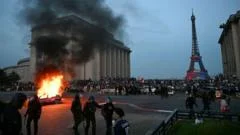
What was supposed to be a night of celebration for French football quickly spiraled into chaos, leaving hundreds arrested and dozens injured in one of the worst outbreaks of fan violence the country has seen in years. The scenes of burning cars, smashed shop windows, and running battles between police and supporters have raised serious questions about public safety and crowd control during major sporting events.
Nearly 800 Arrested After Violent PSG Celebrations
French authorities confirmed that nearly 800 people were arrested across the country after Paris Saint-Germain (PSG) secured the Champions League title. The clashes left a staggering 219 people injured, including 57 police officers who were caught in the crossfire of what officials described as "unprecedented violence."
Why This Matters Right Now
This isn't just another story about rowdy football fans. The scale of the violence — with nearly 800 arrests and over 200 injuries — signals a breakdown in public order that has serious implications for future sporting events, including the upcoming World Cup. For ordinary citizens, it raises fears about safety in public spaces during major celebrations. For authorities, it exposes gaps in crowd management that could have deadly consequences if not addressed.
How the Celebrations Turned Into Riots
The trouble began shortly after PSG's victory, as thousands of fans poured onto the streets of Paris and other cities. What started as jubilant celebrations quickly escalated into destruction. According to reports, fires were set, businesses were damaged, and public transport was disrupted. Police were forced to deploy tear gas and make mass arrests to regain control of the situation.
Videos circulating on social media showed chaotic scenes on the Champs-Élysées, where fans clashed with riot police well into the early hours of the morning. The violence was not limited to Paris — cities across France reported similar disturbances.
Who Is Affected and What Officials Are Saying
The immediate victims are the 57 police officers who were injured while trying to maintain order. But the impact extends far beyond them. Local businesses along the Champs-Élysées and other major thoroughfares suffered significant damage. Commuters faced disruptions as public transport services were suspended in several areas. And for residents living near celebration hotspots, the night brought fear and uncertainty.
French officials have condemned the violence, calling it "unacceptable" and promising that those responsible will face the full force of the law. "This is not how we celebrate," one official said. "This is criminal behavior, and it will be treated as such."
What We Know So Far — and What Remains Unclear
What is confirmed: nearly 800 arrests, 219 injuries, and 57 police officers hurt. The violence was widespread, affecting multiple cities. What remains unclear is the exact trigger for the escalation. Was it poor crowd management? A lack of adequate policing? Or was this simply a case of a small minority using the celebration as cover for criminal activity? Investigations are ongoing, and authorities have not yet released a full breakdown of the charges filed against those arrested.
Risks, Concerns, and the Balanced View
The risks here are clear: when large crowds gather to celebrate, the potential for violence is always present. But the scale of this incident suggests deeper problems. Critics argue that French authorities were underprepared for the scale of the celebrations, despite knowing that PSG had a strong chance of winning. Others point to a broader trend of increasing violence at football-related events across Europe.
On the other hand, it's important to note that the vast majority of PSG fans celebrated peacefully. The violence was driven by a relatively small number of individuals. Still, the damage done — both physical and reputational — is significant.
Why Similar Trends Are Growing Across Europe
This incident is not an isolated one. Across Europe, football-related violence has been on the rise. From clashes in England to riots in Italy, the pattern is troubling. Experts point to several factors: the increasing commercialization of the sport, the rise of organized fan groups with political agendas, and the ease with which misinformation spreads on social media, inflaming tensions.
- In 2025, over 1,000 arrests were made during Champions League celebrations in Spain.
- In 2024, riots in Italy left 150 injured after a Serie A title win.
- In 2023, violence in England during a Premier League title race led to 400 arrests.
"This is a recurring problem that requires a coordinated European response," said a security analyst quoted by BBC News. "You cannot treat each incident in isolation."
What Readers, Fans, and Residents Should Know Now
If you live in or plan to visit a city hosting a major football celebration, stay informed about local conditions. Avoid areas where large crowds are gathering, especially if you see a heavy police presence. Follow official announcements from local authorities and be prepared for potential transport disruptions. For fans, remember that celebrating your team's victory should never come at the cost of public safety.
What Could Happen Next
In the coming days, French authorities are expected to release more details about the arrests and charges. There will likely be calls for a review of policing strategies during major sporting events. The incident could also lead to stricter regulations for public gatherings, including potential bans on alcohol sales near celebration zones. On a broader level, this event may reignite debates about fan behavior and the responsibilities of football clubs in managing their supporters.
Our Take: Why This Story Matters Beyond One Incident
This is not just a story about a football match gone wrong. It's a story about public safety, the limits of celebration, and the thin line between joy and chaos. When nearly 800 people are arrested and over 200 are injured, it's a sign that something is broken in how we manage large-scale public events. The lessons from this night in France will likely influence security protocols for years to come — not just in football, but in any situation where massive crowds gather.
FAQs
What caused the Champions League riots in France?
The riots erupted after Paris Saint-Germain (PSG) won the Champions League title. What began as celebrations quickly turned violent, with fans setting fires, damaging property, and clashing with police across multiple French cities.
How many people were arrested and injured in the France riots?
Nearly 800 people were arrested, and 219 were injured, including 57 police officers. The violence was widespread, with the worst clashes reported in Paris on the Champs-Élysées.
Were the police prepared for the Champions League celebrations?
While police were deployed in large numbers, the scale of the violence appeared to catch authorities off guard. Critics argue that better crowd management and pre-emptive measures could have reduced the chaos.
What are the consequences for those arrested in the riots?
Those arrested face charges ranging from public disorder to assault on police officers. French officials have promised strict legal action, and investigations are ongoing to identify the ringleaders of the violence.