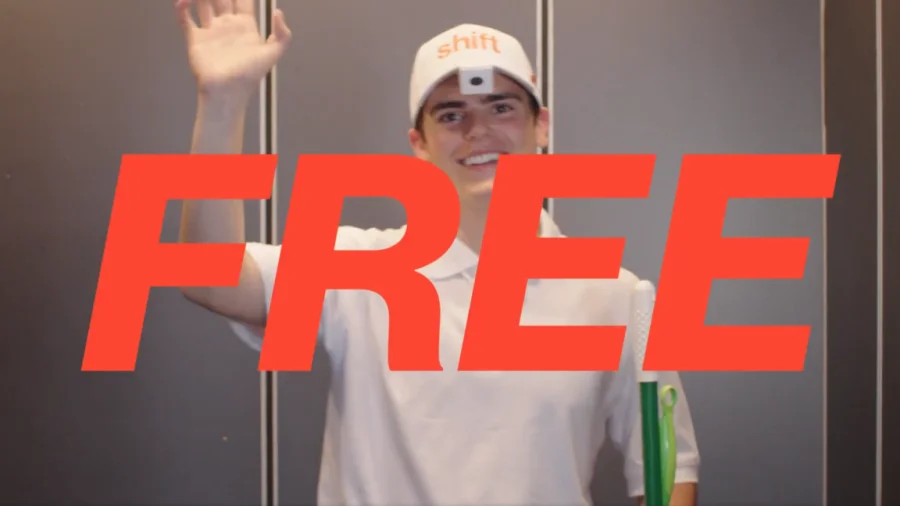
A tech startup is offering New York City residents a deal that sounds almost too good to be true: free professional home cleaning. But there's a significant catch. The cleaners will be wearing cameras on their bodies, recording every swipe of the sponge and every fold of the laundry. All that footage is destined to become training data for AI-powered robots.
The unusual offer comes from MicroAGI, a German startup that describes itself as a “team of engineers, researchers, and operators on a mission to accelerate embodied AI.” The company began promoting its free cleaning service through a newly launched app called Shift on May 28, using social media posts on X and LinkedIn. The promotional video is set to the upbeat piano notes of Jay-Z and Alicia Keys' “Empire State of Mind,” a clear nod to its New York City focus.
What the Shift App Offers — and What It Wants in Return
The Shift app website claims it “connects New Yorkers with free, trusted professional house cleaners.” The value proposition is straightforward for the user: a spotless home at no cost. For MicroAGI, the value is far more complex. Every cleaning session becomes a rich dataset of human movement, decision-making, and task execution in a real-world environment.
This is the raw material needed to train “embodied AI”—artificial intelligence that can physically interact with the world, rather than just process text or images. Teaching a robot to fold a towel or wipe a countertop is far harder than teaching it to write a poem. The Shift app is essentially a data collection pipeline disguised as a consumer service.
Why This Matters Right Now
This story matters because it reveals a quiet but significant shift in how AI companies are gathering training data. For years, AI learned from the internet—text, photos, videos. But physical tasks require physical demonstrations. Companies are now looking for real-world human labor to teach robots how to move.
The implications are wide. For New Yorkers, it offers a tangible benefit: free cleaning. But it also raises questions about privacy, consent, and the long-term value of the data being collected. What happens to the footage after it's used for training? Who has access to it? And what does it mean for the future of domestic work?
This is not a hypothetical experiment. It is a live service operating in one of the world's largest cities.
How the Situation Developed
MicroAGI publicly launched the Shift app promotion on May 28. The company's social media posts featured a polished video showcasing the service, set to an iconic New York anthem. The messaging was clear: free cleaning, professional cleaners, and a chance to be part of something futuristic.
The company's website frames the initiative as part of its broader mission to accelerate embodied AI. The Shift app is the public-facing tool, but the underlying goal is data acquisition. The cleaners are not just cleaning homes; they are performing tasks that will be analyzed, deconstructed, and eventually replicated by machines.
Who Is Affected and What Officials Are Saying
The primary group affected is New York City residents who choose to use the Shift app. They get free cleaning, but they also allow cameras into their private spaces. The cleaners themselves are also central to the story—they are the ones wearing the cameras and performing the work that will be used to train potential replacements.
As of now, there is no official statement from New York City regulators or consumer protection agencies regarding the service. The startup is operating in a relatively unregulated space. The company's own website and social media posts are the primary sources of information about the program's terms and conditions.
What We Know So Far — and What Remains Unclear
What is clear: MicroAGI is a German startup focused on embodied AI. The Shift app offers free cleaning in NYC. Cleaners wear body cameras. The footage is used for AI training.
What remains unclear: The exact privacy protections in place. How long the footage is stored. Whether users can request deletion of their data. How the cleaners are compensated beyond their cleaning wages. And crucially, what happens if the data is used to create robots that eventually replace human cleaners entirely.
The company has not publicly detailed its data handling policies in a way that addresses these specific concerns.
Risks, Concerns, and the Balanced View
From a privacy perspective, the service raises obvious red flags. Allowing a camera-equipped stranger into your home, even a professional cleaner, is a significant trust exercise. The footage captures not just cleaning techniques, but potentially personal items, family members, and private moments.
From a labor perspective, there is an uncomfortable irony: human cleaners are being recorded to train the machines that could one day make their jobs obsolete. The company frames this as accelerating AI, but for the cleaners, it may feel like documenting their own replacement.
On the other hand, the service is voluntary. Users choose to participate. They receive a tangible benefit—free cleaning—in exchange for their data. This is a transaction, not a surveillance operation. The company is being transparent about its intentions, at least at a high level.
The balanced view is that this is an early experiment in a new kind of data economy. It offers value to consumers while advancing technology. But it also demands careful scrutiny of privacy, consent, and long-term consequences.
Why Similar Trends Are Increasing
MicroAGI is not alone. Other companies are exploring similar models. A Bengaluru startup recently faced backlash for recording customers' homes using body cameras for AI training. AI companies have also been known to pay people to film themselves doing everyday tasks like laundry.
The trend is driven by a fundamental challenge in robotics: physical data is scarce. The internet is full of text and images, but it lacks the step-by-step, real-world demonstrations needed to train robots for household chores. Companies are increasingly turning to direct human labor to fill this gap.
- Physical AI training requires real-world demonstrations
- Internet data is insufficient for teaching physical tasks
- Consumer-facing services are becoming data collection tools
- Privacy concerns are emerging as a major issue
“A team of engineers, researchers, and operators on a mission to accelerate embodied AI.” — MicroAGI website
What New Yorkers Should Know Now
If you are considering using the Shift app, here is what to keep in mind. First, understand that the cleaning is not a gift—it is a data exchange. You are trading access to your home for a service. Second, ask about data privacy. How is the footage stored? Who can access it? Can you withdraw your data later?
Third, consider the cleaners. They are professionals doing a job, but they are also participants in a system that may ultimately reduce demand for their labor. Supporting ethical AI development means thinking about these trade-offs.
Finally, stay informed. This is an emerging space, and regulations may evolve. Being an early adopter means being a guinea pig. Make sure you are comfortable with that role before you sign up.
What Could Happen Next
If the Shift app gains traction, it could expand to other cities. Other startups may launch similar services. The data collected could accelerate the development of home robots significantly.
But there could also be backlash. Privacy advocates may raise concerns. Regulators may step in. The cleaners themselves may organize or speak out. The story is just beginning, and the outcome is far from certain.
What is certain is that the line between consumer service and data collection is blurring. MicroAGI's free cleaning offer is a clear example of this new reality.
Our Take: Why This Story Matters Beyond One Incident
This is not just a quirky startup promotion. It is a window into how AI companies will gather the data they need to build the next generation of robots. The model is clever: offer something people want, and collect the data you need in return.
But it also raises uncomfortable questions about consent, labor, and privacy. The people cleaning the homes are helping to build the machines that may replace them. The people receiving the free cleaning are giving up a piece of their privacy for a short-term gain.
This story matters because it is a template for what is coming. More companies will follow this playbook. Understanding the trade-offs now will help consumers make informed choices later.
FAQs
Is the free home cleaning from MicroAGI really free?
Yes, the cleaning service itself is free for New York City residents who use the Shift app. However, the trade-off is that professional cleaners will wear body cameras to record the entire cleaning process. This footage is used to train AI robots for household tasks.
What happens to the video footage recorded during the cleaning?
The footage is collected by MicroAGI to train its embodied AI systems. The company states the data is used to teach robots how to perform household chores. Specific details about data storage, retention, and user deletion rights have not been fully disclosed by the company.
How does the Shift app work for getting free cleaning?
The Shift app connects New Yorkers with professional cleaners. Users schedule a cleaning session through the app. A cleaner arrives, wears a body camera, and performs the cleaning. The user gets a clean home at no cost, while the startup collects the video data for AI training.
Should I be worried about privacy if I use this service?
Privacy is a legitimate concern. You are allowing a camera into your private home, which can capture personal items, family members, and private moments. Before using the service, it is advisable to ask MicroAGI about their data handling policies, who has access to the footage, and whether you can request deletion of your data.