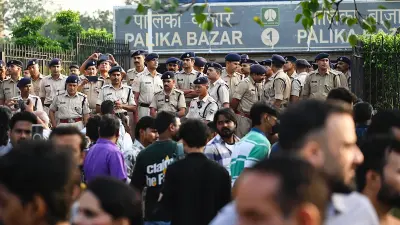
Before dawn on Sunday, the quiet streets of Shalimar Bagh in northwest Delhi turned into a scene of heavy security and controlled chaos. Bulldozers moved in, and within hours, around 150 structures were reduced to rubble. This was not a random act — it was a court-mandated demolition drive to clear encroachments for a road-widening project that has been years in the making.
For the residents and shopkeepers who called these structures home or livelihood, the morning brought an abrupt end. For the authorities, it was the enforcement of a long-pending legal order. The area, according to police, was turned into a "virtual fortress" to prevent any law and order issues.
What Happened in Shalimar Bagh: The Pre-Dawn Demolition Drive
Authorities in Delhi launched a large-scale demolition drive on Sunday, targeting approximately 150 structures in the Shalimar Bagh area. The operation was carried out to remove encroachments as part of a court-mandated road-widening project, an official confirmed.
The drive began in the early hours, backed by a significant police presence. Senior officers, including the Deputy Commissioner of Police and Assistant Commissioner of Police, were present at the site to oversee security and maintain law and order during the exercise, according to reports.
The heavy security arrangement turned the area into what police described as a "virtual fortress," ensuring the operation proceeded without major disruption.
Why This Matters Right Now
This demolition drive is not an isolated event. It represents the culmination of a legal battle over public land and infrastructure in one of Delhi's densely populated zones. For residents, it means the loss of homes and businesses. For commuters, it promises a wider road — but at a human cost that is impossible to ignore.
The operation also raises broader questions about how urban development is balanced with the rights of those living in informal settlements or on encroached land. With similar drives happening across Indian cities, the Shalimar Bagh demolition becomes a case study in enforcement, displacement, and the rule of law.
How the Demolition Drive Unfolded
The timeline of events reveals a carefully planned operation:
- Pre-dawn hours: Police personnel were deployed in large numbers around the targeted area in Shalimar Bagh.
- Early morning: Bulldozers and demolition equipment moved in as authorities began dismantling the structures.
- Throughout the day: The demolition continued under heavy security, with senior police officials monitoring the situation.
- Official confirmation: Authorities confirmed that around 150 structures were being removed as part of a court-mandated road-widening project.
The operation was described as "smooth" by officials, with no major incidents reported. However, the emotional toll on those affected is likely to linger.
Who Is Affected and What Officials Are Saying
The primary impact falls on the residents and business owners whose structures were demolished. Many of these were likely homes, small shops, or informal establishments that had existed for years. For them, the demolition means displacement, loss of assets, and an uncertain future.
Officials, however, maintain that the drive was lawful and necessary. "This is a court-mandated road-widening project. The encroachments had to be removed to comply with the order," an official said. The presence of senior police officers, including the Deputy Commissioner of Police and Assistant Commissioner of Police, underscored the seriousness with which the administration treated the operation.
Police emphasized that the heavy security was a precautionary measure to prevent any law and order situation. "The area was turned into a virtual fortress," police said, indicating the scale of the deployment.
What We Know So Far — and What Remains Unclear
What we know:
- Around 150 structures were demolished in Shalimar Bagh, northwest Delhi.
- The drive was part of a court-mandated road-widening project to remove encroachments.
- The operation was carried out with heavy police security, including senior officers on site.
- The area was described as a "virtual fortress" by police.
What remains unclear:
- The exact number of families or individuals displaced.
- Whether any compensation or alternative accommodation was provided.
- The specific timeline for the road-widening project's completion.
- Whether any legal challenges were filed against the demolition.
Risks, Concerns, and the Balanced View
While the demolition drive was legally mandated, it is not without its concerns. Critics of such operations often point to the lack of adequate notice, insufficient rehabilitation measures, and the sudden disruption of lives and livelihoods.
Risks and concerns:
- Displacement: Families and small business owners lose their homes and income sources overnight.
- Lack of rehabilitation: There is often no clear plan for where displaced people will go.
- Legal ambiguity: In some cases, the distinction between encroachment and legitimate tenure can be blurred.
- Social tension: Such drives can create resentment and mistrust between communities and authorities.
The official perspective:
- The drive was court-mandated, leaving authorities with little discretion.
- Road-widening projects are essential for urban infrastructure and traffic management.
- Encroachments on public land cannot be allowed indefinitely.
A balanced view acknowledges both the legal necessity and the human cost. The challenge for urban governance is to enforce the law while minimizing suffering.
Why Similar Demolition Drives Are Becoming More Common
Delhi and other Indian cities have seen a rise in such demolition drives in recent years. This is driven by several factors:
- Court orders: Many demolitions are the result of court-mandated actions to clear public land.
- Infrastructure projects: Road widening, metro expansion, and other projects require land clearance.
- Political will: Some administrations have adopted a more aggressive stance on encroachments.
- Public pressure: Citizens often demand action against illegal constructions and encroachments.
The Shalimar Bagh drive fits into this broader pattern. It is a reminder that urban development often involves difficult trade-offs between public good and individual rights.
"Senior officers, including the Deputy Commissioner of Police and Assistant Commissioner of Police, were present at the site to oversee security and maintain law and order during the exercise." — PTI report
What Residents and Business Owners Should Know Now
For those living or operating businesses in areas that may be subject to similar drives, here are some practical points:
- Check legal status: If you are on land that may be disputed, verify its legal status with local authorities.
- Stay informed: Follow local news and notices from municipal bodies about upcoming projects.
- Seek legal advice: If you receive a demolition notice, consult a lawyer immediately.
- Document everything: Keep records of your residence or business, including photographs and any documents.
- Know your rights: In some cases, you may be entitled to compensation or alternative accommodation.
What Could Happen Next
The immediate aftermath of the demolition will likely involve:
- Debris clearance: The site will be cleared for the road-widening project.
- Road construction: Work on widening the road is expected to begin soon.
- Legal challenges: Affected parties may approach the courts for relief or compensation.
- Political reactions: The drive may become a political issue, with opposition parties criticizing the government's approach.
In the longer term, similar drives may be planned for other parts of Delhi where encroachments have been identified. The Shalimar Bagh operation could set a precedent for how such projects are executed in the future.
Our Take: Why This Story Matters Beyond One Incident
The demolition of 150 structures in Shalimar Bagh is more than a local news item. It is a snapshot of the complex reality of urban India — where the need for infrastructure development collides with the reality of informal settlements and encroachments.
While the rule of law must be upheld, the human dimension cannot be ignored. Every demolished structure represents a family's home, a small business, or a community's gathering place. The way authorities handle such operations — with notice, compassion, and rehabilitation — defines the character of a city.
This story matters because it forces us to ask: How do we build better cities without breaking the lives of those who live in them? The answer is not simple, but it begins with acknowledging the question.
FAQs
Why were 150 structures demolished in Shalimar Bagh, Delhi?
The structures were demolished as part of a court-mandated road-widening project to remove encroachments in northwest Delhi's Shalimar Bagh area. The operation was carried out by authorities on Sunday with heavy police security.
Who ordered the demolition drive in northwest Delhi?
The demolition drive was ordered by a court as part of a legal mandate to clear encroachments for a road-widening project. Authorities were enforcing this court order when they demolished around 150 structures.
What happened to the people living in the demolished structures in Shalimar Bagh?
Reports indicate that the structures were demolished in a pre-dawn operation. The exact number of displaced families or individuals, and whether any rehabilitation or compensation was provided, remains unclear at this time.
Was there any violence or resistance during the Shalimar Bagh demolition?
No major incidents or violence were reported. The area was turned into a "virtual fortress" with heavy police deployment, including senior officers like the Deputy Commissioner of Police, to maintain law and order during the exercise.