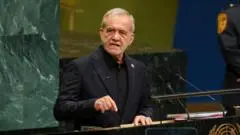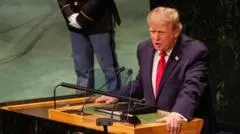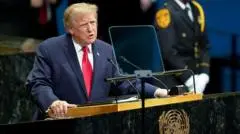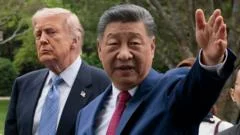
Two flags. One table. And a technology that neither side can afford to lose. When Donald Trump and Xi Jinping sit down, the loudest conversation in the room may not be about tariffs or trade — it will be about who controls artificial intelligence, and whether anyone can keep it under human command.
Why AI Is No Longer a Side Note in US-China Diplomacy
Artificial intelligence has moved from the back pages of tech journals to the front line of superpower rivalry. Both Washington and Beijing now treat AI leadership as a matter of national security, economic strength, and global influence.
The meeting between Trump and Xi places that rivalry directly on the negotiating table — not as a technical discussion, but as a strategic one.
The Real Stakes: Dominance vs. Control
The original framing of this story captures the tension perfectly: the US and China are vying for AI supremacy while seeking to keep it under human control.
That dual ambition is not simple. Dominance implies competition. Control implies cooperation. Holding both at once is one of the hardest diplomatic puzzles of the decade.
How We Got Here
The US-China AI race did not begin with this meeting. It has been building through export restrictions, chip supply debates, research funding battles, and competing visions of AI safety.
What has changed is the venue. AI is now being discussed at the highest level of political leadership — not just in labs, boardrooms, or regulatory bodies.
Who Feels This Beyond Washington and Beijing
Every country with a digital economy is watching. India, with its fast-growing AI ecosystem and large talent base, sits squarely in the middle of this rivalry.
Decisions made in this room — on chip access, data flows, or AI safety standards — could shape what Indian startups, researchers, and students can build and access in the coming years.
What Officials and Analysts Are Signalling
Both governments have consistently framed AI as a strategic priority. The US has emphasised innovation leadership and security. China has emphasised technological self-reliance and global cooperation.
Analysts believe the meeting is less about a single deal and more about setting the tone for how the two powers manage AI competition without triggering a wider conflict.
Reading Between the Lines of the Summit
The phrase "human control" matters. It suggests both sides recognise that unchecked AI development carries risks — from misinformation to autonomous weapons to economic disruption.
But agreement on principles is easier than agreement on enforcement. The gap between saying "AI should be safe" and defining what that means in practice remains wide.
Confirmed Facts vs. What Remains Unclear
Confirmed: Trump and Xi are meeting, and AI supremacy and human control are central themes of the discussion.
Unclear: Whether any formal agreement, joint statement, or framework on AI will emerge from the talks. No verified details on specific proposals have been confirmed.
Any claims about deals, timelines, or outcomes beyond what has been officially stated should be treated as speculation.
The Strategic Moat Neither Side Wants to Give Up
For the US, the moat is advanced semiconductor design, top-tier research institutions, and a deep venture capital ecosystem. For China, it is scale, state-backed investment, and rapid deployment across manufacturing and public services.
Neither wants to surrender that advantage. That is why AI is not just a tech topic — it is a sovereignty topic.
Risks and the Balanced View
There are real risks in how this plays out. Over-competition could fragment the global AI ecosystem into rival blocs, making it harder for smaller nations to participate.
Critics also warn that "human control" can become a slogan without substance if not backed by transparent rules and independent oversight.
At the same time, dialogue between the two largest AI powers is better than silence. Even a tense conversation creates a channel that did not exist before.
A Wider Pattern: AI as Geopolitics
This meeting is part of a broader shift. AI is no longer just a technology story — it is a foreign policy story, a security story, and an economic story all at once.
Expect more summits, more frameworks, and more competition over who writes the rules of the AI era.
What This Means for Readers in India
For Indian students, researchers, and entrepreneurs, the key takeaway is simple: the global AI environment is becoming more political.
Access to tools, chips, and collaborations may depend increasingly on where India positions itself in this US-China dynamic. Staying informed is no longer optional — it is strategic.
What Could Happen Next
Watch for any joint statement, follow-up diplomatic engagements, or signals on export controls and AI safety cooperation.
Even without a formal agreement, the tone set in this meeting could influence how AI is governed for years to come.
Our Take
This is not just a photo opportunity between two leaders. It is a signal that AI has become too important to be left to technologists alone.
The world is now watching whether the two biggest AI powers can compete fiercely without losing sight of the need to keep the technology safe, accountable, and under human direction. That balance — not dominance alone — will define the next decade.
Frequently Asked Questions
Why is AI a focus of the Trump-Xi meeting?
Because both the US and China see artificial intelligence as critical to national security, economic growth, and global influence. AI leadership is now a core part of their strategic rivalry.
What does "human control of AI" mean in this context?
It refers to the principle that AI systems should remain under human oversight and decision-making, especially in high-risk areas like defence, healthcare, and public safety.
Will this meeting produce a formal AI agreement?
That remains unclear. No verified details of a specific agreement have been confirmed. The meeting is significant for setting tone and priorities, even without a signed deal.
How does the US-China AI race affect India?
India is a major AI talent and startup hub. Decisions on chip exports, data rules, and AI standards made by the US and China can directly affect what Indian companies and researchers can access and build.