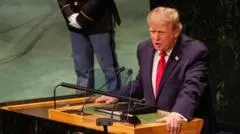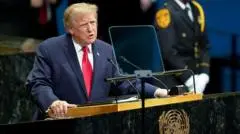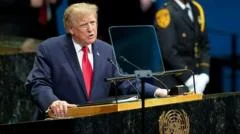
The words came from the green marble podium of the UN General Assembly, but they were aimed at a room several floors below — where American and Iranian officials were reportedly sitting across from each other. Trump said he was weighing two paths with Iran: a peace deal, or annihilation. He did not say which he preferred.
A Binary Framed In Public, A Negotiation Conducted In Private
In his address, the US president framed the choice as stark — either a deal would be agreed, or he would have to take extreme action against Iran. The phrasing left little room for the middle ground that diplomacy usually occupies.
Yet the same week, officials from both countries were reported to be meeting on the sidelines of the UN summit. That contradiction — public ultimatum, private channel — is the defining feature of this moment.
Why The Timing Of The Threat Matters
The UN General Assembly is the one week each year when almost every government is in the same city. Threats delivered here are not just messages to Tehran; they are messages to allies, to markets, and to domestic audiences.
For oil-importing economies, including India, the immediate concern is not the speech but the signal. Any escalation between Washington and Tehran historically moves crude prices within hours.
How The Two Sides Reached This Point
US-Iran tensions have cycled through sanctions, stalled negotiations, and periodic military posturing for years. What is different now is the compression of timelines — a public threat and a private meeting occurring within the same diplomatic window.
Officials have not confirmed what was discussed in the sideline talks, and no joint statement has been issued.
Who Feels This First
Beyond the two governments, the people most exposed are ordinary Iranians already living under sanctions, regional populations in the Gulf, and global consumers who feel oil price shocks at the pump.
For Indian households, the transmission channel is fuel and freight costs. For regional governments, it is the risk of being drawn into a conflict they did not choose.
What Officials Have — And Have Not — Said
No verified statement from Iranian officials responding directly to the "annihilation" remark was available at the time of writing. The White House has not clarified whether the threat refers to military action, economic pressure, or both.
That ambiguity is deliberate in most such speeches — but it also means analysts are left reading tone rather than text.
Reading The Gap Between Stage And Side Room
Experienced diplomats treat public threats and private talks as two instruments of the same policy, not contradictions. The threat creates leverage; the meeting tests whether that leverage converts into concessions.
The risk is miscalculation. When rhetoric outpaces the negotiating channel, either side can misread the other's red lines.
Confirmed Facts vs What Remains Unclear
Confirmed: Trump made the remarks in his UN speech, framing the choice between a peace deal and extreme action against Iran. US and Iranian officials were reported to be meeting on the sidelines.
Unclear: What "annihilate" specifically refers to. What was discussed in the sideline meeting. Whether any framework or deadline exists. Any Iranian official response.
Anything beyond this is speculation and should be treated as such.
Risks And The Case Against Overreading
Hardline rhetoric at the UN has often preceded de-escalation rather than war — the stage is used for maximum pressure before concessions. Critics argue this style of diplomacy narrows options and makes compromise politically costly for both sides.
Supporters argue it forces Tehran to the table. Both readings are plausible; neither is confirmed.
A Pattern, Not An Isolated Line
This is part of a broader shift toward personalised, high-stakes diplomacy conducted in public forums. Leaders increasingly use summit speeches to set terms rather than to summarise consensus.
The consequence is that markets, allies, and adversaries must all interpret intent from tone — an unstable basis for policy.
What Readers Should Watch Now
Watch three things: whether the sideline talks produce any joint statement, whether Iran responds officially, and whether oil markets react within the next 48 hours. Those three signals will indicate whether this was pressure or preparation.
What Could Happen Next
If the talks yield a framework, the threat becomes negotiating colour. If they collapse, the same words acquire a different weight. No verified timeline has been disclosed by either side.
Our Take
The story is not the word "annihilate." It is that the word was spoken on the same trip as a meeting. That combination — maximum public pressure alongside a private channel — is a known diplomatic pattern, but it is also one that can fail if either side misjudges the other. For now, the honest position is uncertainty: we know what was said, not what was meant, and not what was agreed.
Frequently Asked Questions
What did Trump say about Iran at the UN?
He said he was weighing whether a peace deal with Iran would be reached, or whether he would have to take extreme action — using the word "annihilate" — against the country.
Were US and Iranian officials actually meeting?
Yes, officials from both sides were reported to be meeting on the sidelines of the UN summit, even as the public rhetoric escalated.
Did Iran respond to the threat?
No verified official Iranian response to the remark was available at the time of writing.
Why does this matter for India?
India imports a large share of its crude oil from the region. Any escalation between the US and Iran typically raises oil prices, which feeds into fuel and freight costs for Indian consumers.