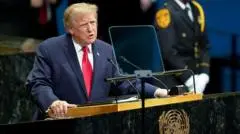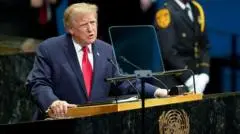
After months of fire and rhetoric, the United States and Iran have done something they hadn't since June: sat down across from each other. The talks mark the first direct engagement since a ceasefire between the two sides fell apart, and they arrive against the backdrop of President Trump's explicit "annihilation" threat — a warning that had pushed tensions to their sharpest point in recent memory.
A Diplomatic Window Opens After Months of Fire
The core development is straightforward: the two governments are talking again. That alone is significant, because the period since June has been defined by intermittent exchanges of fire rather than negotiation. A resumed channel does not mean a deal — it means the possibility of one is back on the table.
Why These Talks Matter Beyond the Headlines
For ordinary people in the region and for global markets, the difference between talking and shooting is not abstract. A sustained US-Iran de-escalation could ease pressure on oil prices, reduce the risk of a wider regional war, and lower the temperature for allied governments caught in the middle. A collapse, by contrast, could return both sides to the pattern that has held since June.
How the Ceasefire Unravelled
The current moment is the product of a specific sequence: a ceasefire that took hold, then broke down in June, followed by months in which the two sides exchanged fire intermittently. That fragile and unresolved backdrop is what makes the resumption of talks notable — it is a return to a channel that had effectively gone silent.
Who Feels the Consequences First
Diplomatic breakdowns are rarely felt evenly. Civilians in affected areas, shipping and energy markets, and regional governments that host US or Iranian-linked assets all absorb the immediate risk. For them, the resumption of talks is less a geopolitical story than a question of whether the next few weeks bring calm or another round of escalation.
Trump's Threat and the Shadow It Casts
The talks did not happen in a vacuum. Trump's "annihilation" threat had sharply raised the rhetorical stakes, and any negotiation now unfolds under that shadow. Whether the threat was intended as leverage or as a genuine signal remains a matter of interpretation — and that ambiguity is itself part of the story.
Reading the Signals From Both Capitals
When adversaries return to the table after a rupture, it usually signals one of two things: both sides see cost in continuing the current path, or one side believes talks can buy time or advantage. Without confirmed details of the agenda, it is not yet possible to say which dynamic is driving this round.
Confirmed Facts vs What Remains Unclear
Confirmed: The US and Iran have held their first talks since June; a ceasefire collapsed in June; intermittent exchanges of fire have continued; Trump issued an "annihilation" threat.
Unclear: The location, format, and participants of the talks; whether any new ceasefire or framework is being discussed; whether either side has shifted its core position. Any claim beyond the confirmed points above should be treated as speculation until officially confirmed.
Risks and the Case for Caution
Resumed talks are not the same as resolved talks. Previous rounds have collapsed, and the underlying disputes remain unaddressed. There is also a risk that a partial or symbolic engagement is mistaken for a durable settlement, raising expectations that the situation cannot yet meet.
A Pattern, Not an Isolated Moment
US-Iran relations have long oscillated between confrontation and cautious contact. This round fits that pattern: a rupture, a period of hostility, and then a return to the table under pressure. What matters is whether this cycle produces something more durable than the last one.
What Readers Should Watch For
Watch for official confirmations of a new ceasefire, any announced framework or agenda, and whether the frequency of military exchanges declines. Absent those signals, the talks should be read as an opening — not an outcome.
What Could Come Next
If the talks hold, the next visible markers would be a formal de-escalation arrangement or a stated agenda. If they stall, the more likely path is a return to the post-June pattern. Neither outcome can be confirmed at this stage.
Our Take
The significance of this story is not that a deal has been reached — it hasn't been confirmed. It is that a channel exists again after months of fire. In a conflict where the alternative to talking has repeatedly proven costly, the resumption of talks is a genuine development, even if its durability remains entirely unproven.
Frequently Asked Questions
When did the US and Iran last hold talks before this?
The last talks preceded the June ceasefire collapse. This round is the first direct engagement since that breakdown.
What did Trump's "annihilation" threat mean?
It was a public warning that sharply escalated rhetoric. Its precise intent — leverage or genuine signal — has not been officially clarified.
Has a new ceasefire been agreed?
No new ceasefire has been confirmed. The talks represent a resumed channel, not a confirmed agreement.
Why do these talks matter for the wider region?
A sustained de-escalation could reduce the risk of wider conflict and ease pressure on energy markets and regional governments. A collapse could restore the post-June pattern of intermittent exchanges.