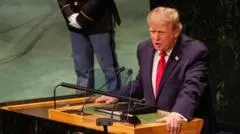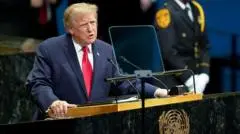
The White House briefing room is built for noise — shouted questions, camera shutters, reporters jostling for a line of sight. This week, parts of it went quiet by choice. Several major US news organisations have stepped back from shared coverage of President Donald Trump after his administration barred CNN, MS NOW and Politico from the White House press pool.
The move is not a scheduling dispute. It is a collective refusal by newsrooms to keep reporting as usual while three of their peers are locked out.
What the boycott actually means for White House coverage
US presidential coverage relies heavily on a "pool" system. Because not every outlet can fit into the Oval Office or Air Force One, a small rotating group of reporters shares its notes, quotes and footage with everyone else.
When outlets pull out of that arrangement, the effect is immediate. Fewer eyes on the president. Fewer transcripts. Less material for the wider press corps to verify and distribute.
The boycott, in other words, is designed to make the cost of exclusion visible — not just to the banned outlets, but to the public that depends on pooled reporting.
Why newsrooms are treating this as a line in the sand
Press access fights are not new in Washington. Administrations of both parties have clashed with reporters over seating, credentials and question time.
What is different here is the response. Instead of individual complaints, major outlets have acted together — a signal that they view the ban on CNN, MS NOW and Politico as a structural threat rather than a one-off grievance.
For readers, the practical consequence is simple: the pipeline that delivers routine presidential information to a wide audience is now partially blocked.
How the standoff developed
According to the original report, regular coverage of the president was disrupted after CNN, MS NOW and Politico were banned from the White House. The three outlets were excluded from the press pool, prompting other major US news organisations to withdraw from shared coverage in protest.
No high-confidence secondary sourcing was available at the time of writing, and the White House has not offered a detailed public justification in the material reviewed. Readers should treat further details — including the exact scope of the ban and any conditions for lifting it — as unconfirmed until official statements or primary documents emerge.
Who feels this first
The immediate losers are not the banned networks. They are the regional papers, radio stations and digital outlets that rely on pool material because they cannot afford a permanent White House correspondent.
When the pool thins, so does the raw material those smaller newsrooms use to inform millions of Americans who will never watch a briefing live.
What the White House and the press corps are saying
In the source material available, the White House has not provided a detailed on-record explanation for the ban. The participating outlets have framed their boycott as a protest against the exclusion of their colleagues.
Because no high-confidence secondary sources were available, this article does not attribute specific quotes to named officials or editors. Any such claims circulating online should be verified against primary statements before being repeated.
Reading the strategy behind the boycott
Pooled coverage is a convenience, but it is also leverage. By withdrawing, the outlets are testing whether the administration values the reach that shared reporting provides.
If the boycott holds, the White House loses a channel that has historically softened coverage by making routine access easy. If it fractures, the ban becomes the new normal.
Confirmed facts vs what remains unclear
Confirmed: CNN, MS NOW and Politico were banned from the White House press pool. Major US outlets have withdrawn from shared Trump coverage in protest.
Unclear: The precise reasons given by the White House, the duration of the ban, whether other outlets will join the boycott, and whether any negotiation is underway. These remain open questions and should not be presented as settled.
Risks and the counter-argument
Critics of the boycott argue that withdrawing from coverage hands the administration more control, not less — the president is still covered, just by outlets willing to stay in the room.
Supporters counter that participation without protest normalises exclusion. Both positions carry real costs, and neither has been resolved by the events so far.
A wider pattern in press–government relations
The confrontation fits a broader trend of administrations using credentialing and access as tools of pressure. It also reflects a news industry that is more willing to act collectively when individual protests have failed.
Whether this becomes a template for future disputes — or a one-time rupture — will depend on how long the standoff lasts.
What readers should do with this story
Treat coverage of the White House in the coming weeks with extra care. Check whether a report is based on direct access, pooled material, or second-hand accounts.
Follow primary sources — official transcripts, court filings, and statements from the outlets involved — rather than social media summaries.
What could happen next
Three paths are plausible: the White House restores access and the boycott ends; the ban holds and the boycott expands; or both sides settle into a prolonged, low-grade standoff with reduced routine coverage.
None of these outcomes can be confirmed at this stage. The situation remains fluid.
Our Take
This is not a story about three networks. It is a story about how verified information reaches the public when access itself becomes a bargaining chip. The boycott is a gamble — it risks leaving readers with less, in order to protect the principle that coverage should not be curated by the people being covered. Whether that trade-off is worth it is a question every newsroom, and every reader, will have to answer.
Frequently Asked Questions
Why are US outlets boycotting shared Trump coverage?
They are protesting the White House's decision to ban CNN, MS NOW and Politico from the press pool. By withdrawing from pooled reporting, they aim to pressure the administration to restore access.
Which outlets were banned from the White House?
According to the original report, CNN, MS NOW and Politico were barred from the White House press pool.
What is a White House press pool?
It is a rotating group of reporters who cover the president on behalf of the entire press corps, sharing notes, quotes and footage with outlets that cannot attend in person.
How does this affect ordinary readers?
It can reduce the volume and speed of verified presidential coverage, especially for smaller newsrooms that depend on pooled material to report on the White House.