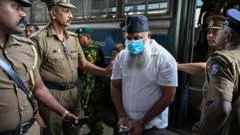
For the families of the 270 people killed on Easter Sunday 2019, the wait for justice has stretched across five painful years. On Tuesday, a Sri Lankan court delivered a verdict that many had feared would never come — convicting 15 men over the coordinated bombings that tore through three churches and three luxury hotels.
A Verdict Five Years in the Making
The convictions relate to the April 21, 2019 attacks, when suicide bombers struck simultaneously in Colombo, Negombo, and Batticaloa. The targets were chosen for maximum carnage: worshippers at Easter Mass and guests at high-end hotels.
The court found the 15 men guilty of offences connected to the bombings, according to the verdict. The attacks remain the deadliest act of terrorism in Sri Lanka since the end of its civil war in 2009.
Why This Verdict Matters Beyond the Courtroom
For Sri Lanka's minority Christian community, the bombings were not just a security failure — they were a wound that exposed how vulnerable they were in a country still healing from decades of ethnic conflict.
The verdict offers a measure of accountability. But for many victims' families, it also reopens the question they have asked for years: who else knew, and why was no one stopped?
How the Investigation Unfolded
The attacks triggered a political firestorm. It soon emerged that Indian intelligence had passed warnings to Sri Lankan authorities weeks before the bombings — warnings that were not acted upon.
A parliamentary inquiry later found serious lapses in intelligence-sharing and coordination. The investigation that followed was slow, tangled in political infighting, and repeatedly criticised by victims' families as an exercise in delay rather than justice.
The Human Cost That Numbers Cannot Capture
Among the dead were mothers and fathers, children, priests, and tourists from at least a dozen countries. St. Sebastian's Church in Negombo lost dozens of worshippers in a single morning.
Survivors carry scars — physical and otherwise. Some lost limbs; others lost their faith in the state's ability to protect them. For these families, a conviction is not closure. It is a confirmation that the system failed, and that someone has finally been held responsible.
What Authorities Have Said
The court's verdict stands as the official legal finding. Details of the sentencing are expected to follow, and the convicted men retain the right to appeal.
Victims' groups have consistently demanded that the trial not end with low-level operatives. Their central question — who financed, planned, and enabled the attackers — has not been fully answered by this verdict alone.
Reading the Verdict: Accountability or Symbolism?
Convictions of this scale are rare in Sri Lanka's post-war justice record. The fact that 15 men were found guilty signals that the legal system can, however slowly, deliver outcomes in complex terror cases.
Yet the verdict also highlights what remains untouched: the intelligence failures, the political negligence, and the networks that made the attacks possible. A conviction of operatives is not the same as accountability for the system that allowed them to strike.
Confirmed Facts vs What Remains Unclear
Confirmed: 15 men were convicted by a Sri Lankan court over the Easter Sunday bombings. The attacks killed 270 people at three churches and three hotels on April 21, 2019.
Unclear: The exact sentences, the possibility of appeals, and whether further prosecutions will follow. The full extent of external involvement and the fate of those accused of intelligence failures remain matters of ongoing public and legal debate.
The Wider Pattern: South Asia's Struggle With Terror Accountability
Sri Lanka is not alone in grappling with the aftermath of mass-casualty terrorism. Across South Asia, trials often stretch for years, witnesses face pressure, and political sensitivities complicate prosecution.
This verdict, however incomplete, places Sri Lanka among the few countries in the region to secure convictions at this scale. That matters — not just for this case, but as a precedent.
What This Means for Victims and Citizens
For the families, the practical next step is sentencing. Many will want to know whether the convicted men receive maximum penalties and whether appeals will delay finality further.
For ordinary Sri Lankans, the verdict is a reminder that security failures have consequences — but also that justice, when it comes, can feel painfully partial.
What Could Happen Next
Sentencing hearings are expected to determine the length of imprisonment. Appeals, if filed, could extend the legal process by months or years.
Pressure will likely continue on the government to pursue those accused of negligence and to fully disclose what was known before the attacks. Whether that pressure produces results remains uncertain.
Our Take
This verdict is a milestone, but not a conclusion. It confirms that the men who carried out the Easter Sunday bombings have been held to account — a necessary step that victims' families have waited far too long to see.
Yet the deeper questions that made the attacks possible — the ignored warnings, the political failures, the networks that funded and inspired the bombers — remain largely unanswered. True justice for Sri Lanka's Easter Sunday victims will require more than convictions of operatives. It will require accountability at every level that failed them.
Frequently Asked Questions
How many people were convicted in the Sri Lanka Easter bombings case?
A Sri Lankan court convicted 15 men over the 2019 Easter Sunday bombings, according to the verdict.
How many people died in the 2019 Sri Lanka Easter attacks?
The attacks killed 270 people and wounded hundreds more. Three churches and three luxury hotels were targeted on April 21, 2019.
What happens next for the convicted men?
They face sentencing, and any appeals could extend the legal process. The court's verdict is the key legal finding so far.
Why did the Sri Lanka Easter bombings trial take so long?
The investigation was slowed by political infighting, intelligence failures, and the complexity of the case. Victims' families repeatedly criticised the pace of proceedings.