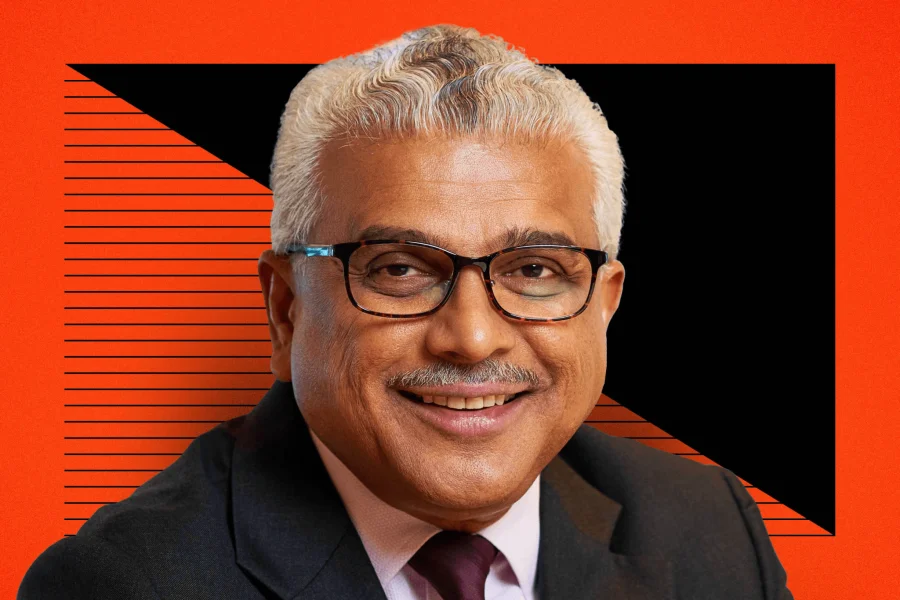
Asia is getting richer, older, and sicker in ways that money alone can't fix. That's the blunt warning from Prem Kumar Nair, CEO of IHH Healthcare, Asia's largest private health group, as he maps out a future where living longer means nothing without living well.
The uncomfortable truth about Asia's longevity boom
"There's no point in living longer if you're not healthy," Nair told Fortune in a candid interview. His concern isn't abstract demographics — it's the daily reality of patients walking into IHH hospitals across the region.
As Asian populations grow more affluent, they're adopting lifestyles that bring new health burdens. "People indulge in good food and wine, we're seeing a rise in lifestyle diseases: diabetes, hypertension and high cholesterol," he said.
Why longer lifespans are masking a deeper health crisis
The numbers paint a sobering picture. The Asian Development Bank projects that one in four people in the region will be over 65 by 2050. Asians already enjoy longer life expectancies than most of the world — but those extra years aren't necessarily healthy ones.
A Stanford study published in April reinforced this gap: longer lives and healthier lives are diverging across the region. The implication for families, economies, and healthcare systems is profound.
From treating illness to engineering wellness
For IHH Healthcare, this demographic shift isn't a future problem — it's a present-day strategic pivot. The group, which operates across Malaysia, Singapore, India, and beyond, is repositioning itself around preventive care and chronic disease management rather than episodic treatment.
Nair's philosophy suggests a fundamental rethink: healthcare providers must move upstream, catching diabetes and hypertension before they become heart attacks and kidney failures.
Who feels the weight of an ageing Asia first
The burden won't fall evenly. Middle-class families across Asia are already juggling care for ageing parents while raising children. Employers face rising healthcare costs. Governments confront strained public hospitals.
For the individual, the stakes are personal: a longer retirement is only meaningful if it's an active one. Nair's message reframes healthcare as an investment in quality of life, not just a safety net for illness.
What IHH Healthcare is betting on
While specific financial details of the strategy weren't disclosed in the interview, the direction is clear. IHH's scale — as Asia's largest private healthcare operator — gives it unique leverage to build integrated care networks that span prevention, treatment, and rehabilitation.
The group's moat lies in its geographic reach and brand trust across multiple Asian markets, allowing it to standardise preventive care protocols at scale.
The hard questions nobody wants to ask
Critics might argue that private healthcare groups profit from illness, not wellness. Preventive care, while better for patients, doesn't always generate the same revenue as surgeries and procedures.
There's also the question of affordability. If IHH's strategy succeeds, will the benefits reach only the wealthy — or will healthier ageing become accessible across income groups?
A regional shift with global consequences
Asia's ageing trajectory mirrors a global pattern, but with sharper edges. The region is home to some of the world's fastest-ageing societies — Japan, South Korea, China — alongside younger nations like India and Indonesia.
How Asia manages this transition will shape global healthcare innovation, from telemedicine to AI-driven diagnostics.
What families and individuals should consider now
For readers, the practical takeaway is straightforward: start managing lifestyle risks before they become diagnoses. Regular screenings for blood pressure, blood sugar, and cholesterol are no longer optional extras — they're essential investments in future quality of life.
For those caring for ageing parents, understanding the difference between lifespan and healthspan matters more than ever.
What happens next for Asian healthcare
Expect IHH and its competitors to accelerate investments in outpatient care, chronic disease programs, and digital health tools. The conversation is shifting from "how do we treat the sick?" to "how do we keep people healthy longer?"
The coming decade will test whether Asia's healthcare systems can evolve as fast as its populations are ageing.
Our Take
Nair's statement cuts through the usual corporate optimism. It acknowledges a hard truth: economic growth in Asia has produced longer lives, but not necessarily better ones. The healthcare industry's real challenge isn't extending life — it's making those extra years worth living.
Whether IHH can turn this philosophy into a sustainable business model remains to be seen. But the direction is right, and the urgency is real.
Frequently Asked Questions
What is IHH Healthcare?
IHH Healthcare is Asia's largest private healthcare group, operating hospitals and medical facilities across Malaysia, Singapore, India, Turkey, and other markets. It provides a wide range of medical services from primary care to complex tertiary treatment.
Why is Prem Kumar Nair concerned about lifestyle diseases in Asia?
Nair points out that rising affluence in Asia has led to increased consumption of rich food and alcohol, driving up rates of diabetes, hypertension, and high cholesterol. These conditions reduce quality of life even as lifespans extend.
How many Asians will be over 65 by 2050?
According to the Asian Development Bank, one in four people in the region will be older than 65 by 2050, representing a major demographic shift with significant healthcare implications.
What does "healthy ageing" mean in this context?
Healthy ageing refers to extending not just lifespan but "healthspan" — the number of years a person lives in good health, free from chronic disease and disability. It's the central focus of IHH's strategic direction under Nair's leadership.