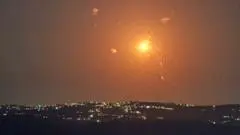
A port city on Yemen's Red Sea coast has reportedly changed hands — and with it, the balance of power along one of the world's most consequential shipping lanes. Reports say Houthi forces have seized Mokha, a historic harbour town sitting just north of the Bab al-Mandab Strait. If confirmed, the move would place the Iran-backed group closer than ever to controlling the gateway between the Red Sea and the Gulf of Aden.
What the Reported Capture of Mokha Actually Means
Mokha is not just another coastal town. It sits on Yemen's southwestern shore, roughly 60 kilometres from the Bab al-Mandab Strait — the narrow waterway through which a significant share of global maritime trade passes. Control of Mokha would give Houthi forces a direct foothold on the Red Sea's eastern flank, adjacent to one of the most watched chokepoints in the world.
The reported seizure, if verified, would mark a notable shift in the Yemen conflict's geography. It would place Houthi positions within striking distance of shipping lanes that connect Europe, the Middle East, and Asia.
Why Bab al-Mandab Is the Name That Matters Most
The Bab al-Mandab Strait is a 26-kilometre-wide passage separating Yemen from Djibouti and Eritrea. It is the southern gateway to the Suez Canal route — the artery for a substantial portion of Europe-Asia trade. Any military presence near this chokepoint immediately raises questions about shipping security, insurance costs, and the willingness of commercial vessels to transit the route.
For global markets, the concern is not abstract. Disruption here ripples into fuel prices, freight rates, and delivery timelines for goods moving between continents.
How the Yemen Conflict Reached This Point
Yemen has been fractured by conflict for nearly a decade. The Houthi movement, which controls large parts of northern Yemen including the capital Sanaa, has steadily expanded its military reach along the Red Sea coast. Mokha had previously been held by forces aligned with Yemen's internationally recognised government, backed by a Saudi-led coalition.
The reported capture, if accurate, would represent a further consolidation of Houthi influence along a coastline that has already seen repeated maritime incidents and attacks on shipping in recent years.
Who Feels This First — and Why It Matters to Real People
The immediate impact falls on commercial shipping crews, port workers, and traders whose routes pass through the Red Sea. But the consequences travel further: higher insurance premiums for vessels, longer rerouting around the Cape of Good Hope, and ultimately, higher costs for consumers in Europe, Asia, and beyond.
For Yemeni civilians, the reported capture adds another layer of uncertainty to an already devastating humanitarian situation, with access to aid and basic supplies often dependent on which faction controls key ports.
What Officials and Analysts Are Saying — and What Remains Unconfirmed
At the time of writing, no verified official statement from Yemen's internationally recognised government or the Saudi-led coalition has confirmed the reported capture. Independent verification of the operation's details — including the scale of the assault, casualties, and current control of the port — remains unavailable.
Analysts have cautioned that reports from conflict zones are often difficult to confirm quickly, and that the situation on the ground may still be fluid. Until independent confirmation emerges, the reported seizure should be treated as a claim under investigation, not an established fact.
Confirmed Facts vs What Remains Unclear
Confirmed: Mokha is a Red Sea port city in Yemen, located near the Bab al-Mandab Strait. The Houthi movement controls significant territory in northern Yemen and has previously targeted shipping in the Red Sea.
Unclear: Whether Houthi forces have fully secured Mokha. The extent of any resistance. Casualty figures. Whether the reported capture has been acknowledged by any official body. The implications for ongoing maritime security arrangements.
The Strategic Logic Behind the Move
For the Houthis, control of Mokha would serve multiple purposes: a coastal launch point, a potential revenue source through port fees, and a bargaining chip in any future negotiations. It would also strengthen the group's ability to project power into the Bab al-Mandab corridor — a lever it has already used to disrupt shipping and draw international attention.
For the Saudi-led coalition and Yemen's government, the loss of Mokha would be a significant setback, weakening their hold on the Red Sea coast and complicating any future military or diplomatic strategy.
Risks and the Balanced View
The risks are clear: further militarisation of a vital shipping lane, heightened danger for commercial vessels, and a possible escalation in regional tensions involving Iran, Saudi Arabia, and Western naval forces. Critics of the Houthis argue that port seizures deepen Yemen's humanitarian crisis and undermine peace efforts.
At the same time, some analysts note that the Houthis have held coastal territory before without fully shutting down shipping, and that the practical impact on global trade depends on how far they choose to push. The situation remains fluid, and predictions at this stage carry significant uncertainty.
A Wider Pattern in Red Sea Security
The reported capture fits a broader trend: the Red Sea has become an increasingly contested space. Attacks on shipping, naval deployments by multiple countries, and shifting territorial control along Yemen's coast have turned a once-routine trade route into a zone of persistent risk. Mokha, if confirmed, would be the latest marker in that pattern.
What Readers and Stakeholders Should Watch Now
For shipping companies and traders: monitor advisories from maritime security bodies and consider contingency routing. For policymakers: watch for coalition or UN statements. For readers following the story: treat unverified reports with caution and look for confirmation from multiple independent sources before drawing conclusions.
What Could Happen Next
Possible developments include official confirmation or denial of the capture, a military response from coalition forces, changes to shipping advisories, or a diplomatic push to de-escalate. None of these are certain. The one reliable takeaway is that the Bab al-Mandab corridor remains a flashpoint — and events there rarely stay local.
Our Take
This story matters less for the town of Mokha itself than for what it signals: the Red Sea is becoming a place where non-state armed groups can shape global trade routes. Whether or not the capture is fully confirmed, the direction of travel is clear. The world's shipping lanes are only as secure as the coastlines that border them — and those coastlines are increasingly contested.
Frequently Asked Questions
Where is Mokha port located?
Mokha is a port city on Yemen's Red Sea coast, roughly 60 kilometres north of the Bab al-Mandab Strait, a critical maritime chokepoint between the Red Sea and the Gulf of Aden.
Why is the Bab al-Mandab Strait important?
The Bab al-Mandab Strait is a narrow waterway through which a significant portion of Europe-Asia maritime trade passes. Control or disruption near this chokepoint can affect global shipping costs and supply chains.
Has the Houthi capture of Mokha been confirmed?
At the time of writing, the reported capture has not been independently verified, and no official confirmation from Yemen's government or the Saudi-led coalition has been confirmed. The situation remains unclear.
What does this mean for global shipping?
If confirmed, the capture could raise security concerns for vessels transiting the Red Sea, potentially increasing insurance costs and prompting some ships to reroute. The full impact depends on how the situation develops.