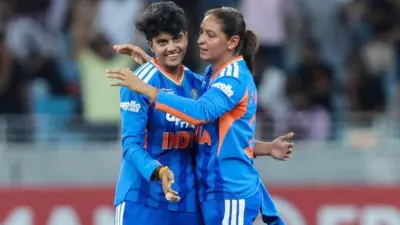
On a pitch where most batters were fighting the ball, Shafali Verma was fighting the field. Her 40-ball 64 did not just top-score for India — it separated two teams that otherwise played the same difficult game.
By the time she was done, India had 149 for six on a slow, turning Dubai surface. Bangladesh, who had kept the spinners in the contest all evening, finished 40 runs short at 109 for seven. The final beckoned.
A Knock That Made the Difference on a Spinner's Pitch
Seven fours and three sixes. On a surface where timing was hard and boundaries harder, Shafali's strike rate stood apart from everything around it.
It was her 20th half-century in T20 internationals — a milestone that underlines how long she has been doing this, and how central she remains to India's top order.
Why the Powerplay Belongs to Her
Shafali was direct about her role. Hitting sixes in the powerplay, she said, is her job — and she is enjoying the responsibility of giving the innings its early push.
It is a simple brief with a hard execution. The first six overs offer the only fielding restrictions in T20 cricket, and on a slow track, the value of a fast start multiplies. India needed someone to take that risk. Shafali did.
How the Match Turned
India's 149 for six looked competitive rather than commanding. On a spin-friendly pitch, it turned out to be more than enough.
Bangladesh's chase never found the same rhythm. Wickets fell at regular intervals, and the required rate climbed out of reach. The 40-run margin flattered no one — it reflected the gap Shafali's innings had created.
What This Means for India's Campaign
India are through to the final of the Women's T20 Asia Cup. For a team that has leaned on its top order in tournament cricket, Shafali's form at the top is the clearest signal of how they intend to play the decider.
Her approach also carries a message for the rest of the batting group: on difficult surfaces, intent is not optional.
Confirmed Facts vs What Remains Unclear
Confirmed: Shafali scored 64 off 40 balls with seven fours and three sixes. India made 149/6. Bangladesh were 109/7. India won by 40 runs and qualified for the final.
Unclear: India's final opponent, the venue conditions for the decider, and whether the team will alter its batting order were not confirmed in the source material.
Risks and Balanced View
An aggressive powerplay approach cuts both ways. On a helpful pitch, it can win a match inside six overs. On a seaming or two-paced surface, it can cost two early wickets and expose a middle order.
Shafali's method worked here because the conditions rewarded the one batter willing to take the risk. Whether that same approach holds up against a stronger bowling attack in the final is the open question.
The Wider Pattern
Women's T20 cricket has been moving steadily toward powerplay aggression at the top of the order. Openers are no longer asked to see off the new ball — they are asked to use the field restrictions before they disappear.
Shafali's framing of her role reflects that shift. She is not describing a personal preference. She is describing a job description.
Practical Reader Guidance
For young batters watching, the lesson is not "swing hard." It is that a defined role, practised repeatedly, produces clarity under pressure. Shafali knows exactly what she is on the field to do — and that certainty is what makes the shots look effortless.
Future Outlook
India enter the final with their most destructive opener in form. If the surface offers anything to the batters, expect Shafali to attack from ball one. If it does not, her ability to adapt — rather than abandon her intent — will decide how far India go.
Our Take
Shafali Verma's innings was not just the highest score of the match. It was the reason the match had a result at all. On a pitch that suppressed everyone else, one player refused to be suppressed — and that is the difference between a competitive total and a winning one.
Frequently Asked Questions
What did Shafali Verma say about her batting role?
She said hitting sixes in the powerplay is her job, and that she is enjoying the responsibility of providing early impetus to India's innings.
How many runs did Shafali Verma score against Bangladesh?
She scored 64 off 40 balls, including seven fours and three sixes — her 20th half-century in T20 internationals.
What was the result of the India vs Bangladesh Asia Cup match?
India posted 149 for six and bowled Bangladesh out for 109 for seven, winning by 40 runs to reach the Women's T20 Asia Cup final.
Why is the powerplay so important in T20 cricket?
The first six overs are the only phase with fielding restrictions, so boundaries are easier to find. A strong powerplay gives the batting side a cushion for the slower middle overs.