The number is almost too large to process: 15 crore. That is the projected scale of voter name deletions in India's ongoing special intensive revision (SIR) of electoral rolls — a figure that would represent roughly 15 per cent of the country's estimated 97–99 crore voting-age population. For context, that is more than the entire population of Mexico. And it is happening quietly, phase by phase, state by state.
The scale of deletions across three phases
According to the available data, the SIR exercise has already removed 13 crore names across its first three phases. The final tally, officials estimate, could swell to 15 crore by the time the Election Commission of India (ECI) completes the process.
The state-wise breakdown reveals where the impact is most concentrated. Maharashtra, covered under SIR Phase 3, has recorded the highest absolute drop — 2.06 crore names, or 21 per cent of its rolls. Uttar Pradesh, under Phase 2, follows closely with 2.04 crore deletions, approximately 19 per cent. Karnataka, also in Phase 3, has seen 1.07 crore names removed, translating to 19.5 per cent of its electorate.
Why 15 crore deletions demand public attention
These are not abstract statistics. Every deleted name represents a citizen who may walk into a polling booth on election day and be turned away. For a democracy that prides itself on electoral participation, the removal of 15 crore names — nearly one in six eligible voters — raises fundamental questions about who gets to vote and why.
The deletions are particularly striking given India's democratic framework, where voter enrolment is meant to be universal and inclusive. A reduction of this magnitude suggests either significant duplication and error in the rolls, or a process that may be casting too wide a net in its cleaning exercise.
How the SIR process unfolded
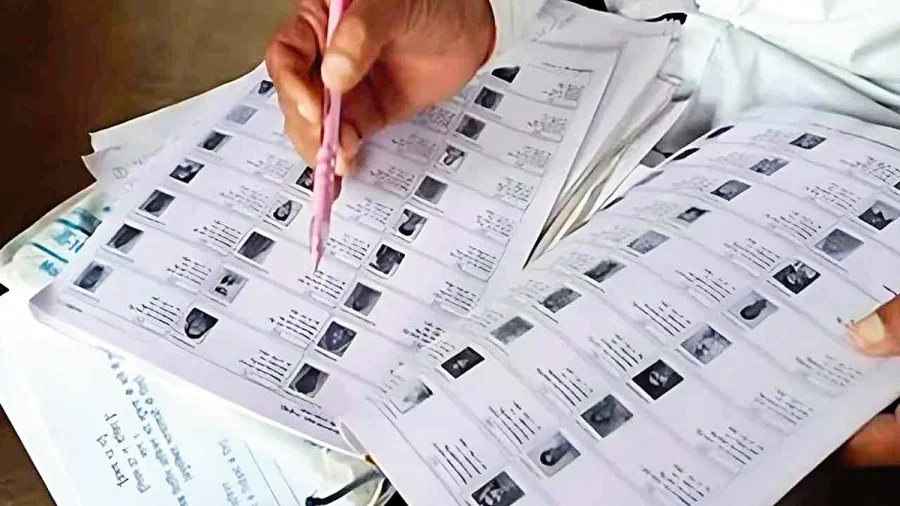
The special intensive revision is a periodic exercise conducted by the ECI to update electoral rolls — removing deceased electors, correcting entries, and eliminating duplicate registrations. The current cycle has been rolled out in phases across states, with each phase covering a specific set of regions.
The Maharashtra SIR draft roll was published on 31 August, marking a critical juncture in Phase 3. The publication of draft rolls opens a window for claims and objections, allowing citizens to challenge deletions or request inclusions before the final roll is certified.
What this means for ordinary voters
For the average citizen, the practical implication is straightforward: check your name on the electoral roll before the next election. If your name has been deleted, you must file a claim — typically through Form 6 for inclusion or Form 7 for objections — within the prescribed timeline.
The burden, critics argue, should not rest solely on voters. A system that deletes 15 crore names places an enormous responsibility on individuals to monitor their own electoral status, often without adequate notification or awareness.
The Election Commission's position
The ECI has framed the SIR as a necessary hygiene exercise — removing duplicate entries, deceased persons, and shifted voters to ensure cleaner rolls. Officials have maintained that the process includes safeguards, including the publication of draft rolls and opportunities for claims and objections.
However, the sheer scale of deletions has prompted concerns about whether the safeguards are sufficient. Electoral observers and civil society groups have repeatedly flagged that mass deletions can disproportionately affect vulnerable populations — the elderly, migrants, and those without digital access who may not learn of their removal until polling day.
Reading between the numbers
The state-wise data reveals patterns worth examining. Maharashtra's 21 per cent deletion rate and Karnataka's 19.5 per cent are remarkably high for states with relatively robust electoral infrastructure. Uttar Pradesh's 19 per cent, while lower in percentage terms, translates to over two crore citizens — a number larger than the population of many countries.
Analysts suggest the high percentages could indicate that the rolls contained significant duplication — a legacy of rapid enrolment drives — or that the revision criteria are being applied aggressively. Without detailed ECI documentation on the reasons for each deletion category, the public is left to infer from aggregate numbers.
Confirmed facts versus what remains unclear
What is verified: the SIR exercise has deleted 13 crore names across three phases, with projections of 15 crore on completion. Maharashtra, Uttar Pradesh, and Karnataka account for the highest absolute numbers. The Maharashtra draft roll was published on 31 August.
What remains unclear: the precise breakdown of deletion reasons — how many were duplicates, how many were deceased electors, and how many were removed due to shifted residence or other errors. The ECI has not yet released a category-wise analysis of the deletions, nor has it clarified whether affected voters were individually notified before removal.
Concerns and counterpoints
Supporters of the SIR argue that cleaning the rolls is essential for electoral integrity — inflated rolls can enable impersonation and undermine public confidence in results. A roll with 15 crore ghost entries, they contend, is as problematic as one with missing voters.
Critics counter that the scale of deletions suggests a systemic problem, not a routine correction. They point to the risk of disenfranchisement, particularly in an election year, and argue that the ECI must demonstrate — with transparent data — that every deleted name was verified and justified.
A pattern across electoral cycles
This is not the first time voter roll revisions have sparked controversy. Similar exercises in previous cycles have drawn complaints of arbitrary deletions, often surfacing only during elections when citizens discover their names are missing. The current SIR, however, appears to be operating at a scale that dwarfs earlier efforts.
The trend raises a broader question about how India manages its electoral database — whether the focus on removing duplicates is balanced by equal vigour in enrolling new and eligible voters, particularly young citizens turning 18.
What citizens should do right now
If you are a registered voter, check your name on the National Voters' Service Portal (NVSP) or through the Voter Helpline app. If your name is missing, file a claim immediately using Form 6. If you find an incorrect entry, use Form 8 for correction.
For those in Maharashtra, Uttar Pradesh, and Karnataka — the states with the highest deletions — the urgency is greater. The claims and objections window is time-bound, and missing it could mean being unable to vote in upcoming elections.
What happens next
The ECI is expected to complete the remaining phases of the SIR and publish final rolls. The final deletion figure — whether it stops at 13 crore or reaches the projected 15 crore — will be confirmed only after all claims and objections are resolved.
In the interim, the focus shifts to whether the ECI will release a detailed, category-wise account of the deletions and whether it will take proactive steps to notify affected voters. Electoral watchdogs will be watching closely, as will the millions of citizens whose names now hang in the balance.
Our Take
The SIR exercise sits at the intersection of administrative necessity and democratic risk. Cleaning voter rolls is legitimate — even essential — but a process that removes 15 crore names demands a level of transparency and citizen communication that has not yet been demonstrated. The ECI must publish detailed data on deletion reasons, ensure individual notification, and guarantee that every affected voter has a genuine opportunity to be reinstated. In a democracy, the burden of proof should never fall on the voter alone.
Frequently Asked Questions
What is the special intensive revision (SIR) of voter rolls?
The SIR is a periodic exercise by the Election Commission of India to update electoral rolls by removing duplicate entries, deceased electors, and correcting errors. It is conducted in phases across states, with draft rolls published for public claims and objections before finalisation.
How many names have been deleted so far in the SIR?
Over the three phases completed so far, approximately 13 crore names have been deleted from voter rolls. Projections suggest the final figure could reach 15 crore once the exercise is fully completed.
Which states have seen the highest voter deletions?
Maharashtra leads with 2.06 crore deletions (21 per cent), followed by Uttar Pradesh with 2.04 crore (~19 per cent) and Karnataka with 1.07 crore (19.5 per cent). These three states account for the highest absolute numbers.
What should I do if my name is missing from the voter roll?
Check your status on the National Voters' Service Portal (NVSP) or Voter Helpline app. If your name is missing, file Form 6 for inclusion. If there is an incorrect entry, use Form 8. Act within the claims and objections window to ensure you can vote.