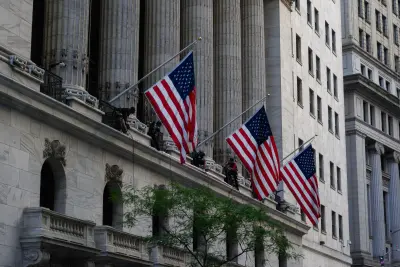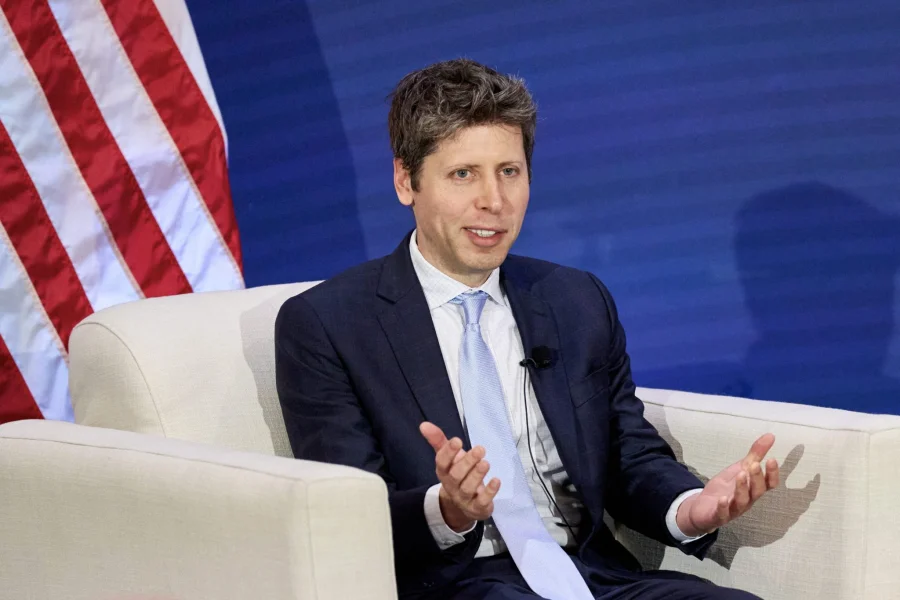
The scene outside the G20 digital economy meeting in Chapel Hill this week told a story the speakers inside likely didn't want to hear. While OpenAI's Sam Altman described AI as "incredible magic of intelligence in a bottle," protestors gathered at the venue's perimeter with a very different message about the industry's direction.
The Optimism Inside the Chapel Hill Venue
Speaking in a fireside chat with U.S. Commerce Secretary Howard Lutnick, Altman projected confidence about AI's transformative potential. His language was almost reverent, framing the technology as a breakthrough that could reshape how society functions.
But even in that moment of celebration, Altman offered a candid warning about what lies ahead. "Even with great gains in efficiency, we are going to need to build much more infrastructure, unless we want this to be a highly priced model, which we don't," he said, according to local outlet the News & Observer.
That admission — that AI's physical footprint will keep growing — sits at the heart of the tension visible outside the venue.
Why the Public Backlash Is Building Now
The protestors weren't objecting to AI as a concept. Their concerns were concrete: land for data centers, massive electricity consumption, water usage for cooling, and the question of who bears these costs while tech companies capture the profits.
For ordinary residents, the AI boom has begun to feel less like abstract progress and more like a series of local disruptions. Communities across the United States have watched data center proposals spark zoning battles, environmental reviews, and utility rate debates.
This gathering in Chapel Hill became a visible symbol of that divide — billionaires celebrating inside while concerned citizens organized outside.
How the G20 Digital Economy Meeting Became a Flashpoint
The event brought together some of the most powerful figures in technology. Nvidia CEO Jensen Huang and Palantir CEO Alex Karp were present, both projecting similarly positive outlooks on AI's trajectory. Tesla CEO Elon Musk joined via conference, extending the roster of industry heavyweights weighing in.
Their collective message was consistent: AI represents an unprecedented opportunity, and the infrastructure to support it must be built rapidly. The urgency in their tone reflected competitive pressures — nations and companies racing to establish AI dominance.
Yet the physical gathering in a university town known for progressive activism created an inevitable collision between corporate ambition and community skepticism.
Who Feels the Real-World Impact of AI Expansion
For residents near proposed data center sites, the AI revolution isn't abstract. It means potential changes to their electricity bills, concerns about water availability during droughts, and questions about whether local grids can handle the load.
Small businesses and homeowners worry about rising energy costs as utilities invest in capacity for industrial-scale AI operations. Environmental groups point to the carbon footprint of power-hungry facilities, even as tech companies tout their renewable energy commitments.
The protestors in Chapel Hill represented these diffuse anxieties — people who see the AI industry's growth as something happening to them, not for them.
What Commerce Secretary Lutnick's Presence Signaled
The pairing of Altman with Commerce Secretary Howard Lutnick underscored how closely the current administration is aligned with AI industry priorities. Government officials framing AI as a national imperative gives tech leaders political cover for aggressive expansion.
That alignment may be strategically necessary — the United States is competing with China on AI development, and infrastructure speed matters in that race. But it also creates a perception that regulatory oversight will take a backseat to industrial policy.
Critics argue this dynamic leaves local communities without adequate recourse when they object to AI-related development in their areas.
Reading Between the Lines of Altman's Infrastructure Warning
Altman's comment about avoiding a "highly priced model" deserves closer examination. It suggests that without massive infrastructure investment, AI services could become prohibitively expensive — limiting access to wealthy individuals and corporations.
That would undermine the democratizing narrative the industry promotes. If AI becomes a luxury product, the gap between those who benefit from the technology and those who don't will widen further.
The protestors' presence outside the venue hinted at another concern: that even if AI becomes widely available, the communities hosting its infrastructure may not share in the benefits proportionally.
What's Confirmed vs What Remains Unclear
Confirmed: Altman made the statements attributed to him at the G20 event, as reported by the News & Observer. Confirmed: Huang, Karp, and Musk participated in the gathering. Confirmed: Protestors assembled outside the venue.
Unclear: The specific demands of the protestors and the size of the demonstration. Unclear: Whether the protest will influence any policy positions or corporate decisions. Unclear: How the administration balances its pro-AI stance with growing local opposition.
These details matter for understanding whether this moment represents a temporary friction point or a structural challenge for the AI industry's expansion plans.
Why This Industry's Growth Strategy Faces Unique Headwinds
Unlike software companies of the previous era, AI firms require physical infrastructure at unprecedented scale. Data centers consume enormous resources and occupy significant land — making them visible targets for community opposition.
The industry's leading companies — OpenAI, Nvidia, Palantir — have built formidable technological moats. Nvidia's dominance in AI chips, OpenAI's frontier models, and Palantir's government and enterprise relationships give them competitive advantages that are difficult to replicate.
But these advantages don't translate into public goodwill. A community fighting a data center proposal isn't persuaded by benchmark scores or model capabilities. The industry's technical achievements don't automatically address local concerns about noise, water, and grid capacity.
The Risks of Ignoring the Popularity Problem
Industry leaders who dismiss protestors as uninformed or Luddite risk a serious miscalculation. Local opposition can translate into permitting delays, regulatory hurdles, and ultimately slower infrastructure deployment.
There's also a reputational dimension. As AI companies seek to attract talent, partners, and favorable policy treatment, a narrative of community resistance could complicate their efforts.
Some industry supporters argue the protestors represent a vocal minority and that broader public opinion remains favorable toward AI. Others counter that the gap between elite enthusiasm and grassroots skepticism is exactly how political movements start.
A Pattern of Tech Optimism Meeting Public Resistance
This Chapel Hill moment echoes earlier technology transitions. The rollout of 5G infrastructure faced similar local opposition over health concerns and aesthetic objections. Ride-sharing companies clashed with municipal regulators. Social media platforms faced growing scrutiny over their societal effects.
Each cycle follows a similar arc: industry enthusiasm, public skepticism, regulatory response, and eventual accommodation. The AI industry appears to be entering the second phase of that cycle.
What's different this time is the scale of infrastructure required and the speed at which companies want to build it. The compression of timelines may intensify conflicts that previously unfolded over years.
What Residents and Communities Should Consider
For communities facing data center proposals, the Chapel Hill protest offers a template for engagement. Organizing early, articulating specific concerns, and demanding transparent impact assessments can shape outcomes.
Residents should ask pointed questions about energy sourcing, water usage, noise mitigation, and local economic benefits. They should also understand their legal rights regarding zoning and environmental review processes.
For those who support AI development but want responsible expansion, engaging constructively with both industry representatives and concerned neighbors can help bridge the divide.
What Could Happen Next in This Debate
The immediate aftermath of the Chapel Hill gathering will likely see continued industry messaging about AI's benefits and necessity. Companies may ramp up community engagement efforts in areas where they plan to build.
Longer term, the tension could drive policy changes at state and local levels — new requirements for environmental reviews, community benefit agreements, or utility rate structures that protect residential consumers.
Federal policy may also evolve. If local opposition slows infrastructure deployment significantly, national security arguments for streamlining approval processes could gain traction.
Our Take
The image of protestors outside a G20 event while tech executives celebrated inside is more than a visual contrast — it's a preview of the AI industry's central challenge. The technology's promise is real, but so are the legitimate concerns of communities asked to host its physical footprint.
Altman's own words acknowledged the tension: AI infrastructure demands will keep growing, and the alternative is a costly, exclusive model. But the industry hasn't yet articulated a compelling answer to the question of who bears the burdens of that expansion.
Until tech leaders engage seriously with those concerns — not as public relations exercises but as genuine policy problems — the protests outside their gatherings will likely continue. And each demonstration chips away at the narrative of inevitable, welcomed progress.
Frequently Asked Questions
Why were protestors outside the G20 event in Chapel Hill?
Protestors gathered to express concerns about AI industry expansion, particularly the construction of data centers that consume significant electricity, water, and land. They represent growing public skepticism about whether local communities bear disproportionate costs of AI infrastructure development.
What did Sam Altman say about AI infrastructure at the G20 meeting?
Altman called AI "incredible magic of intelligence in a bottle" but warned that infrastructure needs will keep expanding despite efficiency gains. He said the industry must build much more infrastructure to avoid AI becoming a "highly priced model" accessible only to the wealthy.
Which tech leaders attended the G20 digital economy meeting?
OpenAI CEO Sam Altman, Nvidia CEO Jensen Huang, and Palantir CEO Alex Karp attended in person. Tesla CEO Elon Musk participated via conference. U.S. Commerce Secretary Howard Lutnick also took part in the discussions.
What is the main tension between tech CEOs and protestors regarding AI?
Tech CEOs emphasize AI's transformative potential and argue rapid infrastructure development is essential for competitiveness and accessibility. Protestors focus on concrete local impacts — energy costs, environmental effects, and community disruption — questioning whether the benefits justify the burdens placed on host communities.