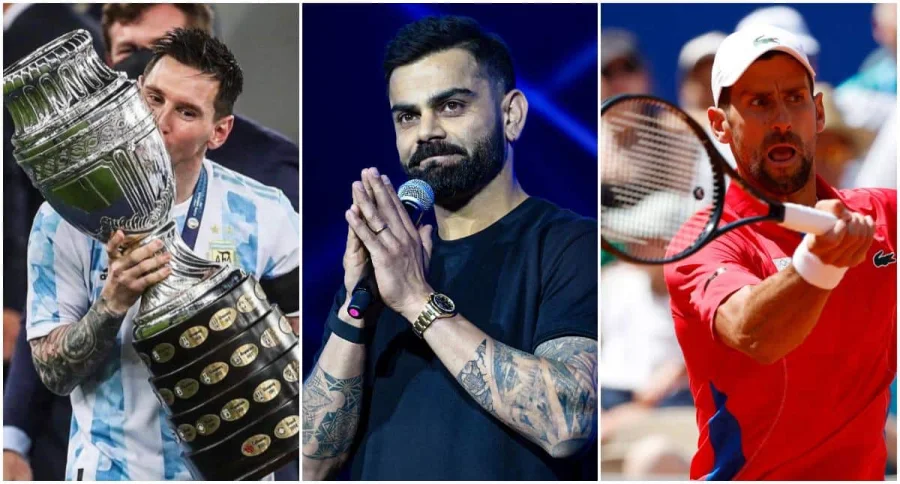
In the traditional narrative of professional sports, late thirties are reserved for farewell tours, sentimental cameos, and quiet retirements. The physical toll of competing at the highest level usually forces the human body to compromise. However, we are currently witnessing a rare, generational anomaly.
A select trio of sporting icons—Lionel Messi, Novak Djokovic, and Virat Kohli—are completely shattering the conventional timeline of athletic decline, proving that age is merely a secondary metric when matched against unmatched genius and discipline.
How Three Icons Are Defying Athletic Decline
Look no further than the football pitch, where Lionel Messi, at 39 years old, remains the undisputed epicenter of the sport. While most players his age have long retired or moved to less competitive leagues, Messi continues to dictate games for Inter Miami and the Argentine national team. His vision, dribbling, and goal-scoring ability show little sign of erosion.
Similarly, Novak Djokovic, at 37, continues to challenge younger rivals in tennis. His Grand Slam record and consistent top ranking defy the physical demands of a sport that typically peaks in the mid-20s. Djokovic's flexibility, endurance, and mental fortitude have become case studies in athletic longevity.
Virat Kohli, at 35, remains a cornerstone of Indian cricket. His fitness standards revolutionized the sport in India, and his batting average in international cricket remains elite. Kohli's ability to adapt his game across formats has kept him relevant even as younger players emerge.
Why This Matters for Fans and Future Athletes
This phenomenon matters because it challenges deeply held beliefs about age and performance. For decades, athletes were expected to decline after 30. Now, Messi, Djokovic, and Kohli are proving that with the right approach, peak performance can extend well into the late 30s.
For young athletes, this offers a new blueprint: longevity is not just about genetics but about discipline, recovery, and mental resilience. For fans, it means more years of watching their heroes compete at the highest level, creating deeper emotional connections and richer sporting narratives.
The Science Behind the Longevity Formula
Rupha Ramani, in a Firstpost analysis, breaks down how these two icons (Messi and Djokovic) have rewritten the rules of longevity. The formula includes meticulous nutrition, advanced recovery techniques, and a psychological approach that prioritizes consistency over flashy peaks.
Messi's longevity is partly attributed to his playing style—less reliant on explosive speed and more on intelligence and positioning. Djokovic's plant-based diet and yoga-inspired flexibility routines have become legendary. Kohli's transformation from a talented youngster to a fitness icon set new standards in Indian cricket.
Human Impact: What This Means for Everyday Sports Fans
For the average fan, seeing Messi, Djokovic, and Kohli continue to excel is emotionally resonant. It offers hope that age need not be a barrier to excellence. It also creates moments of shared joy—watching a Messi free-kick, a Djokovic rally, or a Kohli cover drive—that transcend generations.
Parents and coaches now have real-world examples to show young athletes that dedication to fitness and mental strength can extend careers. The trio's journeys are not just about records but about inspiring millions to rethink their own limits.
What the Athletes and Experts Say
While the provided sources do not include direct quotes from the athletes, Rupha Ramani's analysis highlights that their greatest legacy may still lie ahead. The narrative is not about slowing down but about redefining what is possible.
Experts in sports science point to the trio's ability to adapt their training as they age. They avoid burnout by managing workloads, prioritizing recovery, and maintaining a growth mindset. This approach is increasingly being studied by sports academies worldwide.
Deeper Analysis: Why This Generation Is Different
This era of longevity is not accidental. Advances in sports medicine, nutrition science, and data analytics have allowed athletes to optimize every aspect of their performance. Messi, Djokovic, and Kohli have all embraced these tools, but their success also stems from an obsessive commitment to their craft.
Moreover, the financial incentives of modern sports—lucrative contracts, endorsements, and legacy-building—encourage athletes to extend their careers. The trio are not just playing for money; they are cementing their places in history.
Confirmed Facts vs What Remains Unclear
Confirmed: Messi is 39 and still performing at an elite level. Djokovic is 37 and competing for Grand Slams. Kohli is 35 and a key player for India. Their longevity is widely documented by sports media and analysts.
Unclear: The exact retirement timelines for each athlete remain speculative. Whether their longevity formula can be replicated by others is also uncertain, as genetics and individual discipline play significant roles.
What Sets These Icons Apart: The Longevity Moat
What makes Messi, Djokovic, and Kohli unique is not just their talent but their ability to evolve. Messi transitioned from a winger to a playmaker. Djokovic adapted his game to outlast younger opponents. Kohli refined his technique to handle different bowling attacks.
Their "moat" includes: unparalleled work ethic, access to elite training facilities, mental resilience, and a brand value that keeps them motivated. They have also built teams of experts—nutritionists, physiotherapists, and coaches—who tailor programs to their aging bodies.
Risks and Balanced View
Despite their success, there are risks. Injuries become more frequent with age, and recovery takes longer. Critics argue that their continued dominance may stifle opportunities for younger talent. There is also the risk of tarnishing legacy if performance drops sharply before retirement.
Some analysts caution that their longevity is exceptional and not a template for all athletes. Genetics, sport-specific demands, and personal circumstances vary widely. The trio's success should inspire but not set unrealistic expectations.
Wider Trend: The Age of Athletic Longevity
Messi, Djokovic, and Kohli are part of a broader trend. Athletes like LeBron James (basketball), Tom Brady (American football), and Serena Williams (tennis) have also extended their careers. This shift is driven by better understanding of human physiology and a cultural shift that values longevity over early retirement.
In cricket, Kohli's fitness revolution has inspired a generation of Indian cricketers to prioritize conditioning. In tennis, Djokovic's dominance has pushed younger players to raise their fitness levels. In football, Messi's longevity is a benchmark for attacking players.
Practical Guidance for Athletes and Fans
For aspiring athletes: Focus on sustainable training, prioritize recovery, and invest in mental health. Study how these icons manage their bodies and minds. For fans: Appreciate the current era while it lasts. Watch matches, follow their journeys, and share the stories with younger generations.
For coaches: Incorporate longevity principles into training programs. Teach young athletes that peak performance can extend beyond 30 with the right habits. For sports organizations: Invest in sports science and recovery facilities to support longer careers.
Future Outlook: What Could Happen Next
Messi may continue for another 2-3 years, possibly leading Argentina in the next World Cup. Djokovic could target more Grand Slam records, though younger rivals like Carlos Alcaraz are emerging. Kohli may play for another 3-4 years, with a focus on Test cricket and major ICC tournaments.
All three will eventually retire, but their impact on the concept of athletic longevity will endure. Future athletes will likely benefit from the pathways they have forged.
Our Take
Messi, Djokovic, and Kohli are not just exceptional athletes; they are symbols of human potential. Their careers remind us that age is a number, not a limit. While their longevity is rare, it offers a powerful lesson: discipline, adaptability, and passion can extend the boundaries of what we think is possible.
This story matters because it challenges us to rethink our own assumptions about aging and performance. Whether in sports or life, the trio's example is a testament to the power of relentless pursuit of excellence.
Frequently Asked Questions
How are Messi, Djokovic, and Kohli defying age in sports?
They maintain elite performance through rigorous training, advanced nutrition, recovery techniques, and mental resilience. Their playing styles also adapt to reduce physical strain as they age.
What is the longevity formula used by these athletes?
The formula includes personalized diet plans, recovery protocols like cryotherapy and yoga, workload management, and a growth mindset. They also have expert teams supporting their physical and mental health.
Can other athletes replicate their longevity?
Partially. While the principles of discipline and science can be applied, genetics, sport-specific demands, and individual commitment play major roles. Their success is exceptional but offers a blueprint for extending careers.
When might Messi, Djokovic, and Kohli retire?
Exact timelines are unclear. Messi may play until 2026 World Cup, Djokovic could continue for 2-3 more years, and Kohli might retire in 3-4 years. All depend on form, injuries, and personal decisions.