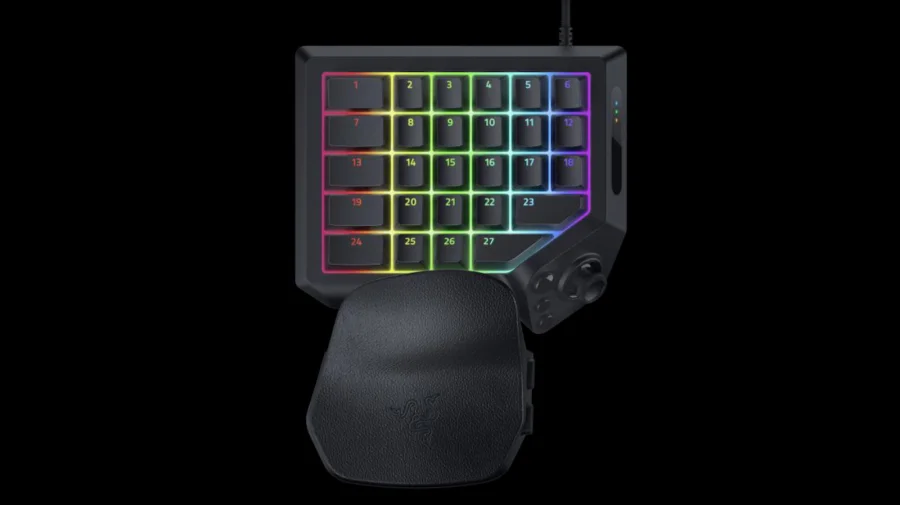
Razer has quietly refreshed the Tartarus Pro, its one-handed gaming keypad, with improved switches. There's no dramatic redesign here, no radical new shape — just a targeted change to the part of the device your fingers actually touch. For a product category that many assumed was fading, that's a more interesting signal than it first appears.
A Small Switch Change, Not a New Device
The refresh centres on the switches inside the Tartarus Pro. Razer's one-handed keypad line has long leaned on analog-style input, where keys can register varying levels of press rather than a simple on-or-off signal. The updated switches are described as improved, suggesting refinements to feel, actuation, or response consistency rather than a change in the underlying concept.
Everything else — the one-hand layout, the thumb cluster, the palm rest — appears to carry over. This is a revision, not a reinvention.
Why a One-Handed Keypad Still Exists in 2025
On paper, the Tartarus Pro looks like a relic. Most PC players use a standard keyboard and mouse, and a dedicated one-hand keypad adds cost and desk space for a narrow set of games.
But that narrow set is loyal. MMO players juggling dozens of abilities, MOBA players mapping skills to a compact grid, and streamers who want macro keys within thumb reach have kept this category alive. For them, the appeal isn't novelty — it's muscle memory built over years.
What "Improved Switches" Actually Means for Players
Switch changes are the least visible and most felt kind of update. A cleaner actuation point, more consistent resistance, or a smoother return can matter more in practice than a new colourway or a redesigned shell.
For analog-capable keypads, the stakes are higher. If the switch can read partial presses accurately, it opens up finer control in games that support it — gradual movement, variable throttle, pressure-sensitive inputs. Any improvement there is a functional upgrade, not a cosmetic one.
Who This Refresh Is Actually For
If you already own a Tartarus Pro and it works, this refresh is unlikely to be an urgent buy. Switch refinements rarely justify a full replacement on their own.
The more relevant audience is newcomers — players who've been curious about one-handed keypads but held off, or those whose existing unit has worn down. For them, a refreshed model with improved switches is a cleaner entry point than buying into an older revision.
Razer's Broader Peripheral Strategy
Razer refreshes products constantly, often without fanfare. Keyboards, mice, and headsets get silent revisions as components improve or supply chains shift. The Tartarus Pro refresh fits that pattern.
What it also shows is that Razer hasn't abandoned the niche. A company doesn't keep updating a product line it plans to kill. The refresh is a quiet vote of confidence in a category that survives on a dedicated, if small, audience.
Confirmed Facts vs What Remains Unclear
Confirmed: Razer has refreshed the Tartarus Pro with improved switches. The product remains a one-handed gaming keypad in the existing line.
Unclear: Exact switch specifications, pricing, availability dates, and regional rollout have not been detailed in the source material. Whether the improvements are mechanical, optical, or firmware-related is also not specified.
Anything beyond this — performance benchmarks, comparisons to the previous version, or claims about specific games — would be speculation at this stage.
Risks and a Balanced View
The obvious risk is that "improved switches" is vague marketing language until independent testing confirms it. Peripheral makers routinely describe revisions in flattering terms, and the gap between a spec sheet and real-world feel can be wide.
There's also the question of value. One-handed keypads are a premium niche product. If the refresh comes with a price bump, the case for buying gets harder to make for casual players who'd be fine with a standard keyboard.
The Wider Pattern: Niche Peripherals Aren't Dead
The gaming peripheral market has consolidated around a few core categories — keyboards, mice, headsets, controllers. Everything else fights for shelf space.
Yet niche products keep getting refreshed. One-handed keypads, flight sticks, racing wheels, stream decks — these survive because they solve specific problems for specific people. The Tartarus Pro refresh is a reminder that "niche" and "obsolete" aren't the same thing.
What Should You Do Now?
If you're in the market for a one-handed keypad, it's worth waiting for hands-on reviews of the refreshed Tartarus Pro before buying. Switch improvements are exactly the kind of change that needs real-world testing to evaluate.
If you already own one and it's working fine, there's no pressing reason to upgrade. If yours is worn or you've been considering the category, the refreshed model is the version to look at — once pricing and availability are clear.
What Happens Next
Expect Razer to publish full specifications and pricing in the coming weeks, followed by retail listings and early reviews. Independent testing will be the real test of whether the switch improvements are meaningful or marginal.
Until then, the refresh is best read as a signal: Razer is still investing in this category, and the Tartarus Pro isn't going anywhere.
Our Take
This is a small story about a small product, and that's precisely why it's worth noting. In a market obsessed with flagship launches and headline-grabbing specs, a quiet switch refresh on a niche keypad tells you something about where Razer sees durable demand.
It won't move markets. It probably won't trend. But for the players who've built their setups around a one-handed keypad, it means the tool they rely on is still being cared for. Sometimes that's enough.
Frequently Asked Questions
What is the Razer Tartarus Pro?
The Razer Tartarus Pro is a one-handed gaming keypad designed for PC players. It replaces the left side of a keyboard with a compact key grid, a thumb cluster, and a palm rest, and uses analog-capable switches for pressure-sensitive input.
What's new in the refreshed Razer Tartarus Pro?
According to the source material, the refresh focuses on improved switches. The overall design and one-handed layout remain the same. Detailed specifications have not been confirmed.
Should I upgrade to the refreshed Tartarus Pro?
If you already own a working Tartarus Pro, an upgrade is unlikely to be necessary based on switch improvements alone. New buyers or those replacing a worn unit should wait for reviews and confirmed pricing before deciding.
Is the one-handed keypad category still relevant?
Yes, for a specific audience. MMO, MOBA, and macro-heavy players continue to value dedicated one-hand control. The category is niche but not obsolete, which is why Razer keeps refreshing the Tartarus Pro.