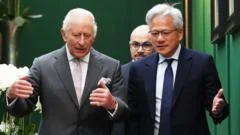
The rapid advancement of artificial intelligence has met a moment of royal scrutiny. King Charles has issued a stark warning regarding the technology, stating that it poses an "existential danger" if it falls into the wrong hands. The intervention came during a high-stakes summit in Ayrshire, where the future of global AI was under discussion.
A Royal Intervention in the AI Debate
The King's comments cut through the usual technical jargon of the tech world. Speaking at the summit, he emphasized that while AI holds immense potential, the risks associated with its misuse are profound. The setting in Ayrshire brought together some of the most powerful players in the industry, including representatives from Nvidia, OpenAI, and Anthropic.
Why the 'Wrong Hands' Narrative Matters
The phrase "wrong hands" shifts the focus from general technological anxiety to specific security threats. It suggests a concern not just about AI becoming sentient, but about malicious actors—whether state or non-state—weaponizing the technology. For the public, this raises questions about data privacy, autonomous weapons, and the integrity of information.
The Ayrshire Summit: A Meeting of Giants
The presence of Nvidia, OpenAI, and Anthropic indicates the gravity of the gathering. These companies represent the cutting edge of AI development. Nvidia provides the hardware backbone, while OpenAI and Anthropic are at the forefront of generative AI models. Their participation alongside the King suggests a push for a unified approach to safety.
Who Is Affected by This Warning?
While the warning comes from a figurehead, the implications ripple down to everyday users. As AI integrates into healthcare, finance, and communication, the "existential danger" is not just a theoretical concept. It affects how safe citizens feel online and how much they trust the digital systems they rely on daily.
Balancing Innovation with Security
The King's warning highlights a delicate balancing act. On one side, there is immense pressure to innovate and maintain economic competitiveness. On the other, there is a growing consensus that without guardrails, the technology could cause irreversible harm. The summit likely touched on these tensions, though specific policy outcomes remain unclear.
Confirmed Facts vs. What Remains Unclear
What is confirmed is that King Charles made these remarks at the Ayrshire summit, and that major AI companies were present. What remains unclear is the specific regulatory framework discussed or whether any binding agreements were reached. The exact nature of the "wrong hands" referenced—whether foreign adversaries or criminal syndicates—was not detailed in the initial reports.
The Wider Trend of AI Anxiety
This warning is part of a broader global trend. From the EU AI Act to US Senate hearings, governments are scrambling to understand and regulate AI. The King's voice adds a moral and historical weight to these discussions, framing AI not just as a business opportunity, but as a test of human stewardship.
Practical Guidance for the Public
For now, readers should remain informed about how AI is used in their daily lives. Be cautious with data sharing and stay updated on local regulations regarding AI. The debate at the summit is a signal that the era of unchecked AI expansion may be facing a new phase of scrutiny.
Future Outlook
It is expected that the pressure on tech giants to self-regulate or comply with stricter laws will only increase. The involvement of the monarchy suggests that AI safety is being elevated to a matter of national and international importance, potentially leading to more summits and collaborative frameworks in the coming months.
Our Take
King Charles's warning serves as a necessary pause button. While the tech industry races forward, the King's intervention reminds us that the "existential" aspect of AI is not just about machines thinking, but about how humans choose to use them. It is a call for responsibility that transcends profit margins.
Frequently Asked Questions
What did King Charles say about AI?
He warned that AI poses an "existential danger" if it falls into the wrong hands.
Where was the AI summit held?
The summit took place in Ayrshire.
Which companies attended the summit?
Participants included major AI firms such as Nvidia, OpenAI, and Anthropic.
What does "existential danger" mean in this context?
It refers to risks that could fundamentally threaten human safety or societal stability if the technology is misused.