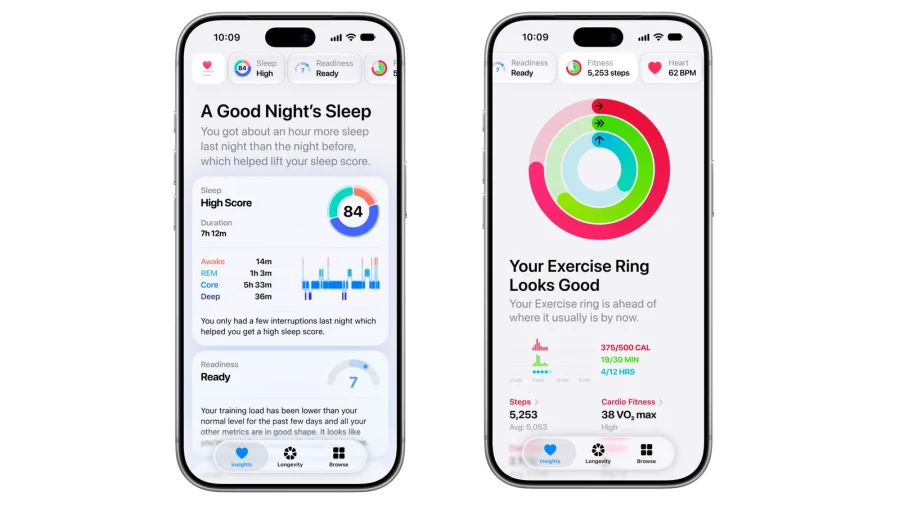
Your phone may soon tell you how old your body actually is — and it won't be a compliment. Apple has pushed a redesigned Health app into the iOS 27.2 developer beta, and the headline addition is a metric called Health Age. It's the clearest signal yet that Apple wants its health software to feel less like a logbook and more like a coach.
What Apple Actually Changed Inside the Health App
The update centres on a rebuilt Health app experience, with Health Age positioned as the flagship feature. Based on the original report, the metric is designed to translate a user's health data into a single, readable number — an estimate of biological age rather than chronological age.
That framing matters. A single score is far easier to act on than a wall of charts, and it's the same psychological hook that has driven engagement on rival platforms.
Why a Single Number Changes How You Use Your Phone
Health data has a motivation problem. Steps, heart rate and sleep graphs are informative, but they rarely make anyone change behaviour on their own.
A Health Age score reframes the same data as a verdict. If the number reads older than your actual age, the app has effectively issued a challenge. That emotional pull is precisely why the feature is likely to drive daily opens — and why it will also invite scrutiny.
How Whoop and Oura Got Here First
Apple is not inventing this category. Whoop and Oura have built their entire brands around translating biometrics into readiness, recovery and biological-age style scores.
Both companies sell hardware subscriptions and position themselves as health platforms rather than gadget makers. Apple, by contrast, already has the device in hundreds of millions of pockets. The competitive question is no longer who can measure — it's who can interpret.
Who Gets to Try It First
For now, the redesigned Health app is confined to the iOS 27.2 developer beta. That means access is limited to developers enrolled in Apple's beta programme, not the general public.
Developer betas are typically used to surface bugs, gather feedback and let app makers adapt before a wider release. Readers on stable iOS versions should not expect the feature to appear immediately.
What Apple Has Said — And What It Hasn't
No detailed public statement from Apple has been confirmed at this stage, and the company has not outlined a full feature list or a public release date.
That silence is normal for beta cycles, but it does mean several important details remain open — including how Health Age is calculated and what data sources feed into it.
Confirmed Facts vs What Remains Unclear
Confirmed: A redesigned Health app is available in the iOS 27.2 developer beta, and Health Age is part of the update.
Unclear: The exact methodology behind Health Age, the full set of redesigned features, regional availability, and the timeline for a public rollout. Any claims beyond this should be treated as speculation until Apple confirms them.
The Real Moat Is the Wrist, Not the Algorithm
Health Age is not technically difficult to build. What is difficult is having the data to make it meaningful.
Apple's advantage is distribution: Apple Watch, iPhone and a decade of HealthKit integrations give it a continuous stream of heart rate, sleep, activity and clinical data. Rivals must convince users to buy dedicated hardware. Apple only needs users to keep the phone they already own.
Where This Could Go Wrong
A biological age score is only as good as the science beneath it, and health metrics carry real consequences. A number that reads alarmingly high could cause anxiety; one that reads reassuringly low could encourage complacency.
Apple will also face questions about accuracy, transparency and whether a consumer score should be presented with clinical framing. These are legitimate concerns, not marketing objections.
The Bigger Shift: From Tracking to Judging
This update fits a broader pattern across the health-tech industry. The era of simply counting steps is fading. Companies are now competing to interpret data and tell users what it means.
That shift raises the stakes. Interpretation creates dependence, and dependence creates responsibility.
What You Should Do Right Now
If you're not a registered developer, there is nothing to install today. Avoid unofficial beta profiles and third-party downloads claiming early access — they carry security risk and offer no guarantee of the real feature set.
If you are on the beta, treat Health Age as an experimental signal, not a medical assessment. It is not a diagnosis and should not replace professional advice.
What Happens Next
Expect the feature set to be refined across beta cycles before any public release. Apple typically stabilises major Health changes alongside a full iOS release, though the company has not confirmed that timeline here.
Watch for two things: how Apple explains the Health Age methodology, and whether the feature expands beyond the developer beta in the coming months.
Our Take
Apple is not winning a features race here — it is winning a habit race. Health Age is a simple idea with an outsized effect: it turns passive data into a personal scorecard.
Whether that's genuinely useful or quietly stressful depends entirely on how honestly Apple explains what the number means. That explanation, not the redesign, is the story to watch.
Frequently Asked Questions
Is the redesigned Apple Health app available to everyone now?
No. It is currently available only in the iOS 27.2 developer beta, which is limited to developers enrolled in Apple's beta programme.
What is Health Age in the Apple Health app?
Health Age is a new metric that estimates a user's biological age based on health data, rather than their actual chronological age. Apple has not yet detailed the exact methodology.
How is this different from Whoop and Oura?
Whoop and Oura offer similar biological-age and readiness-style scores, but they rely on dedicated wearable hardware. Apple's advantage is that its Health app already runs on devices hundreds of millions of people own.
When will the public get the new Health app?
Apple has not confirmed a public release date. The feature is expected to be refined through beta cycles before any wider rollout.