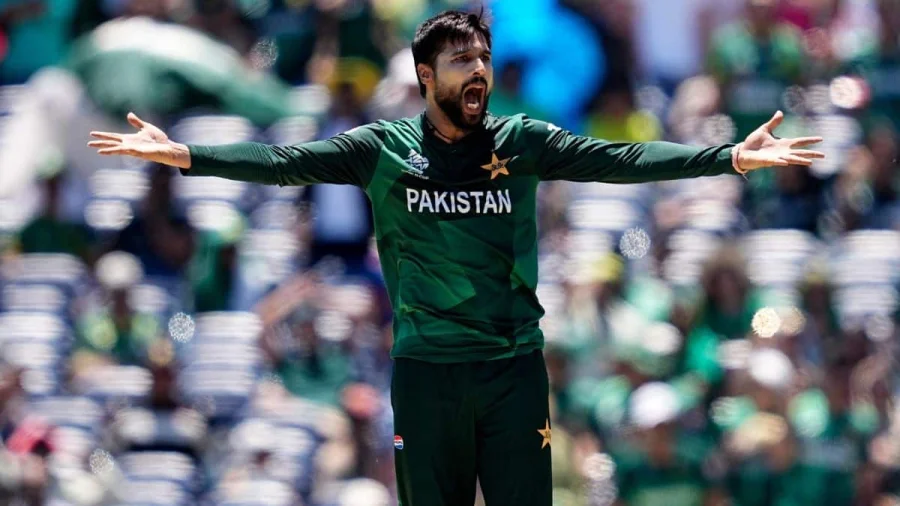
The news lands like a slower ball that suddenly grips the pitch. Mohammad Amir, the left-arm pacer who has spent years as a cornerstone of Pakistan's bowling attack, will walk into PSL 2027 under a different label. Not as a local hero, but as an overseas player. The shift, confirmed by the 34-year-old on Wisden's The Scoop Extended podcast, is more than a bureaucratic detail — it changes the arithmetic of an entire franchise.
Why Amir's Citizenship Status Shakes Up PSL Squad Planning
For Rawalpindi, the franchise that holds Amir's contract, the reclassification is a puzzle with no obvious solution. Every PSL team operates with a strict cap on overseas players. When Amir was a local, he filled a domestic slot. Now, he consumes one of the precious foreign spots — a slot that could have gone to a fresh international signing.
The timing adds another layer of complexity. Multi-year contracts, signed when Amir's status was clear, now sit in a grey zone. The PCB will need to decide whether those contracts remain valid under the new classification or require renegotiation.
The Backstory: From Pakistan Star to British Citizen
Amir's journey to British citizenship did not happen overnight. The pacer has spent significant time in the UK, playing county cricket and building a life beyond the boundary rope. His decision to formalize his status there was personal, but its ripple effects are now professional.
This is not the first time a Pakistan cricketer has navigated dual nationality. However, Amir's case stands out because of his profile — a World Cup winner, a man who returned from a spot-fixing ban to reclaim his place, and now a player whose passport changes the competitive landscape of a major T20 league.
What This Means for Rawalpindi's Balance and Fans
For the franchise, the immediate headache is squad composition. Do they retain Amir as an overseas pick, or release him to free up a slot? For fans, the emotional weight is different. Amir has been a crowd favourite, a bowler who could turn a game with a single spell. Seeing him classified as a foreigner in a league he helped elevate feels jarring.
The practical reality is starker. Overseas players in PSL command higher salaries and stricter availability windows. If Amir's county commitments in England clash with PSL dates, Rawalpindi could lose him for key matches.
PCB's Regulatory Tightrope
The Pakistan Cricket Board now faces a precedent-setting decision. How do you classify a player who is Pakistani by birth, but British by passport? The rules, as they stand, appear binary — local or overseas. Amir's case exposes the gap in that framework.
Officials have not yet commented publicly, but the expectation is that the PCB will issue a clarification before the 2027 draft. The board must balance fairness to the player, the franchise, and the competitive integrity of the league.
Beyond the Passport: What This Reveals About Modern Cricket
Amir's situation is a symptom of a globalized sport. Cricketers now move across leagues, countries, and citizenships with unprecedented fluidity. The old categories — local, overseas, emerging — are struggling to keep pace with reality.
This is not just a Pakistan story. Leagues like the IPL, the Hundred, and the Big Bash have all grappled with similar classification issues. The difference is that PSL's smaller player pool makes every slot more valuable, and every reclassification more disruptive.
Confirmed Facts vs What Remains Unclear
What is confirmed: Amir has British citizenship. He will be classified as an overseas player in PSL 2027. He stated this on a recorded podcast.
What remains unclear: How Rawalpindi plans to use its overseas slots. Whether the PCB will amend its rules. Whether Amir's existing contract will be honoured, renegotiated, or terminated. None of these details have been officially confirmed.
Rawalpindi's Moat: Why Amir Still Matters
Despite the administrative headache, Amir's value to Rawalpindi is not diminished by his passport. He brings experience, wicket-taking ability, and a proven record in pressure situations. His left-arm angle offers variety to any bowling attack.
The franchise's challenge is not whether Amir is good enough — it is whether he is worth an overseas slot in a league where foreign signings often come with bigger names and bigger expectations.
The Risks and the Balanced View
There are legitimate concerns on both sides. Critics of the reclassification argue that Amir's British citizenship is a technicality that should not alter his status in a Pakistan-based league. Supporters of the rule point out that overseas slots exist to bring international talent into the competition, and a British passport holder is, by definition, international.
For Amir, the risk is professional. If Rawalpindi decides his overseas slot is better used elsewhere, he could find himself without a PSL team. For the league, the risk is reputational — a messy contract dispute involving a high-profile player would be unwelcome publicity.
The Wider Pattern: Cricketers and Dual Nationality
Amir is not alone. Several cricketers across the world now hold dual nationality, and leagues are adapting slowly. The trend raises questions about loyalty, eligibility, and the very definition of a "local" player in a global sport.
PSL, still a young league, has a chance to set a clear precedent. How it handles Amir's case will likely shape how it handles similar situations in the future.
What Should Fans and Franchises Watch For
For fans, the key date is the PSL 2027 draft. Watch how Rawalpindi uses its overseas picks. For the franchise, the immediate task is clarity — they need to know Amir's availability and cost before making decisions.
For Amir himself, the coming months are about performance. If he bowls well in domestic and franchise cricket, his passport will matter less than his pace.
Future Outlook: What Happens Next
The most likely scenario is a quiet resolution — the PCB issues a clarification, Rawalpindi adjusts its squad, and Amir plays on as an overseas player. But there is also a chance of friction if contract terms become contentious.
Either way, the debate has already opened a conversation about how modern cricket defines its players. That conversation is unlikely to end with Amir.
Our Take
This story is not really about a passport. It is about the collision between personal choices and professional structures. Amir made a life decision; cricket's rulebook was not ready for it. The PSL now has a chance to show whether it can adapt to the realities of a globalized game — or whether it will cling to categories that no longer fit.
Frequently Asked Questions
Why is Mohammad Amir now considered an overseas player in PSL?
Mohammad Amir has secured British citizenship. Under PSL rules, player classification is based on nationality, so he will no longer qualify as a local player and will be treated as an overseas player from the 2027 season.
How does this affect Mohammad Amir's PSL contract with Rawalpindi?
Amir's existing multi-year contract with Rawalpindi may need to be reviewed. Since overseas players occupy a different quota and salary structure, the franchise and the PCB will need to clarify how the contract applies under his new status.
Can Mohammad Amir still play for Pakistan's national team?
Yes. British citizenship does not automatically end his eligibility for Pakistan. However, his selection would depend on PCB rules and his own availability, which may be affected by county cricket commitments in England.
What happens to Rawalpindi's overseas player slots in PSL 2027?
If Amir is retained as an overseas player, he will use one of Rawalpindi's limited foreign slots. The franchise will need to decide whether to keep him or free up the slot for another international signing.