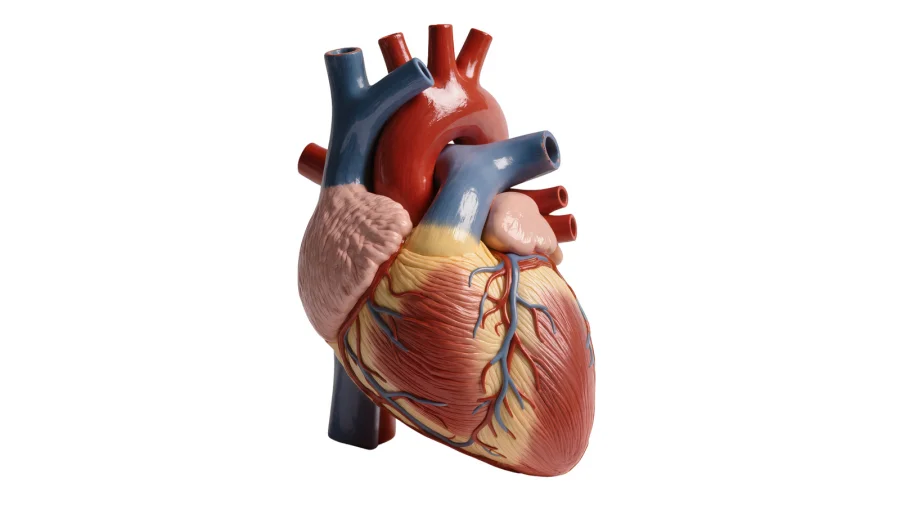
For parents of children born with congenital heart defects, the word "surgery" is rarely a one-time event. It is a cycle — a series of operations, each one buying time until the next. That cycle may now be closer to breaking.
The U.S. Food and Drug Administration has approved a new artificial heart valve designed to grow with a child, a development that could fundamentally change how doctors treat certain congenital heart conditions.
A Valve That Doesn't Wait for a Second Surgery
Traditional artificial heart valves are fixed in size. In children, that means the valve that fits today will be too small in a few years, requiring another open-heart operation to replace it.
The newly approved valve is built to expand as the child grows, potentially eliminating the need for those repeated procedures.
Why This Approval Matters Beyond the Operating Room
Each open-heart surgery carries real risks — infection, bleeding, scarring, and the toll on a small body. For families, it also means weeks of recovery, lost school days, and emotional strain that compounds with every cycle.
Reducing the number of surgeries is not just a clinical win. It is a quality-of-life change for the child and everyone around them.
How Pediatric Heart Care Reached This Point
Congenital heart defects are among the most common birth defects worldwide. For decades, the standard approach has been to implant the largest possible valve and plan for replacement.
Researchers have long pursued a "growing" solution, but engineering a valve that expands safely inside a beating heart has been a persistent challenge. This approval signals that the approach has cleared regulatory review.
The Children Who Stand to Benefit Most
The valve is intended for children with specific congenital heart defects — those whose conditions require valve replacement early in life.
For these patients, the difference between three surgeries and one is not abstract. It is years of childhood spent recovering instead of playing, learning, and growing.
What Regulators and Clinicians Are Signaling
The FDA's approval reflects a judgment that the benefits of a growing valve outweigh the risks for the intended patient group. That decision follows review of clinical data, though full details of the trial results have not been widely detailed in public reporting.
Pediatric cardiologists are expected to evaluate the valve carefully before broad adoption, as they do with any new implant.
What This Means for the Future of Pediatric Devices
This approval is notable not just for what it does, but for what it represents. It opens the door to a category of implants designed to adapt to a patient's growth rather than be replaced.
If the model proves durable over years, it could influence how devices are designed for other pediatric conditions as well.
Confirmed Facts vs What Remains Unclear
Confirmed: The FDA has approved an artificial heart valve that grows with children, intended for certain congenital heart defects.
Unclear: Long-term durability data, the full scope of eligible patients, cost, and how quickly hospitals will adopt the valve. These details are not yet established in available reporting.
Risks and the Balanced View
New implants always carry unknowns. A growing valve must withstand years of movement, pressure, and biological wear. Whether it performs as well in year ten as in year one is a question only time and monitoring will answer.
There is also the practical matter of access — approvals do not guarantee availability, affordability, or insurance coverage.
A Wider Shift in How We Treat Young Hearts
This approval fits into a broader movement in medicine: designing treatments around a patient's life stage rather than forcing the patient to adapt to a fixed device.
Pediatric care has often been an afterthought in device development. This is a rare case where children are the primary focus.
What Parents and Clinicians Should Do Now
Parents of children with congenital heart defects should speak with their pediatric cardiologist about whether this valve is relevant to their child's specific condition.
Clinicians will need to review eligibility criteria and monitor outcomes as the valve enters real-world use.
What Comes Next
The next phase is clinical adoption — how quickly hospitals begin using the valve and what early outcomes show. Long-term follow-up studies will be critical.
If results hold, this could become a new standard for a specific group of young patients.
Our Take
This is not a cure for congenital heart disease. But it is a meaningful step toward reducing the surgical burden on children who have already carried too much of it. The real test will be in the years ahead — in the durability data, the access, and the lives of the children who receive it.
Frequently Asked Questions
What is the newly approved heart valve for children?
It is an artificial heart valve designed to grow as a child grows, reducing the need for repeated replacement surgeries in children with certain congenital heart defects.
Why is this approval significant?
Until now, children with fixed-size artificial valves needed multiple open-heart surgeries as they grew. A growing valve could eliminate several of those procedures.
Who is eligible for this valve?
The valve is intended for children with specific congenital heart defects that require valve replacement. Eligibility should be discussed with a pediatric cardiologist.
Does this mean children will no longer need heart surgery?
No. It may reduce the number of surgeries, but it does not eliminate the need for surgical intervention in these conditions.