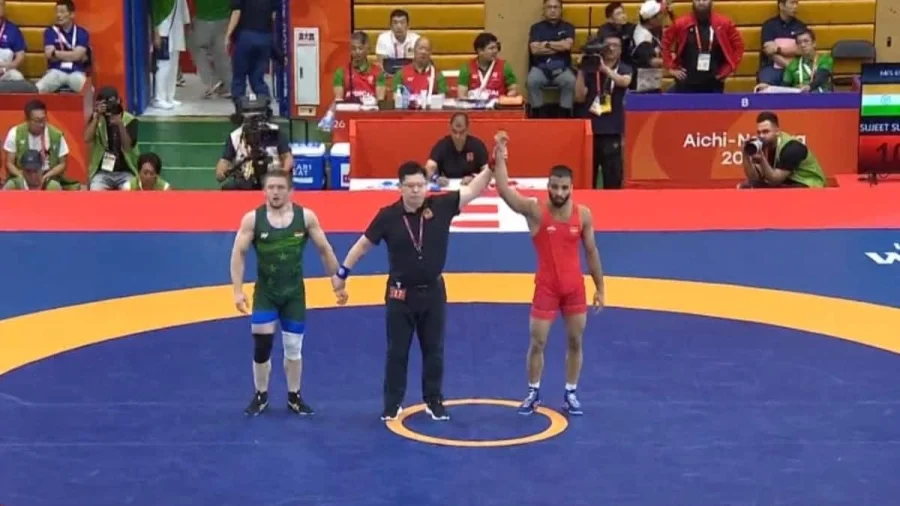
For most of the men's 65kg final, the gold medal looked like it was heading to Tajikistan. With barely 1 minute and 40 seconds left on the clock, Sujeet Kalkal was staring at a 2-9 deficit — the kind of gap that usually ends a bout long before the final whistle. Then everything changed.
By the time the mat cleared, it was the Indian wrestler standing on top of the podium, and Abdulmazhid Kudiev was left processing one of the most painful collapses of the tournament.
How Sujeet Kalkal Turned a 2-9 Deficit Into Gold
Kudiev had controlled the contest for long stretches, building a lead that seemed unassailable. Kalkal, by contrast, had struggled to find openings and was running out of time.
What followed was a late assault that flipped the scoreboard entirely. Kalkal refused to let the bout slip away, and the momentum shifted so sharply that the Tajik wrestler had no answer in the closing seconds.
Why This Win Matters Beyond the Medal
Wrestling golds at the Asian Games carry weight far beyond the podium. They shape selection debates, funding priorities, and the confidence of a generation of Indian grapplers who train with the belief that international medals are within reach.
For Kalkal, this is the kind of result that can define a career — a final that will be replayed, clipped, and remembered long after the Games close.
The Bout That Almost Got Away
For much of the final, the story was Kudiev's dominance. He held a commanding advantage and appeared to be managing the bout comfortably.
Kalkal's comeback did not come from a single moment but from a refusal to concede. Trailing 2-9 with time running out, he needed near-perfect execution — and he found it.
Who This Matters To
For Indian wrestling fans, this is the kind of result that justifies the long hours in akhadas and training centres across Haryana, Delhi, and beyond. For young wrestlers watching at home, it is proof that a bout is never over until the final whistle.
For Kudiev, it is a reminder of how quickly a commanding lead can evaporate at the highest level.
What the Officials and the Mat Said
The result stands as declared by the tournament officials, with Kalkal confirmed as the gold medallist in the men's 65kg category. The scoring sequence of the comeback — the exact moves and points that closed the gap — is expected to be detailed in official bout records.
Reading the Comeback: What Made It Possible
Late comebacks in wrestling rarely happen by accident. They require a wrestler to stay technically disciplined even when the scoreboard is against them, to keep hunting for scoring opportunities, and to force the opponent into defensive errors.
Kalkal's ability to stay in the bout — rather than mentally checking out at 2-9 — is what created the opening for the turnaround.
Confirmed Facts vs What Remains Unclear
Confirmed: Sujeet Kalkal won gold in the men's 65kg wrestling category at the Asian Games, defeating Abdulmazhid Kudiev of Tajikistan. Kalkal was trailing 2-9 with approximately 1 minute 40 seconds remaining before the comeback.
Unclear: The precise sequence of scoring moves in the final minute, the final scoreline, and any post-bout statements from either wrestler have not been detailed in the available material. Any specific claims about individual moves or quotes should be treated as unverified until official records or statements are released.
Risks and the Balanced View
A dramatic comeback can overshadow the fact that Kalkal was, for most of the bout, second-best on the scoreboard. Kudiev's dominance for large stretches is a real part of this story, and it is worth acknowledging rather than glossing over.
One gold does not erase the broader challenges Indian wrestling faces — depth in weight categories, consistency across tournaments, and the transition from age-group success to senior podiums. This win is significant, but it is one data point, not a verdict on the state of the sport.
The Wider Pattern: Indian Wrestling's Big-Match Moments
Indian wrestling has produced a steady stream of international medals over the past two decades, often built on late-round resilience and tactical discipline. Kalkal's comeback fits that pattern — Indian grapplers have repeatedly shown an ability to stay in contests that appear lost.
What makes this one stand out is the margin. Overturning a seven-point deficit in under two minutes is rare at any level, let alone in an Asian Games final.
What Readers and Fans Should Take Away
For fans, the practical takeaway is simple: watch the replay. The final 100 seconds of this bout are the part worth studying, especially for young wrestlers learning how to manage a losing position.
For those tracking Indian wrestling's pipeline, Kalkal's name now belongs on the list of athletes to follow closely in the coming season.
What Could Happen Next
Kalkal's gold will likely bring increased attention to his weight category and to India's wrestling programme at the Games. Official bout records and any post-final statements from the wrestlers or coaching staff are expected to add detail to the story.
Beyond the immediate celebration, the focus will shift to how this result translates into future competitions — and whether it becomes a launchpad or a standalone high point.
Our Take
Comebacks like this are why wrestling remains one of the most watchable sports at the Asian Games. The scoreboard said 2-9. The clock said under two minutes. Kalkal said no.
It is a result that will be remembered less for the final score and more for the refusal to accept it — and that is exactly the kind of moment that makes a gold medal mean something beyond the metal.
Frequently Asked Questions
Who won the Asian Games men's 65kg wrestling gold?
Sujeet Kalkal of India won the gold medal in the men's 65kg wrestling category at the Asian Games, defeating Abdulmazhid Kudiev of Tajikistan.
What was the score when Sujeet Kalkal started his comeback?
Kalkal was trailing 2-9 with approximately 1 minute and 40 seconds remaining in the bout before he launched his late comeback.
Who was Sujeet Kalkal's opponent in the final?
His opponent was Abdulmazhid Kudiev of Tajikistan, who had held a commanding lead for much of the final.
Why is this comeback considered so dramatic?
Overturning a seven-point deficit in under two minutes is rare in wrestling, especially in an Asian Games final. Kalkal's ability to stay in the bout and force a turnaround in the closing stages is what makes the result stand out.