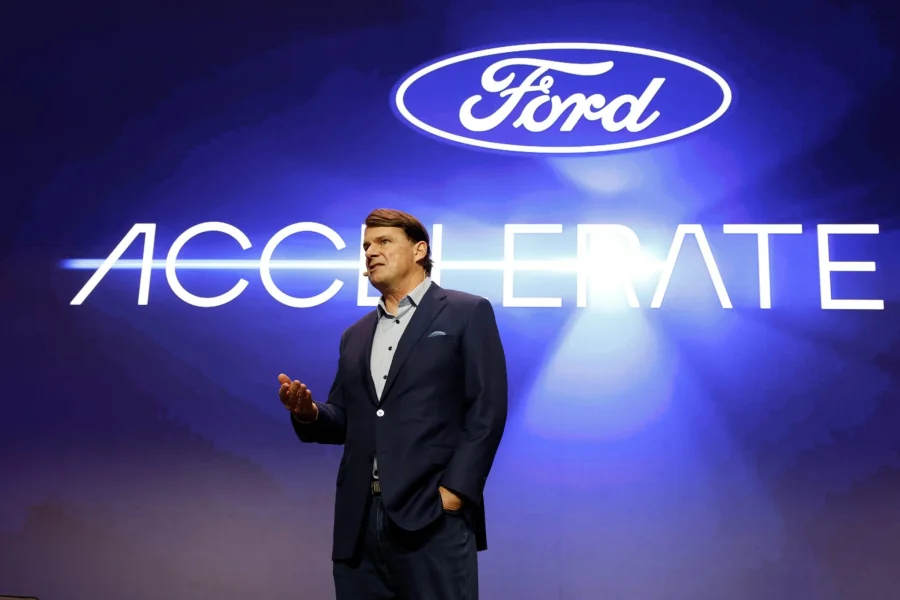
The job title on a factory floor used to tell you almost everything. An engineer designed. A skilled tradesperson built. That separation, according to Ford CEO Jim Farley, no longer holds.
Speaking to Fortune in Detroit this week, Farley said the line between engineers and hourly skilled-trades workers "is completely blurred out" as software, robotics, and machine learning take over more of the assembly line. It is a short sentence with long consequences for anyone who works in — or hopes to work in — manufacturing.
What Farley Actually Said — And Where He Said It
Farley made the remark during a Fortune interview in Detroit, the heart of America's auto industry. He was describing how the modern plant floor operates, not announcing a new Ford program or policy.
The framing matters. This was a CEO describing a reality he believes already exists, not a future he is promising. According to Fortune's CEO Daily newsletter, Farley's point was that the traditional categories companies use to hire, pay, and promote workers are struggling to describe what the work has become.
Why a Blurred Job Line Is a Bigger Deal Than It Sounds
For decades, American manufacturing ran on a clear hierarchy. Engineers held degrees. Skilled tradespeople held apprenticeships. Pay scales, unions, and career ladders were built around that split.
If the work itself no longer respects that boundary, then hiring filters, training programs, and even job classifications start to look outdated. That is the quiet disruption inside Farley's comment — not the technology itself, but what it does to the structures built around it.
How the Factory Floor Changed This Fast
Modern vehicle assembly relies on connected robots, sensor data, and software diagnostics. A worker troubleshooting a robotic arm today may need to read code, interpret machine logs, and understand mechanical tolerances — often in the same shift.
That overlap is what Farley was pointing to. The tools changed first. The job descriptions are catching up.
Who Feels This First
The people most affected are not executives. They are apprentices, technicians, and mid-career workers who trained for one kind of job and now find themselves doing another.
For younger workers entering manufacturing, the message is mixed. More skills mean more value — but also more pressure to keep learning. For companies, it raises an uncomfortable question: if the roles are blurring, why are the pay bands and promotion tracks still separate?
What Ford Has Said — And What It Hasn't
Farley's comment was an observation, not a policy. Ford has not announced a restructuring of job classifications, a new training mandate, or changes to how it hires engineers versus tradespeople.
Fortune also reported that at its inaugural AIQ Summit in New York, a panel of Fortune 500 chief people officers told editor-in-chief Alyson Shontell that AI has effectively killed the traditional org chart. Farley's remark fits that same theme: the structures companies inherited no longer match the work being done.
Confirmed vs. Unclear
Confirmed: Farley made the statement in a Fortune interview in Detroit. The context was AI, robotics, and machine learning on the assembly line.
Unclear: Whether Ford will formally merge job categories, adjust pay structures, or change training requirements. No such announcement has been made. Any claim that Ford is restructuring roles is speculation at this point.
Why Ford's Position Gives the Comment Weight
Ford is one of the largest automakers in the world, with a manufacturing footprint that spans multiple continents. When its CEO describes how factory work is changing, it carries weight beyond one company.
Ford's competitive position depends heavily on its ability to build vehicles efficiently at scale. If the skills required to do that are shifting, the company's workforce strategy has to shift with them — and rivals are watching the same problem.
The Risks in Blurring the Line
There is a real tension here. Blurring roles can create more flexible, more capable workers. It can also create ambiguity around pay, seniority, and union agreements that were negotiated around clear categories.
Skilled trades unions have historically protected defined roles and apprenticeship paths. If those definitions loosen, workers may gain opportunity — or lose the protections that came with clarity. Both outcomes are possible, and neither is guaranteed.
A Pattern Beyond Ford
Farley's comment is not isolated. Across manufacturing, energy, and logistics, employers are describing the same convergence: software skills and hands-on skills increasingly required in the same person.
The org chart, as the Fortune 500 HR leaders suggested at the AIQ Summit, is under similar pressure. Companies are reorganizing around projects and capabilities rather than rigid departments.
What This Means If You Work in Manufacturing
If you are a skilled tradesperson, the practical takeaway is not to abandon your trade — it is to add digital literacy to it. Reading data, understanding automation, and troubleshooting software-driven systems are becoming core, not optional.
If you are an engineering student, the reverse applies. Hands-on understanding of how things are actually built is increasingly valuable. The degree alone is no longer the dividing line.
What to Watch Next
Watch for whether Ford or its competitors adjust job postings, apprenticeship curricula, or pay structures in response to this reality. Those concrete moves — not the quote itself — will show whether the blurred line becomes official policy.
Also worth watching: how unions respond if companies try to redefine roles that were negotiated over decades.
Our Take
Farley's comment is easy to read as a tech-forward soundbite. It is more useful read as a warning about institutional lag. The work changed. The job titles, pay bands, and training pipelines mostly have not.
That gap is where the real story sits — not in the robots, but in whether companies and workers can adapt the structures around them fast enough to matter.
Frequently Asked Questions
What did Ford CEO Jim Farley say about engineers and skilled trades?
Farley said the line between engineers and hourly skilled-trades workers is "completely blurred out" as software, robotics, and machine learning reshape the assembly line. He made the comment in a Fortune interview in Detroit.
Did Ford announce any changes to jobs or training?
No. Farley's remark was an observation about how factory work has changed, not a formal announcement of restructuring, new training programs, or changes to job classifications.
Why does this matter for manufacturing workers?
Because hiring, pay, and promotion systems are still built around a clear engineer-versus-tradesperson split. If the actual work no longer fits that split, workers and companies both face pressure to adapt.
Is this trend limited to Ford?
No. The convergence of software and hands-on skills is being reported across manufacturing, logistics, and energy. Ford's CEO is describing a broader shift, not a company-specific one.
[NEWS_SCHEMA] {"@context":"https://schema.org","@type":"NewsArticle","headline":"Ford CEO Jim Farley Says AI Has Erased the Line Between Engineers and Factory Workers","description":"Ford CEO Jim Farley says the divide between engineers and skilled tradespeople is 'completely blurred out' as AI and robotics reshape factory work.","image":"","datePublished":"","dateModified":"","author":{"@type":"Person","name":"","url":"","sameAs":[]},"publisher":{"@type":"Organization","name":"","logo":{"@type":"ImageObject","url":""}},"mainEntityOfPage":{"@type":"WebPage","@id":""},"articleSection":"Business","keywords":"Ford CEO Jim Farley skilled trades, Ford AI manufacturing, skilled trades AI, Jim Farley Detroit, future of factory jobs"} [SOURCES] Fortune — CEO Daily newsletter and AIQ Summit coverage — Fortune