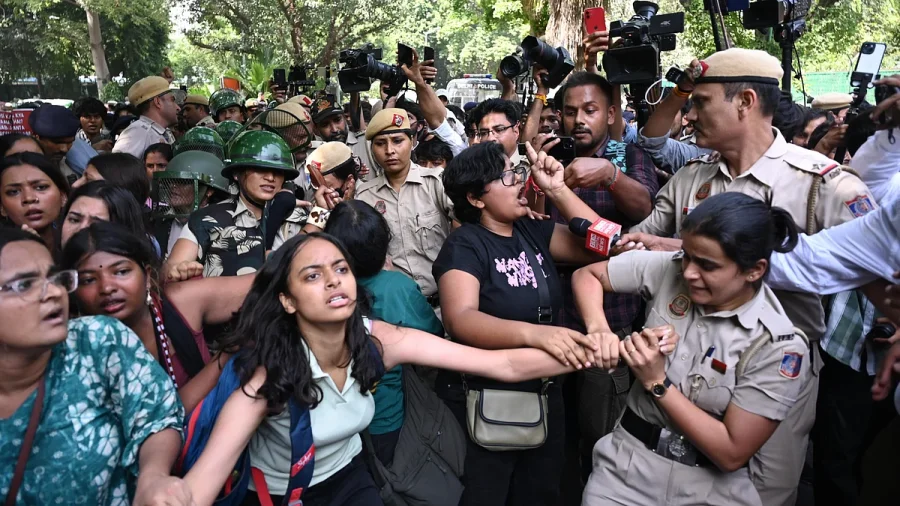
The streets around Jantar Mantar fell silent by Friday evening — not because the protests had ended, but because over 700 people had been taken away in police buses. Among those detained were Aam Aadmi Party leaders, student activists, and members of youth organisations who had gathered to demand the resignation of Chief Election Commissioner Gyanesh Kumar.
What began as a planned demonstration against alleged irregularities in the Special Intensive Revision (SIR) of electoral rolls turned into one of the largest single-day detentions in the capital in recent memory. The question now: why did a protest about voter lists escalate so quickly — and what does it signal about the trust deficit between the Opposition and the Election Commission?
The SIR Exercise at the Centre of the Storm
The Special Intensive Revision is a process where the Election Commission verifies and updates electoral rolls, removing names that appear ineligible or duplicated. The Opposition alleges that the exercise has led to mass deletions of genuine voters, disproportionately affecting certain communities and regions.
The Election Commission has consistently rejected these claims, stating that the SIR follows established legal procedures and that every deletion is backed by verification. According to the Commission, the process is designed to strengthen electoral integrity, not suppress voters.
Why This Protest Matters Beyond Delhi
Delhi's streets may have been cleared, but the political message was aimed far beyond the capital. The detention of AAP leaders and student activists has reignited a national debate about the independence of the Election Commission and the fairness of electoral processes ahead of upcoming state and general elections.
For millions of voters, the SIR is not an abstract administrative exercise — it determines whether their name appears on the voter list on polling day. If even a fraction of the allegations are true, the consequences could affect the fundamental right to vote.
How the Day Unfolded
Police had denied permission for the protest in advance, citing law and order concerns. Despite this, protesters began gathering near Jantar Mantar from Friday morning. As numbers swelled, authorities imposed Section 144 restrictions in the area and began detaining participants.
Several metro stations in central Delhi were temporarily closed, and internet services in certain pockets were suspended — a move that officials described as a precautionary measure. By evening, police confirmed that over 700 people had been detained, with many later released.
Who Was Detained — and Why It Matters
The list of detainees included not just political workers but also first-time student protesters. For many young Indians, this was their first direct confrontation with state machinery over an electoral issue.
Student organisations have argued that the SIR disproportionately targets young and first-time voters, whose names are often flagged for verification due to incomplete documentation. The Election Commission has denied any targeting, stating that the process is uniform across all demographics.
The Election Commission's Stand
The Election Commission has maintained that the SIR is a routine exercise mandated by law and that all deletions follow due process, including multiple opportunities for affected voters to present their case. Officials have described the allegations as politically motivated.
However, the Commission has not yet issued a detailed public response to Friday's detentions or the specific claims raised by the protesters. Opposition parties say they will continue to press for accountability until the Commission addresses their concerns directly.
What We Know — and What Remains Unclear
Confirmed: Over 700 people were detained. Police denied permission for the protest. Metro and internet restrictions were imposed. The Election Commission rejects allegations of irregularities.
Unclear: The exact number of voter deletions under SIR. Whether any detained protesters will face formal charges. Whether the Commission will initiate a review of the SIR process. The long-term political fallout of Friday's events.
The Trust Deficit Between Opposition and Poll Body
This is not the first time the Election Commission has faced accusations of bias. Over the past decade, Opposition parties have repeatedly questioned the Commission's neutrality — from EVM tampering claims to the handling of electoral roll revisions.
Each controversy has widened the trust deficit. Friday's detentions add another layer: the perception that peaceful protest against the poll body is being met with force rather than dialogue.
Risks and the Road Ahead
The immediate risk is escalation. If Opposition parties and student groups continue to protest and are met with detentions, the cycle could intensify — potentially drawing in larger crowds and more aggressive police responses.
There is also a legal dimension. Detentions without formal charges could invite judicial scrutiny, and civil liberties organisations may challenge the restrictions in court. The government, meanwhile, is likely to argue that maintaining public order is its primary responsibility.
What This Means for Voters
For the average voter, the SIR process is deeply personal. If your name is deleted from the electoral roll, you cannot vote — and restoring it can be a lengthy, bureaucratic process.
Protesters argue that the burden of proof should not fall on the voter. The Election Commission insists that its process is fair. Until both sides agree on a transparent verification mechanism, the controversy is unlikely to fade.
What Happens Next
Opposition parties have indicated they will continue their agitation. Student groups are planning further demonstrations. The Election Commission may issue a detailed clarification in the coming days.
Legal challenges are also possible. If the detentions lead to formal FIRs, the matter could move to court — where the debate over SIR's fairness and the right to protest will be tested against constitutional principles.
Our Take
Friday's detentions are a symptom of a deeper problem: the absence of a credible, transparent dialogue between the Election Commission and those who question its processes. Detaining protesters may restore order temporarily, but it does not resolve the underlying distrust.
For Indian democracy, the real test is not how many people were detained — it is whether the electoral roll revision process can be made transparent enough that no genuine voter is disenfranchised. Until that happens, protests like Friday's will keep returning.
Frequently Asked Questions
Why were over 700 protesters detained in Delhi?
They were detained during a demonstration demanding the resignation of Chief Election Commissioner Gyanesh Kumar over alleged irregularities in the SIR of electoral rolls. Police had denied permission for the protest.
What is the SIR exercise?
The Special Intensive Revision is a process by which the Election Commission verifies and updates electoral rolls, removing names deemed ineligible or duplicated. The Opposition alleges it leads to mass deletions of genuine voters.
What does the Election Commission say about the allegations?
The Commission rejects all allegations of wrongdoing, stating that the SIR follows legal procedures and that every deletion is backed by verification.
Will the detained protesters face charges?
It is not yet clear whether formal charges will be filed. Many detainees were released later in the day. Legal experts say the situation could invite judicial scrutiny if detentions were made without due process.