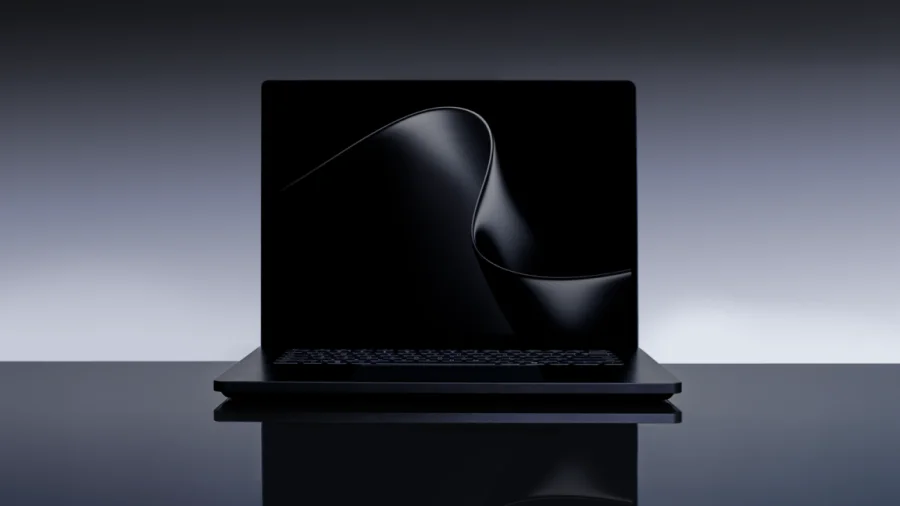
Microsoft just made its most direct bet yet that the future of personal computing runs on local AI, not the cloud. At its first live event in two years, the company unveiled the Surface Laptop Ultra and a set of Windows 11 changes designed to push AI processing directly onto the device in your hands.
The headline moment was the Surface Laptop Ultra, the first Microsoft device to use Nvidia's new RTX Spark SoC. It starts at $2,599, ships October 16, and is available for pre-order now. But the bigger story may be what Microsoft is signaling about where Windows is headed.
Surface Laptop Ultra: What Microsoft Actually Announced
The Surface Laptop Ultra was originally teased in May 2026, but this event filled in the details. The device will ship in multiple configurations, pairing either a 5120-core or 6144-core Blackwell GPU with up to 128GB of LPDDR5x unified memory.
That memory ceiling matters. Unified memory lets the GPU and CPU share the same pool, which is exactly what local AI workloads need to run large models without constantly offloading to the cloud. For developers building or testing AI applications, that changes what a laptop can realistically do.
Why Local AI on a Laptop Is a Bigger Deal Than It Sounds
Most AI features people use today run on remote servers. Your prompt travels to a data center, gets processed, and comes back. That model works, but it comes with latency, ongoing costs, and privacy questions.
Microsoft's pitch here is different. By putting serious GPU and memory capacity into a laptop, the company is arguing that AI agents, coding assistants, and creative tools can run locally. For developers, that means faster iteration and fewer API bills. For home enthusiasts, it means AI features that work even without a strong internet connection.
Windows 11 Changes and the Agentic Workflow Vision
Alongside the hardware, Microsoft outlined a host of changes coming to Windows 11. The company framed these updates around "agentic workflows" — software that doesn't just respond to commands but takes initiative on multi-step tasks.
Microsoft did not detail every feature at the event, but the direction is clear: Windows is being repositioned as a platform where AI agents handle background work, from organizing files to managing development environments. The company said these changes are aimed at both the developer community and home enthusiasts.
Who This Is Actually For
At $2,599, the Surface Laptop Ultra is not a mass-market device. Microsoft was explicit that the Ultra is focused on the developer crowd, with home enthusiasts as a secondary audience.
That pricing puts it in direct competition with high-end workstations and premium MacBook Pro configurations. The question is whether developers see enough value in local AI processing to justify the cost, especially when cloud AI tools remain cheap and accessible.
What Microsoft Has Confirmed vs. What Remains Unclear
Confirmed: The Surface Laptop Ultra exists, uses Nvidia's RTX Spark SoC, starts at $2,599, offers 5120-core or 6144-core Blackwell GPU options, supports up to 128GB of LPDDR5x unified memory, ships October 16, and is available for pre-order now.
Confirmed: Microsoft is bringing changes to Windows 11 focused on local AI and agentic workflows, aimed at developers and home users.
Unclear: The full list of Windows 11 features, exact performance benchmarks for the RTX Spark SoC, battery life figures, and how third-party developers will integrate with the new agentic workflow system. Microsoft has not yet shared these details.
Microsoft's Moat: Why the Company Matters Here
Microsoft's advantage isn't just hardware. It's the combination of Windows, Azure, GitHub, and Office — an ecosystem where AI features can be deployed to hundreds of millions of users at once.
Nvidia's RTX Spark SoC gives Microsoft a hardware story, but the real lock-in is software. If Windows 11's agentic workflows become the default way developers build and test AI applications, Microsoft controls the platform layer. That's a stronger position than selling laptops alone.
Risks and the Balanced View
There are real questions here. Local AI hardware is expensive, and the $2,599 starting price limits the addressable market. Developers may prefer cloud-based tools that scale elastically and don't require upfront capital.
There's also the risk that "agentic workflows" remain more marketing than substance. Microsoft has promised AI-driven Windows features before, and adoption has been uneven. The company will need to show concrete developer tools, not just vision statements.
Finally, Nvidia's RTX Spark SoC is new. Its real-world performance, thermal behavior, and software maturity are unproven at scale.
The Wider Trend: AI Is Moving to the Edge
Microsoft's event fits a broader shift across the tech industry. Apple, Qualcomm, AMD, and Intel are all pushing AI processing onto devices rather than relying solely on cloud data centers.
The reasoning is consistent: lower latency, better privacy, reduced bandwidth costs, and offline capability. Microsoft's Surface Laptop Ultra is the company's most aggressive move in that direction so far, and it signals that the PC is being rethought as an AI-native device rather than a traditional computer with AI features bolted on.
What Developers and Buyers Should Do Now
If you're a developer considering the Surface Laptop Ultra, the pre-order window is open, but shipping starts October 16. It may be worth waiting for independent benchmarks before committing $2,599 or more.
For Windows users more broadly, the upcoming Windows 11 changes matter regardless of hardware. Keep an eye on Microsoft's developer documentation for details on how agentic workflows will be exposed to third-party apps.
Future Outlook
Microsoft is expected to share more Windows 11 AI feature details and developer tooling as the October 16 launch approaches. The company's success will depend less on the Surface Laptop Ultra's specs and more on whether developers actually build for the local AI and agentic workflow model Microsoft is promoting.
If they do, this event could mark the moment Windows started transitioning from an operating system to an AI platform. If they don't, the Surface Laptop Ultra may remain a niche device for enthusiasts willing to pay a premium for early access to local AI.
Our Take
Microsoft's event was less about a single laptop and more about a strategic pivot. The company is betting that AI processing will move from the cloud to the device, and it's using the Surface Laptop Ultra as proof of concept. The hardware is impressive on paper, but the real test is whether Windows 11's agentic workflows deliver enough value to justify the cost — for developers and for everyone else.
Frequently Asked Questions
What is the Microsoft Surface Laptop Ultra?
The Surface Laptop Ultra is Microsoft's new premium laptop, the first to use Nvidia's RTX Spark SoC. It starts at $2,599, offers up to 128GB of LPDDR5x unified memory, and ships on October 16.
What is Nvidia RTX Spark SoC?
RTX Spark is Nvidia's new system-on-a-chip designed for local AI processing. It combines a Blackwell GPU with unified memory, allowing AI models to run directly on a laptop instead of in the cloud.
What Windows 11 changes did Microsoft announce?
Microsoft outlined changes focused on local AI and agentic workflows — software that can handle multi-step tasks autonomously. Full feature details have not yet been released.
Is the Surface Laptop Ultra worth buying?
That depends on your needs. It's aimed at developers who want local AI processing. At $2,599, it's a significant investment, and independent benchmarks aren't available yet. Waiting for reviews before pre-ordering may be wise.