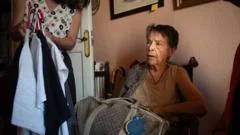
She was 87 years old, and she had lived in that apartment for more than 70 years. When Maricarmen Abascal was carried out on a stretcher in September, cameras captured the moment — and Spain could not look away. Now, her union says, she is gone.
The death of the Barcelona pensioner, whose forced eviction became the face of a national housing crisis, was confirmed by her union. It closes one chapter of a story that had already become a symbol — and opens another that Spain's government may find harder to contain.
A Stretcher, a Doorway, and a Country That Stopped Scrolling
In September, Abascal was removed from the home she had occupied for over seven decades. The image of an elderly woman being taken out on a stretcher, rather than walking out on her own terms, spread rapidly across Spanish media and social platforms.
Within days, the eviction had moved from a local Barcelona dispute to a national flashpoint. Protests followed in multiple cities, with demonstrators framing her case not as an isolated tragedy but as evidence of a deeper failure.
Why One Eviction Became Spain's Housing Argument
Spain has spent years grappling with rising rents, limited social housing, and a rental market that has increasingly squeezed older tenants on fixed pensions. Abascal's case distilled that pressure into a single, unignorable image.
For many Spaniards, she was not an exception. She was a warning — of what happens when long-term tenants, particularly the elderly, can no longer afford to stay in the neighbourhoods they helped build.
How the Story Unfolded
Abascal had lived in the same apartment for more than 70 years, according to the accounts that circulated after her eviction. In September, she was forcibly removed, an event that drew immediate public attention and political reaction.
Her union became one of the most visible voices in the aftermath, and it is the same union that has now confirmed her death. Details surrounding the timing and circumstances of her passing have not been independently verified beyond that statement.
The People Behind the Headlines
Behind the protest slogans was an 87-year-old woman who had spent most of her life in one home. Her case resonated most strongly with Spain's elderly renters, tenants' rights groups, and families watching their own housing costs climb.
For them, the question was never only about Abascal. It was about whether the system protects anyone at the end of their life — or whether it simply moves them along.
What the Union Has Said — and What Remains Unconfirmed
The union's confirmation of her death is the central verified development. Beyond that, official statements from Spanish authorities, the property owner, or municipal officials were not available in the source material reviewed.
Readers should treat unverified claims circulating on social media about the cause or exact date of her death with caution until confirmed by official or family sources.
Confirmed Facts vs What Remains Unclear
Confirmed: Abascal was 87. She had lived in the same apartment for more than 70 years. She was forcibly evicted on a stretcher in September. Her eviction sparked nationwide protests. Her union has confirmed her death.
Unclear: The exact date and cause of her death. Whether any legal proceedings related to the eviction were ongoing. Whether authorities have issued a formal response. Any statements from the property owner.
Risks and the Balanced View
Eviction cases in Spain involve competing legal claims — property rights, rental contracts, and tenant protections — and not every eviction is unlawful. Courts often act on contractual and ownership disputes that predate public attention.
At the same time, critics argue that the system offers insufficient protection for elderly and vulnerable tenants, and that cases like Abascal's expose gaps that legislation has been slow to close. Both positions will shape how her death is received politically.
A Pattern Spain Cannot Ignore
Abascal's case is not the first eviction to draw national attention in Spain, but it is among the most visible in recent memory. It arrives amid a broader European conversation about housing affordability, rent regulation, and the treatment of ageing tenants.
Whether her death becomes a catalyst for policy change or fades into a symbol without legislation will depend largely on how Spain's political class responds in the coming weeks.
What This Means for Renters and Families Right Now
For tenants in similar situations, the practical takeaways remain unchanged: know your rental contract terms, seek legal aid early, and contact tenant unions or municipal housing services before an eviction reaches the courts.
For families with elderly relatives in long-term rentals, documenting tenancy history and seeking advice proactively can make a material difference in how a dispute unfolds.
What Could Happen Next
Her death is likely to reignite protests and renew calls for stronger eviction protections. Political parties across Spain's spectrum may face pressure to clarify their positions on housing and tenant rights.
Any formal government response, investigation, or legislative proposal would be a significant next step — but none has been confirmed at the time of writing.
Our Take
Maricarmen Abascal's story mattered because it was ordinary in the worst way: an elderly woman, a long-held home, and a system that moved faster than the protections around her. Her death does not resolve the questions her eviction raised. It sharpens them. Spain now has to decide whether she becomes a footnote — or a turning point.
Frequently Asked Questions
Who was Maricarmen Abascal?
Maricarmen Abascal was an 87-year-old Spanish pensioner who had lived in the same Barcelona apartment for more than 70 years. She was forcibly evicted on a stretcher in September, an event that sparked protests across Spain.
How did Maricarmen Abascal die?
The cause and exact date of her death have not been confirmed in the source material. Her union has confirmed that she has died. Readers should rely on official or family statements for further details.
Why did her eviction cause nationwide protests in Spain?
Her eviction became a symbol of Spain's wider housing crisis — rising rents, limited social housing, and weak protections for elderly tenants. The image of an 87-year-old being carried out of her long-term home triggered public anger and demonstrations in multiple cities.
What happens next in the Maricarmen Abascal case?
Her death is expected to intensify pressure on Spanish authorities over eviction protections for elderly and vulnerable tenants. Any formal government response or legislative action has not been confirmed.