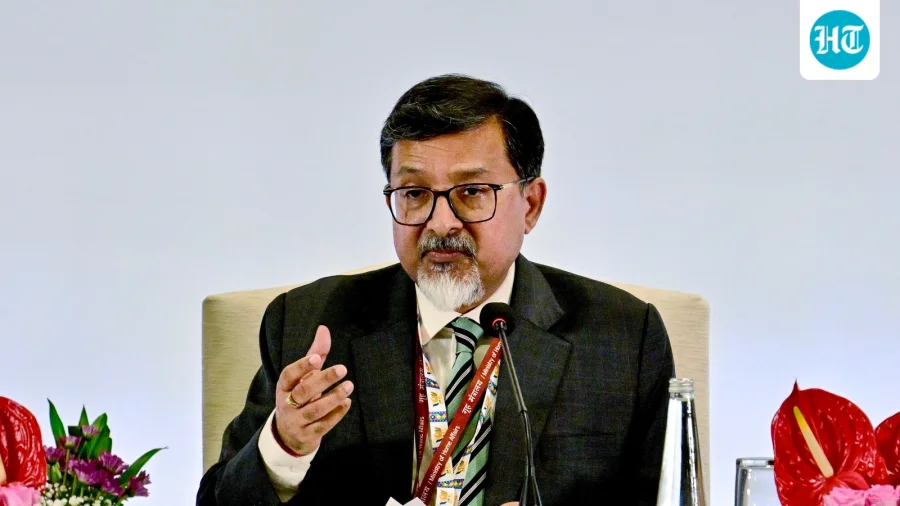
India has quietly moved to reset one of its most closely watched diplomatic posts. Senior diplomat Sudhakar Dalela, currently serving as India's BRICS Sherpa, has been proposed as the country's next ambassador to Nepal — a role that carries weight far beyond its ceremonial title.
The proposal follows the retirement of Naveen Srivastava, who has served as India's envoy in Kathmandu. For a relationship defined by open borders, shared rivers, and overlapping cultures, the choice of who sits in that chair matters more than most ambassadorial postings.
A Diplomatic Posting That Sits at the Heart of India's Neighbourhood Policy
Nepal is not just another neighbour. It shares an open border with five Indian states, hosts a large Gorkha population with deep Indian military links, and depends on India for fuel, transit, and a significant share of its trade.
At the same time, Kathmandu has grown more assertive in balancing India against China — a shift that has made the Indian ambassador's role as much about listening as about negotiating.
Why This Appointment Matters Beyond Kathmandu
For ordinary Indians and Nepalis, the ambassador's work shows up in ways that rarely make headlines: the movement of goods across the border, the treatment of pilgrims travelling to Pashupatinath or Kailash Mansarovar, and the handling of disputes over territory and water.
A misstep in Kathmandu can quickly become a domestic political issue in both countries. That is why New Delhi tends to send senior, tested diplomats to this post rather than junior ones.
Who Is Sudhakar Dalela?
Dalela is a career Indian Foreign Service officer whose current assignment as BRICS Sherpa places him at the centre of India's multilateral economic diplomacy. The Sherpa role involves coordinating India's agenda across Brazil, Russia, China, and South Africa — a position that demands both negotiation skill and an understanding of how large powers compete.
That background is significant. Nepal sits at the intersection of India-China competition, and an envoy who understands both bilateral and multilateral dynamics is seen as an asset in that environment.
The Vacancy Left by Naveen Srivastava's Retirement
Srivastava's tenure ended with his retirement, leaving a natural opening at the Indian Embassy in Kathmandu. Diplomatic postings of this kind are typically filled through a process that involves the Ministry of External Affairs, the Prime Minister's Office, and finally the host government's consent.
India has not publicly detailed the timing of the transition, and Nepal has not issued any formal statement on the proposed name.
What Has Been Confirmed — and What Has Not
Confirmed: India has proposed Sudhakar Dalela as its next ambassador to Nepal. Dalela currently serves as India's BRICS Sherpa. Naveen Srivastava has retired from the post.
Not confirmed: The exact date of Dalela's appointment, whether Nepal has formally granted agrément, and any official statement from either government. Until Nepal's consent is formally conveyed, the appointment remains a proposal, not a fait accompli.
Why India-Nepal Ties Remain Structurally Sensitive
The relationship has seen cycles of warmth and friction. The 2015 border blockade, disputes over the Kalapani and Lipulekh areas, and periodic tensions over the 1950 Treaty of Peace and Friendship have all tested trust.
More recently, both sides have worked to rebuild confidence through infrastructure projects, power trade agreements, and people-to-people exchanges. The incoming ambassador inherits both the progress and the unresolved questions.
Risks and the Balanced View
Not everyone reads senior appointments as purely positive. Critics argue that India's Nepal policy has at times been reactive rather than strategic, and that ambassadorial changes alone cannot fix structural issues like trade imbalances or border disputes.
There is also the question of continuity. A new envoy must rebuild relationships with Nepal's political leadership, which has shifted significantly in recent years. Experience in multilateral settings does not automatically translate into success in a bilateral posting with deep cultural and historical layers.
A Wider Pattern in India's Diplomatic Appointments
India has increasingly placed senior and multilateral-experienced diplomats in key neighbourhood posts. The logic is straightforward: as China expands its footprint across South Asia, New Delhi wants envoys who can handle both day-to-day diplomacy and strategic competition.
Dalela's proposed posting fits that pattern — a signal that India views Nepal through a strategic, not merely administrative, lens.
What This Means for Readers and Stakeholders
For Indian businesses trading with Nepal, the ambassador's office is often the first point of contact for resolving customs, transit, and regulatory issues. For Nepali students, patients, and workers who travel to India, the embassy's consular services matter directly.
For observers of South Asian geopolitics, the appointment is a small but telling indicator of how seriously New Delhi is treating its northern neighbour at a time of regional flux.
What Happens Next
The immediate next step is Nepal's formal response to India's proposal. If agrément is granted, Dalela would be expected to assume charge in Kathmandu, though no timeline has been officially confirmed.
Until then, the story remains one of diplomatic process — important, but not yet concluded.
Our Take
Ambassadorial appointments rarely make headlines, but they quietly shape how millions of people experience a border. India's choice of a BRICS Sherpa for Kathmandu suggests New Delhi is not treating Nepal as a routine posting.
Whether that translates into tangible progress on trade, water, and border questions will depend less on the diplomat's résumé and more on the political will on both sides. The appointment is a beginning, not an answer.
Frequently Asked Questions
Who is Sudhakar Dalela?
Sudhakar Dalela is a senior Indian diplomat currently serving as India's BRICS Sherpa. He has been proposed as India's next ambassador to Nepal.
Why is India appointing a new ambassador to Nepal?
The previous ambassador, Naveen Srivastava, has retired, creating a vacancy at the Indian Embassy in Kathmandu. India has proposed Dalela to fill the post.
Has the appointment been confirmed?
Not yet. The proposal requires Nepal's formal agrément before it becomes official. No timeline has been publicly confirmed by either government.
Why does the Indian ambassador to Nepal matter so much?
India and Nepal share an open border, deep cultural ties, and significant trade and water dependencies. The ambassador manages a relationship where small issues can quickly become politically sensitive in both countries.
What is a BRICS Sherpa?
A Sherpa is a senior official who prepares and negotiates the agenda for a country's leader at multilateral summits. India's BRICS Sherpa coordinates its position across Brazil, Russia, China, and South Africa.