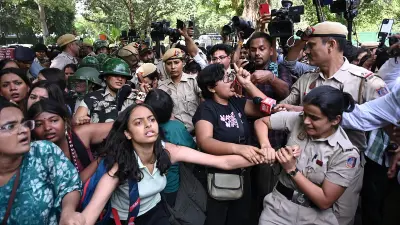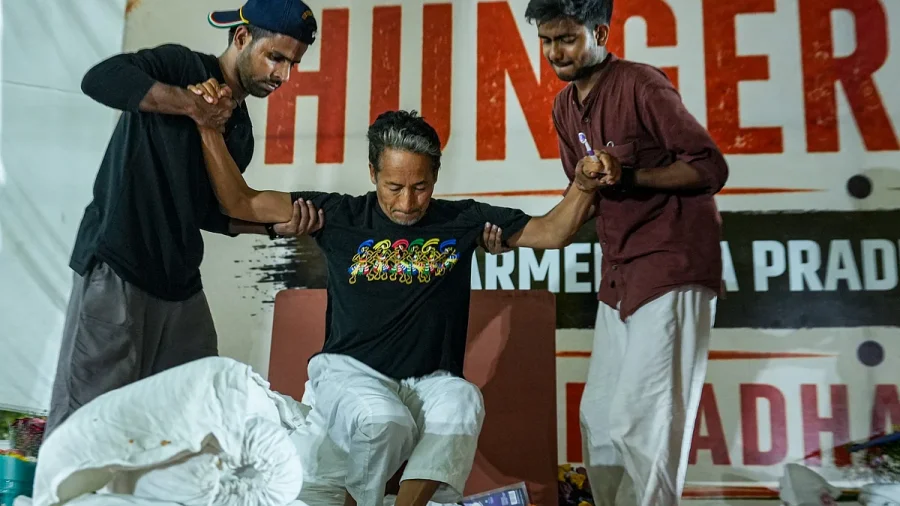
The controversy over alleged irregularities in the NEET examination has crossed borders, with solidarity protests for activist Sonam Wangchuk erupting in major global cities. From New York to London, demonstrators are amplifying his demand for accountability, turning a domestic exam row into an international flashpoint.
Solidarity across the Atlantic: New York and San Jose lead the charge
Members of the US-based advocacy group Hindus for Human Rights gathered at Mahatma Gandhi’s statue in New York City’s Union Square on Monday evening. Similar protests were held in San Jose, California. Placards read messages of support for Wangchuk, who has been on a prolonged hunger strike, and called for transparency in the handling of the NEET controversy.
Why the NEET row is drawing global attention
The NEET exam, India’s premier medical entrance test, has been mired in allegations of paper leaks and administrative lapses. For students and parents, the stakes are life-changing. Wangchuk’s hunger strike has become a symbol of the demand for a fair process. The global protests reflect how deeply this issue resonates with the Indian diaspora, who see it as a matter of educational justice.
From New York to London: A growing wave
Reports indicate that solidarity demonstrations have also taken place in London, with activists raising slogans critical of the Indian government. Protesters are demanding the resignation of Union Education Minister Dharmendra Pradhan, holding him accountable for the alleged irregularities. The movement appears to be spreading to other cities, though details remain limited.
Who is affected and why it matters
For millions of NEET aspirants and their families, the controversy is not abstract. A flawed exam can derail careers and deepen inequality. Wangchuk’s hunger strike has given voice to this anxiety. The global protests show that the Indian diaspora is watching closely, and that the issue is no longer confined to India’s borders.
Official response remains absent
As of now, there has been no official response from the Indian government or Minister Dharmendra Pradhan regarding the global protests. The silence may further fuel the movement, as activists interpret it as a lack of accountability.
What this means for the NEET controversy
The global dimension adds a new layer of pressure. International media coverage and diaspora activism can influence public opinion and political calculations. For Wangchuk’s supporters, the protests are a sign that their cause is gaining legitimacy beyond India.
Confirmed facts vs what remains unclear
What is confirmed: Hindus for Human Rights organized protests in New York and San Jose. Placards demanded transparency and Pradhan’s resignation. What remains unclear: The exact scale of the London protests, whether other cities will join, and whether the Indian government will respond.
Risks and balanced view
While the protests amplify a legitimate demand for accountability, some critics argue that external pressure may not be effective in influencing domestic policy. Others question whether the focus on Wangchuk’s hunger strike overshadows the broader systemic issues in exam administration. The movement must balance emotional appeal with concrete demands.
Wider trend: Diaspora activism in the digital age
This is not an isolated incident. The Indian diaspora has increasingly used global protests to highlight issues ranging from farm laws to citizenship amendments. Social media enables rapid coordination, turning local grievances into international campaigns. The NEET protests fit this pattern.
What students and supporters should do now
For those affected by the NEET controversy, staying informed through verified sources is crucial. Supporters can amplify the message through peaceful, lawful means. Students should monitor official updates from the National Testing Agency (NTA) and the Ministry of Education for any announcements.
Future outlook: What could happen next
The protests may expand to more cities if the government does not address the demands. Wangchuk’s health remains a concern, and his condition could intensify the movement. A judicial or parliamentary inquiry into the NEET irregularities could defuse the situation, but no such move has been announced.
Our Take
The global protests for Sonam Wangchuk are a reminder that educational justice is not a local issue. When a system fails its students, the consequences ripple across borders. The Indian government would do well to recognize that transparency is not just a domestic demand—it is a global expectation. The NEET controversy is now a test of institutional credibility, and the world is watching.
Frequently Asked Questions
Why are global protests happening for Sonam Wangchuk?
Sonam Wangchuk is on a hunger strike demanding accountability over alleged NEET exam irregularities. The Indian diaspora and advocacy groups like Hindus for Human Rights are organizing protests in cities like New York, San Jose, and London to amplify his demand for transparency and the resignation of Education Minister Dharmendra Pradhan.
What is the NEET controversy about?
The NEET (National Eligibility cum Entrance Test) is India’s medical entrance exam. Allegations of paper leaks, administrative lapses, and irregularities have sparked widespread protests. Activists and students are demanding a fair investigation and accountability from the government.
Who is Hindus for Human Rights?
Hindus for Human Rights is a US-based advocacy group that focuses on human rights issues related to India. They have organized protests in support of Sonam Wangchuk, calling for transparency in the NEET exam process.
Has the Indian government responded to the global protests?
As of now, there has been no official response from the Indian government or Union Education Minister Dharmendra Pradhan regarding the global solidarity protests.