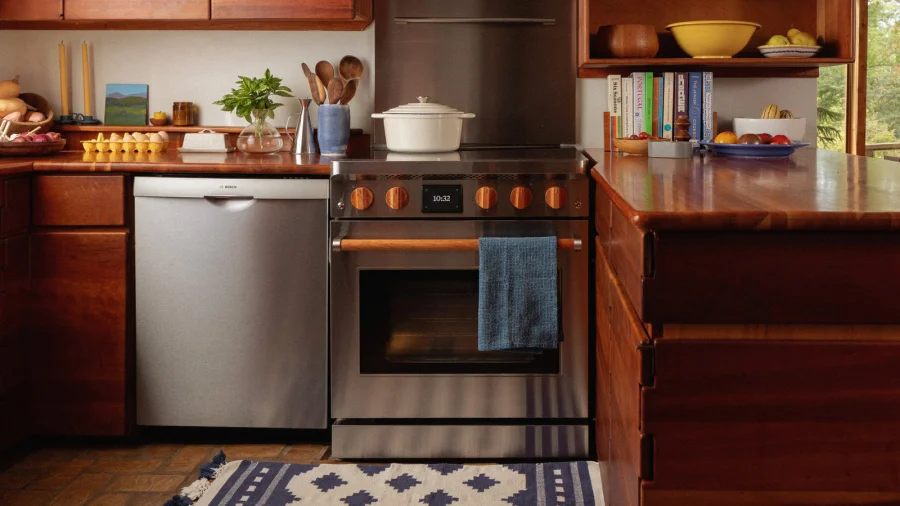
For years, the biggest problem with high-end induction cooking wasn't the cooking. It was the wiring. Most premium induction ranges demand a dedicated 240-volt line — the kind of electrical work that turns a kitchen upgrade into a renovation project. Copper's new Charlie range is trying to change that by supporting both 120-volt and 240-volt outlets.
What Copper Actually Changed With the Charlie Range
The core update is simple but significant: the Charlie induction stove now works on a standard 120-volt household outlet as well as the higher-powered 240-volt connection. That dual-voltage flexibility means the same appliance can be installed in a wider range of kitchens without an electrician rewiring the room first.
For a high-end induction product, that's an unusual move. Most premium brands treat 240V as a given and leave the installation headache to the buyer.
Why Dual-Voltage Support Matters More Than It Sounds
Induction cooking works by generating a magnetic field that heats the pan directly, not the surface. It's faster, more precise, and safer than gas or traditional electric — but it has always been power-hungry. A 240V line delivers that power comfortably. A 120V outlet delivers less.
So the real question buyers will ask is whether the Charlie range performs the same on both. Copper hasn't publicly detailed how the stove manages the power difference, and that gap in information matters for anyone comparing it to a traditional 240V-only induction range.
The Installation Barrier Copper Is Trying to Break
In older homes, rental apartments, and many urban kitchens, 240V outlets simply don't exist. Adding one can cost hundreds of dollars and require landlord approval or a licensed electrician. That single logistical hurdle has quietly kept a large chunk of interested buyers away from induction altogether.
By supporting 120V, Copper is targeting exactly those households — people who want premium induction cooking but can't justify the electrical work.
Who This Stove Is Really For
The Charlie range appears aimed at renters, apartment dwellers, and homeowners in older properties who have been priced out of high-end induction by installation costs, not sticker price. It's also a play for anyone upgrading a kitchen without a full remodel.
For those buyers, the appeal isn't just the stove. It's the idea that a premium appliance can finally fit into the kitchen they already have.
What Copper Has Confirmed — and What It Hasn't
Confirmed: the Charlie range supports both 120V and 240V outlets. That's the central product claim.
Unclear: pricing, availability dates, cooking performance differences between the two voltage modes, wattage output, and whether the 120V mode limits certain functions. Copper has not released detailed specifications publicly, and no independent testing is available yet.
Buyers should treat performance claims on 120V as unverified until hands-on reviews appear.
Where Copper Fits in the Premium Induction Market
Copper's positioning in the high-end induction space rests on design-led hardware and a direct-to-consumer model rather than legacy appliance distribution. The Charlie range's dual-voltage feature is a differentiator, but it's a practical one — not a technical breakthrough.
Its real moat, if it holds, is convenience: solving a problem competitors have largely ignored because it doesn't fit their showroom-first sales model.
The Risks Copper Is Taking On
Dual-voltage support raises real engineering questions. Running a high-end induction cooktop on 120V may mean slower heating, reduced burner output, or limited simultaneous cooking. If performance drops noticeably, the convenience advantage could backfire.
There's also the risk of confusing buyers. A stove that works "everywhere" sounds simple, but voltage differences affect real cooking behavior — and unclear messaging could hurt trust in a premium category where expectations are high.
The Bigger Shift Behind This Update
Copper's move fits a broader trend in home appliances: premium features are being redesigned for real-world housing, not ideal kitchens. As more people rent long-term or stay in older homes, appliances that install easily are becoming a genuine competitive edge.
Induction adoption in the US still lags behind gas and traditional electric. Removing installation friction is one of the few levers that could actually move that number.
What Buyers Should Do Right Now
If you're considering the Charlie range, check your kitchen's outlet type before anything else. If you already have a 240V line, you're in the ideal setup. If you only have 120V, wait for independent performance testing before assuming the cooking experience matches a standard induction range.
Also confirm warranty terms for 120V installation — some premium appliance warranties assume dedicated 240V wiring.
What Happens Next
Expect Copper to release fuller specifications, pricing, and availability details as the Charlie range moves toward wider distribution. Independent reviews comparing 120V and 240V performance will be the real test of whether this update is a genuine convenience win or a marketing angle.
If it works, competitors will likely follow. If it doesn't, the 240V standard stays exactly where it is.
Our Take
Copper's Charlie update isn't a flashy product launch — it's a quiet fix to a problem most premium appliance brands have ignored. That's often where real market shifts start. The stove won't win on specs alone; it will win if it genuinely delivers high-end induction cooking without forcing buyers to rewire their homes. Until independent testing confirms that, the promise is real but unproven.
Frequently Asked Questions
What is the Copper Charlie induction stove?
The Charlie is Copper's high-end induction range. Its latest version supports both 120-volt and 240-volt outlets, making installation possible in more types of homes.
Why does 120V and 240V support matter for an induction stove?
Most premium induction ranges require a 240V outlet, which many older homes and rentals don't have. Supporting 120V removes the need for expensive electrical work before installation.
Does the Charlie stove cook the same on 120V and 240V?
Copper has not publicly confirmed performance differences between the two modes. Buyers should wait for independent testing before assuming identical cooking power.
Who should consider the Copper Charlie induction range?
It's best suited for renters, apartment dwellers, and homeowners in older properties who want premium induction cooking without rewiring their kitchen.