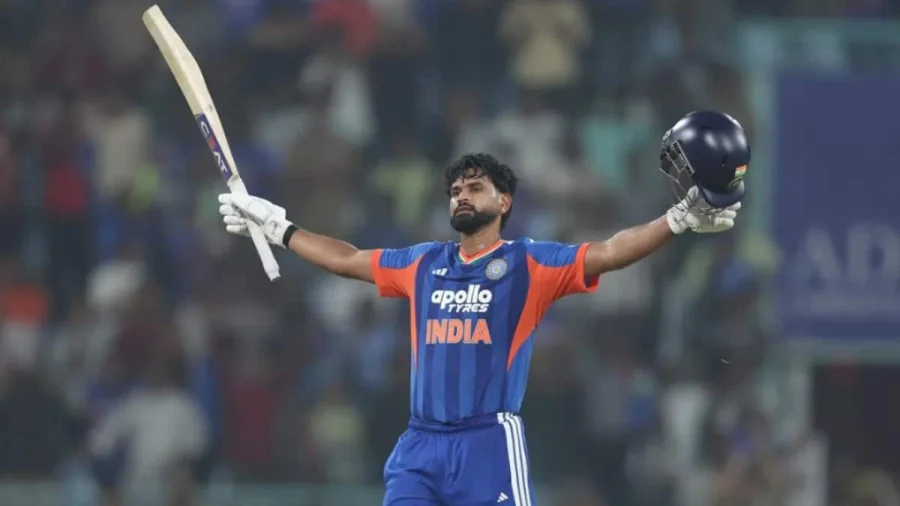
Some innings settle a match. This one settled an argument. Shreyas Iyer walked in as captain under scrutiny and walked off with 102 not out off 43 balls, finishing a 172-run chase in 14.4 overs that West Indies never got close to defending.
By the time the winning runs came, India had lost just two wickets. The margin — eight wickets, with 32 balls to spare — tells you how completely one man bent the contest to his will.
Lucknow Witnesses a Chase That Never Slowed Down
India's reply began with intent rather than caution. Sanju Samson fell for 11 off nine balls, the only early wobble, but the required rate never became a burden because Iyer kept clearing the field.
His 43-ball hundred was built on 10 fours and six sixes — a strike rate that turns a competitive total into a formality. India reached 172/2, and the West Indies bowling attack, short of answers, cycled through options without finding one.
Why This Knock Matters Beyond the Scoreboard
T20 cricket rewards specialists, and Iyer's innings was a reminder of what a top-order batter in full control looks like: not slogging, but selecting. The sixes came from balls he chose, not balls he survived.
For a captain, that has a second layer of value. A leader who wins a match single-handedly buys himself room — in selection debates, in dressing-room authority, and in the public conversation that follows every Indian series.
How the Match Unfolded
West Indies batted first and posted 172, a total that looked par on a Lucknow surface offering true bounce. Against most attacks, it would have required a partnership and a late flourish.
India instead front-loaded the chase. With Samson gone early, the innings could have slowed. It accelerated. By the time the field spread, the target was already shrinking faster than the required rate.
What This Means for the Players Involved
For Iyer, the century is a statement in a format where he has often been discussed more for his omission than his output. For the West Indies bowlers, it is a night that will demand honest review before the second T20I.
For India's bench and middle order, it is a quieter message: when the top order performs like this, opportunities to bat become scarce. That pressure cuts both ways in a five-match series.
Captaincy, Form and the Selection Conversation
Iyer's leadership has been a subject of debate in Indian cricket circles. A 43-ball hundred does not end that debate, but it changes its tone — from questions about whether he belongs to questions about how the team builds around him.
Officials have not issued any statement on the innings or on the series ahead. The result itself, as reported by Tribune India, is the only confirmed record at this stage.
Reading the Innings: Control, Not Chaos
The most striking number is not 102. It is 43. A hundred at better than two runs a ball in a chase means the bowling side was never allowed to set a field, hold a line, or build pressure.
That is the difference between a good T20 innings and a match-deciding one. Iyer's knock falls in the second category because it removed the contest from the equation entirely.
Confirmed Facts vs What Remains Unclear
Confirmed: Iyer scored 102 not out off 43 balls with 10 fours and six sixes. India chased 172 in 14.4 overs, winning by eight wickets. Samson made 11 off nine. India lead the five-match series 1-0.
Unclear: The exact composition of the West Indies bowling figures, the second T20I venue and date, and any post-match comments from either captain have not been confirmed in the source material available. Anything beyond the above should be treated as unverified.
The Bigger Pattern in Indian T20 Batting
India's T20 approach in recent seasons has shifted toward aggression from ball one, with top-order batters expected to convert starts into match-winning scores rather than steady 40s.
Iyer's innings fits that template precisely. It also raises a familiar question for the selectors: how many players in the country can produce a 43-ball hundred, and how do you choose between them?
What Fans and Followers Should Take Away
One match does not define a series, and a five-game contest leaves room for reversal. But a chase completed with 32 balls remaining changes the psychological starting point for the next fixture.
For viewers, the practical takeaway is simple: the second T20I becomes a test of whether West Indies can adjust their plans, and whether India's top order can repeat the approach under different conditions.
What Could Happen Next
West Indies will likely revisit their bowling match-ups and field placements against Iyer specifically. India, meanwhile, will weigh whether to keep the same top order or rotate personnel with the series already in hand.
No official schedule confirmation for the remaining fixtures is available in the source material, so any prediction about team changes would be speculation at this point.
Our Take
This was not a lucky hundred. It was a controlled one, and that distinction matters more than the margin of victory. India won because their captain made a difficult chase look routine — and in T20 cricket, that is the rarest skill of all.
The series is far from decided. But the first night in Lucknow gave Indian cricket something it has been searching for: a captain answering questions with his bat rather than his press conferences.
Frequently Asked Questions
How many balls did Shreyas Iyer take for his century?
Shreyas Iyer scored 102 not out off 43 balls in the first T20I against West Indies at Lucknow, hitting 10 fours and six sixes.
What was the result of the India vs West Indies 1st T20I?
India beat West Indies by eight wickets, chasing down 172 in 14.4 overs to take a 1-0 lead in the five-match series.
How did India's chase begin?
Sanju Samson was dismissed for 11 off nine balls, but India maintained a brisk scoring rate throughout, with Iyer anchoring and accelerating the innings.
What happens next in the series?
India lead 1-0 with four T20Is remaining. The venue and date of the second match have not been confirmed in the available source material.