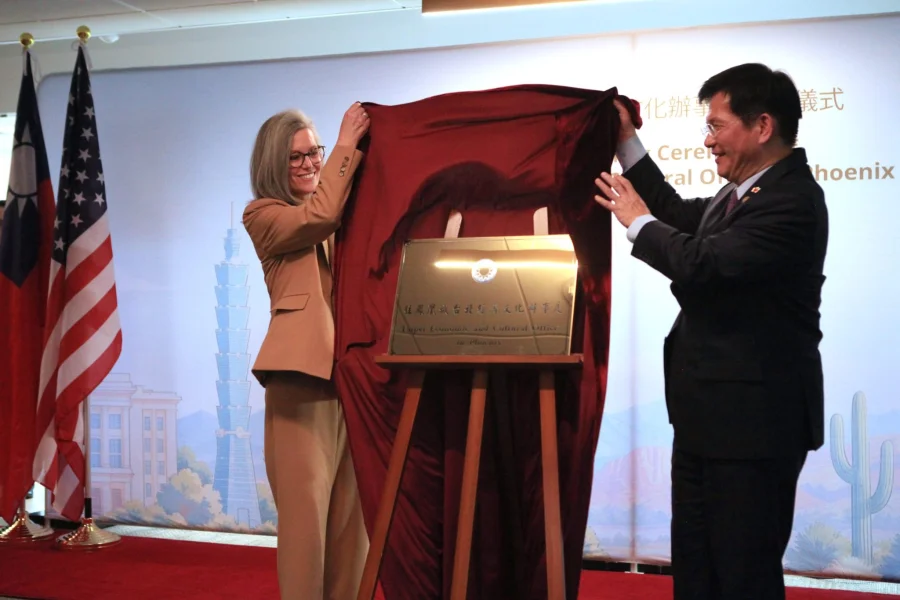
Phoenix now hosts Taiwan's 14th office in the United States — a quiet ribbon-cutting that carries outsized weight for the global chip supply chain. The new economic and cultural office, opened Monday, is designed to deepen semiconductor ties and serve a fast-growing Taiwanese community in Arizona. Beijing had tried to stop it.
A Ribbon-Cutting That Signals Where the Chip Map Is Moving
Arizona Gov. Katie Hobbs joined Taiwanese leaders at the opening, according to the Associated Press. The office will focus on technology collaboration — particularly semiconductor manufacturing — and on supporting Taiwanese migrants who have relocated to the Phoenix area in recent years.
The choice of Phoenix is not accidental. It sits at the center of one of the largest semiconductor buildouts in American history, tied to a broader $265 billion chip investment flowing into Arizona.
Why This Office Matters Beyond Diplomatic Symbolism
Semiconductors are the backbone of modern economies — powering phones, cars, defense systems, and AI data centers. Taiwan is the world's most critical node in that supply chain. Arizona is rapidly becoming America's.
An official Taiwanese presence in Phoenix makes it easier for engineers, suppliers, and small businesses to coordinate across borders. For the thousands of Taiwanese families now calling Arizona home, it also means consular-style support closer to where they live.
How Beijing Tried to Block the Office
Before the opening, Hobbs received two letters from China's consulate general in Los Angeles asking her to object to the proposal, documents shared with the AP show. In a July 3 letter, the Chinese authority urged the governor to "refute" the plan.
China considers Taiwan a part of its territory and routinely opposes any move that gives Taipei a more visible international footprint. Arizona proceeded anyway.
The People Behind the Numbers
Behind the $265 billion figure are real workers — Taiwanese engineers relocating with families, American technicians training on advanced tools, and local businesses adjusting to a new economic gravity in the desert.
The Phoenix office is meant to serve them: helping with documentation, business networking, and cultural exchange. It is, in effect, a small embassy for a very specific kind of migrant — the semiconductor professional.
What Arizona Officials and Taipei Are Saying
Taiwanese authorities have framed the office as a practical step, not a political statement — a way to promote technology collaboration and better serve citizens. Hobbs' participation signals Arizona's willingness to deepen ties despite diplomatic pressure from Beijing.
The Chinese consulate's letters, meanwhile, reflect a consistent pattern: Beijing treats Taiwan's overseas offices as a challenge to its "One China" position.
Reading the Signals: What This Really Means
This is not just about one office. It is about where the world's most strategic industry is physically located — and who gets to shape it.
As chip fabrication shifts toward the United States, Taiwan's presence in states like Arizona becomes less ceremonial and more operational. The Phoenix office is a small but telling marker of that shift.
Confirmed Facts vs What Remains Unclear
Confirmed: The office opened Monday; it is Taiwan's 14th in the US; Hobbs attended; China's consulate sent two letters urging objection; the office will focus on technology and migrant services.
Unclear: The full text of China's letters has not been publicly released. It is not yet known whether Beijing will take further diplomatic action. The exact breakdown of the $265 billion investment figure across projects has not been detailed in this report.
Why Arizona Became the Center of This Story
Arizona's combination of land, tax incentives, water infrastructure investments, and political willingness made it a magnet for chip manufacturers. That ecosystem — not any single factory — is what Taiwan is now formally plugging into.
The Phoenix office gives Taiwanese firms a local anchor for partnerships, workforce pipelines, and supplier networks.
Risks and the View From the Other Side
Beijing sees such offices as eroding its sovereignty claims and may respond through diplomatic channels or economic signaling. Some analysts warn that deeper US-Taiwan ties could raise tensions across the Taiwan Strait.
Supporters argue the office is economic and cultural, not political — and that Arizona has every right to host it. Critics of China's pressure say the letters themselves prove why such offices are needed.
A Wider Pattern: Chips, Geography, and Geopolitics
The Phoenix opening fits a broader trend: semiconductor supply chains are being re-mapped along geopolitical lines. Taiwan is diversifying its global presence; the US is onshoring critical manufacturing; China is pushing back.
Every new office, fab, or partnership is now a data point in that larger contest.
What This Means for Readers
If you work in tech, watch Arizona. If you're a Taiwanese national in the US, the Phoenix office may soon offer services closer to home. If you follow geopolitics, this is another small but meaningful shift in how Taiwan operates internationally.
For students and job-seekers, the chip buildout in Arizona continues to generate demand for engineers, technicians, and supply-chain specialists.
What Could Happen Next
Expect Beijing to monitor the office's activities closely. Further Taiwanese offices in other US states are possible. And as Arizona's chip investment matures, the Phoenix office's role may expand from cultural support to full-scale business facilitation.
Our Take
This story is easy to underestimate. A single office opening rarely makes headlines — but this one sits at the intersection of semiconductors, migration, and US-China rivalry. It shows how deeply the chip industry has reshaped not just economies, but diplomacy. Arizona is no longer a peripheral player. It is now part of the map that Taipei and Beijing both watch closely.
Frequently Asked Questions
What is Taiwan's Phoenix office?
It is Taiwan's 14th economic and cultural office in the United States, opened in Phoenix to promote technology collaboration — especially semiconductors — and to serve Taiwanese residents in Arizona.
Why did China object to the office?
China considers Taiwan part of its territory and opposes any move that gives Taipei a more visible international presence. Its consulate general in Los Angeles sent two letters to Arizona Gov. Katie Hobbs urging her to block the plan.
What is the $265 billion chip investment in Arizona?
It refers to the large-scale semiconductor investment flowing into Arizona, tied to major fabrication projects and supplier ecosystems. The figure reflects the broader buildout, not a single company's spending.
Did Arizona block the office after China's letters?
No. Gov. Katie Hobbs proceeded with the opening and attended the ceremony alongside Taiwanese leaders.