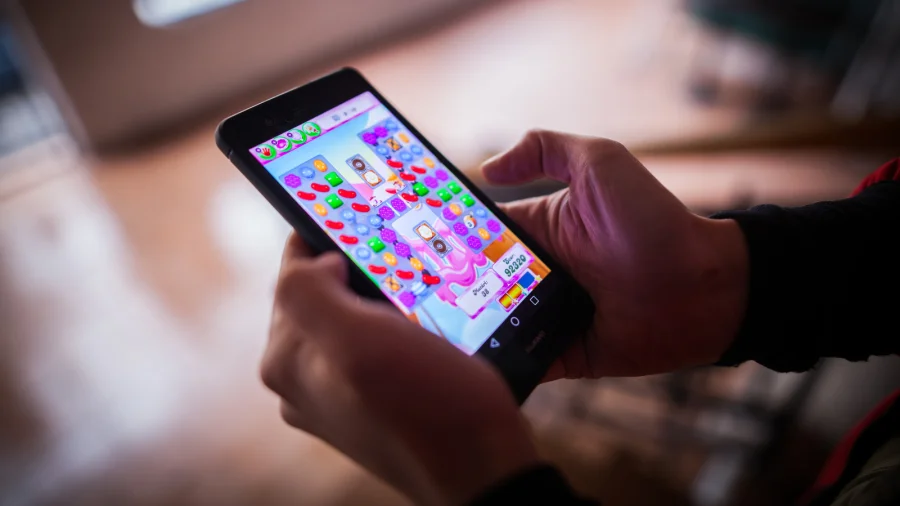
The people who build Candy Crush — one of the most downloaded mobile games in history — are preparing to stop working next week. Staff at King, the studio behind the match-three juggernaut, are planning strike action in an effort to force stalled negotiations back to the table after what the original report describes as years of bargaining.
It is a small sentence with a large implication. The studio that turned a simple swap-and-match mechanic into a global habit is now the setting for a labour dispute that could echo across the wider mobile gaming industry.
A Walkout Inside One of Mobile Gaming's Most Profitable Studios
King is not a niche developer. Candy Crush Saga and its spin-offs have been installed hundreds of millions of times and have generated revenue for more than a decade. The studio operates under the Activision Blizzard umbrella, which itself sits inside Microsoft's gaming division following the 2023 acquisition.
That corporate lineage matters. A strike at King is not a strike at a small independent team — it is a labour action inside one of the largest gaming conglomerates in the world.
Why Years of Bargaining Have Reached a Breaking Point
According to the original report, the core grievance is procedural as much as financial: negotiations have been running for years without reaching a conclusion. When talks stall for that long, staff typically lose confidence that the process itself is working.
A strike, in that context, is less a first move than a last resort — a way of converting a slow, abstract negotiation into an immediate, visible cost.
How the Dispute Reached This Point
Details of the specific demands, the bargaining timeline, and the exact number of employees involved have not been independently verified. What is confirmed by the source material is narrower but still significant: a strike is being planned, and it is scheduled for next week.
That is the frame readers should hold onto. Everything beyond it — the size of the walkout, the response from management, the involvement of unions or works councils — remains unconfirmed.
Who This Actually Affects
The most immediate impact falls on King employees themselves, who face the financial and professional risk that any strike carries. But the ripple reaches further.
Players of Candy Crush and King's other titles may eventually notice shifts in live events, updates, or seasonal content if work stoppages extend. And other studios — particularly those with similar ownership structures — will be watching closely to see whether this becomes a template.
What King and Its Parent Company Have Said
At the time of writing, no verified statement from King, Activision Blizzard, or Microsoft has been confirmed in relation to the planned strike. Readers should treat any unverified claims circulating on social platforms with caution until an official response is issued.
Why a Mobile Puzzle Game Is an Unlikely Labour Battleground
Candy Crush is often dismissed as casual entertainment — a game you play on the train. But casual games are among the most operationally demanding products in the industry. They rely on constant live-service updates, seasonal events, monetisation tuning, and player retention analytics.
The people doing that work are not hobbyists. They are engineers, designers, data analysts, and live-ops specialists. A strike in that environment is not symbolic — it directly interrupts the machinery that keeps a live game running.
Confirmed Facts vs What Remains Unclear
Confirmed: A strike is being planned by King staff for next week, according to the original report. The stated motivation is to restart negotiations after years of bargaining.
Unclear: The number of participants, the specific demands, whether a union is formally involved, whether the strike has legal recognition, and how management intends to respond. Any claim beyond the confirmed points should be treated as speculation until verified.
Why King's Position Makes This Harder to Ignore
King's value to its parent company is not just its revenue — it is its ecosystem. Candy Crush has a player base that spans age groups and geographies, a brand recognition that few mobile titles achieve, and a live-service model that depends on continuous internal output.
That combination gives the studio leverage. It also means a disruption is harder to absorb quietly. A strike at a small indie studio might pass unnoticed; a strike at King is a headline.
Risks and the Case Against the Walkout
Strikes carry real costs for the people who take part. Lost wages, potential retaliation, and the possibility that negotiations harden rather than soften are all legitimate concerns.
There is also the question of public sympathy. Mobile gaming audiences are not always sympathetic to labour disputes inside companies whose products are seen as casual entertainment. Whether that perception shifts — or whether it even matters to the outcome — is an open question.
A Wider Pattern in the Gaming Industry
This is not an isolated event. The global games industry has seen a steady rise in labour organising over the past several years, particularly in North America and Europe, driven by layoffs, crunch culture, and consolidation.
What makes the King situation notable is the category. Mobile live-service studios have historically been less visible in labour disputes than their console and PC counterparts. If that changes, it signals a broader shift in where game workers are willing to draw lines.
What Readers and Players Should Watch For
For employees and industry workers: watch whether the strike proceeds as planned and whether it draws formal union backing. For players: monitor whether live events or updates are delayed. For investors and analysts: watch for any statement from Activision Blizzard or Microsoft that signals how the parent company intends to handle the dispute.
The most useful thing anyone can do right now is wait for verified information rather than reacting to unconfirmed claims.
What Happens Next
If the strike goes ahead next week, the immediate question becomes how long it lasts and whether it forces both sides back into meaningful talks. If it is called off or postponed, that itself will be a signal about the state of negotiations.
Either way, the coming days will clarify what has so far been described only in outline.
Our Take
The story here is not really about Candy Crush. It is about what happens when a workforce inside a highly profitable, globally recognised studio decides that the negotiating table is no longer producing results.
King's staff are not asking for something exotic. They are asking for a process that moves. The fact that it has taken the threat of a strike to get there says as much about the state of labour relations in gaming as it does about this particular dispute.
Frequently Asked Questions
Are Candy Crush developers really going on strike?
According to the original report, staff at King — the studio behind Candy Crush — are planning strike action for next week. The action has been described as planned, not yet confirmed as underway.
Why are King employees planning to strike?
The stated reason is to restart negotiations that have been stalled for years. Staff want the bargaining process to move forward after a prolonged period without resolution.
Will Candy Crush stop working if the strike goes ahead?
That is not yet clear. A strike by live-service staff could affect updates, events, or content schedules, but no confirmed impact on the game has been reported at this stage.
Has King or Activision Blizzard responded to the strike plan?
No verified official statement has been confirmed at the time of writing. Readers should be cautious about unverified claims circulating online until an official response is issued.