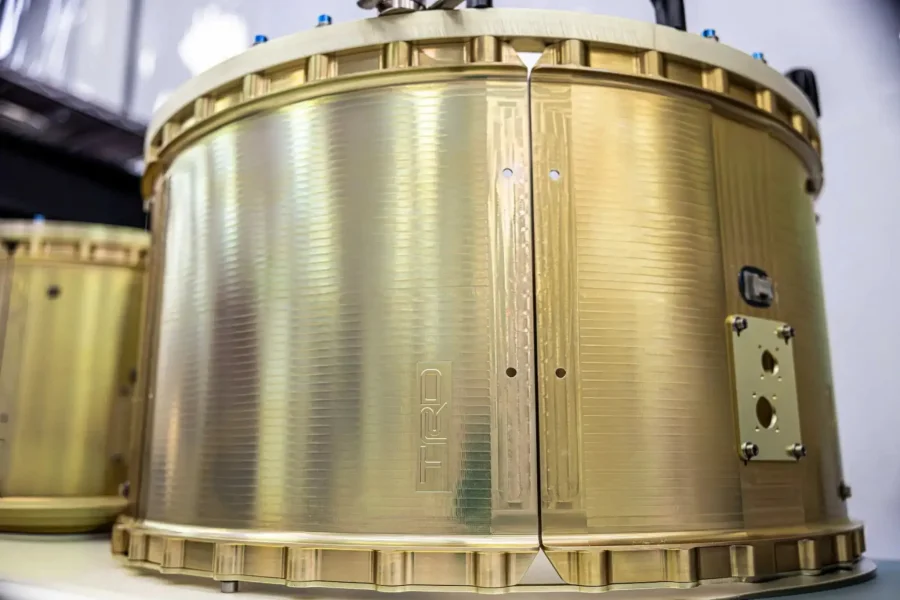
Imagine a satellite drifting silently through the vacuum of space. Now imagine a race car screaming down a track at 300 km/h. They seem worlds apart — one celestial, one terrestrial. But according to Apex Space and Toyota’s racing division, they share a brutal truth: both operate in environments that are wildly unforgiving, where the smallest miscalculation can turn into a disaster.
The harsh reality of orbits and racetracks
“Orbits and racetracks are very inhospitable environments,” said Jim Adler, founder and general partner at Toyota Ventures, the $251 billion automaker’s corporate early-stage venture arm. Adler has been thinking deeply about the parallels between space and racing. On a racetrack, cars endure heat, collisions, and relentless mechanical stress. In orbit, satellites face radiation, extreme temperature swings, and an airless void — with no help on the way. Both demand hardware that can stand alone against time and pressure.
Why small failures become catastrophic in both worlds
For a race car, a tiny crack in a brake line or a slight misalignment in the suspension can cause a crash at high speed. For a satellite, a minor software glitch or a single faulty component can render a multi-million-dollar mission useless. In both cases, there is no second chance. The margin for error is razor-thin. This shared fragility is what makes the comparison so powerful — and so urgent for engineers.
How Apex and Toyota’s racing division see the connection
Apex Space, a startup building satellite platforms, and Toyota’s racing division (through Toyota Ventures) are exploring how lessons from motorsports can apply to space hardware. Both fields require extreme reliability, real-time monitoring, and materials that can withstand punishing conditions. The idea is not just academic — it could lead to better satellite designs inspired by racing engineering, and vice versa.
Who is affected by this parallel thinking
For engineers, this means new approaches to testing and materials. For investors, it signals a convergence of two high-stakes industries. For the public, it’s a reminder that the technology we rely on — from GPS to live TV broadcasts — depends on hardware that must survive conditions far harsher than any racetrack. And for the space and automotive sectors, it opens the door to shared innovation.
What Toyota Ventures and Apex are saying
Jim Adler’s comment captures the core insight: both environments are inhospitable. Toyota Ventures, which invests in early-stage tech, sees the parallel as a way to identify startups that understand extreme reliability. Apex, meanwhile, builds satellites designed for durability. Together, they are asking: what can space learn from racing, and what can racing learn from space?
Why this comparison matters beyond engineering
This is not just a technical curiosity. It reflects a broader trend: industries that once operated in silos are now sharing knowledge. The race to build better satellites and faster cars is, at its heart, a race against failure. Understanding that both domains face the same fundamental challenge — surviving an unforgiving environment — could accelerate progress in both.
Confirmed facts vs what remains unclear
Confirmed: Jim Adler of Toyota Ventures explicitly compared orbits and racetracks as inhospitable environments. Apex and Toyota’s racing division are exploring the parallel. Unclear: Specific technical collaborations, timelines, or concrete projects have not been disclosed. The comparison remains at the conceptual stage, though it signals potential future work.
Why Apex and Toyota’s racing division matter in this context
Apex brings expertise in satellite platform design — building hardware that must function flawlessly in space. Toyota’s racing division (via Toyota Ventures) brings decades of motorsports engineering, where reliability under extreme stress is non-negotiable. Together, they represent a rare bridge between two high-stakes worlds. Their shared insight: the best engineering is invisible — it’s the failure that never happens.
Risks and balanced view
Critics might argue that the comparison is more poetic than practical. Space and racing have different physical constraints — vacuum vs. atmosphere, zero gravity vs. high downforce. But proponents say the core principle — designing for extreme environments — is universal. The risk is overpromising cross-industry breakthroughs without concrete results. Still, the conversation itself is valuable.
A wider trend: industries learning from each other
This is part of a larger pattern. Aerospace engineers study Formula 1 for lightweight materials. Racing teams borrow from space for telemetry and data analysis. The boundaries between industries are blurring. Apex and Toyota’s racing division are simply the latest to recognize that survival in extreme conditions is a shared language.
What this means for engineers, investors, and enthusiasts
For engineers: watch for cross-pollination of testing methods and materials. For investors: startups that understand extreme reliability may have an edge. For racing and space enthusiasts: the next breakthrough in your favorite field might come from the other. And for everyone else: the next time you watch a race or track a satellite, remember — both are fighting the same battle against an unforgiving world.
Future outlook: what could come next
If this parallel gains traction, expect more formal collaborations between space startups and automotive racing divisions. Joint research into materials, sensors, and failure prediction could emerge. The ultimate goal: hardware that is not just reliable, but resilient — whether in orbit or on the track.
Our take
This story is deceptively simple. On the surface, it’s a clever analogy. But beneath it lies a profound truth: the most unforgiving environments — space and racetracks — demand the same kind of engineering excellence. By recognizing this, Apex and Toyota’s racing division are not just making a comparison. They are opening a door to shared innovation that could make both satellites and race cars safer, more reliable, and more capable. That is a race worth watching.
Frequently Asked Questions
Why is a satellite like a race car?
Both satellites and race cars operate in extreme, unforgiving environments — space and racetracks — where small failures can become catastrophic. Both require hardware that withstands heat, stress, and isolation with no room for error.
What did Toyota Ventures say about satellites and race cars?
Jim Adler, founder and general partner at Toyota Ventures, said: “Orbits and racetracks are very inhospitable environments.” He highlighted the parallel as a way to think about reliability in both domains.
How are Apex and Toyota’s racing division connected?
Apex builds satellite platforms, and Toyota’s racing division (through Toyota Ventures) invests in early-stage tech. They are exploring how engineering lessons from motorsports can apply to space hardware.
What can satellites learn from race cars?
Race cars are designed for extreme reliability under stress, with real-time monitoring and materials that resist heat and fatigue. These principles could help make satellites more durable in the harsh environment of space.