It wasn’t too long ago that analog photography — using photographic film and chemical processing — was declared all but dead, relegated to the province of niche hobbyists and professional artists. Digital cameras had taken over nearly all areas of photographic production. Film industry titans like Polaroid and Kodak had shrunk dramatically from their heyday, becoming shells of their former selves. Darkrooms, where students learned how to manually develop and print film, shuttered at high schools and college campuses across the country, replaced by digital labs. For most people, the spirit of analog photography was mainly channeled through Instagram filters.
How Gen Z is rewriting the story of film photography
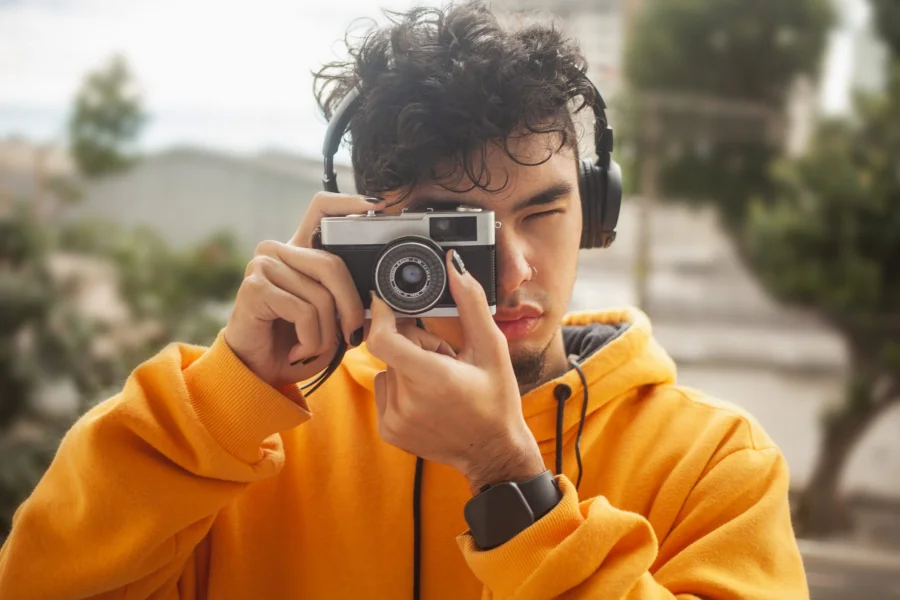
But within the past five years, something unexpected happened. A generation that grew up with smartphones, instant sharing, and infinite digital storage began reaching for something slower, more deliberate, and more tangible. Gen Z — born between the late 1990s and early 2010s — is now driving a revival of film cameras that many thought would never return. They are buying used Canon AE-1s, Polaroid OneSteps, and even disposable cameras, not as ironic relics but as serious creative tools.
Why analog matters to a digital-native generation
For a generation raised on endless scrolling and algorithmic feeds, film photography offers something rare: constraint. Each roll of film has only 24 or 36 exposures. There is no delete button, no instant preview, no filter to fix a mistake. This forces intentionality. Every shot matters. The wait — days or weeks to see developed photos — adds a layer of anticipation that digital immediacy erased. It is not about nostalgia for a past they never lived; it is about reclaiming a sensory, tactile experience that digital cannot replicate.
The timeline of a resurrection: from decline to revival
The decline of film photography was swift. By the early 2000s, digital cameras had become affordable and ubiquitous. Polaroid filed for bankruptcy in 2001 and again in 2008. Kodak, once a household name, filed for bankruptcy in 2012 and stopped making consumer film cameras. Darkrooms closed across schools and universities. By 2015, film photography seemed like a footnote in history. Then, around 2018, a shift began. Young creators started posting film photos on Instagram and TikTok, not as filters but as genuine analog captures. The hashtag #filmphotography grew exponentially. Used camera prices on eBay and Etsy started climbing. Film manufacturers, including Kodak, quietly restarted production lines.
Who is affected and why it matters to real people
This revival is not just a niche hobby. It is reshaping consumer behavior and challenging the assumption that digital is always better. For young photographers, film teaches patience, composition, and the value of imperfection. For companies like Polaroid and Kodak, it offers a second chance at relevance. For the broader market, it signals that even in a hyper-digital world, there is hunger for analog experiences — whether in photography, vinyl records, or handwritten letters. The trend also has economic implications: film camera prices have risen, film rolls are selling out, and small businesses offering film development services are seeing a resurgence.
What industry experts and companies are saying
While no official statements from Polaroid or Kodak were available in the source material, the market data tells the story. According to industry reports, sales of film cameras and film rolls have increased steadily since 2018, with Gen Z accounting for a significant share of new buyers. Photography educators have noted a renewed interest in darkroom techniques among students. Some colleges that had closed their darkrooms are now considering reopening them. The trend is also visible in the rise of film photography communities on social media, where users share tips, trade cameras, and celebrate the analog process.
What this revival really means: more than nostalgia
The Gen Z film camera revival is not simply about nostalgia for a past they never experienced. It is a reaction to the overwhelming speed and perfectionism of digital culture. Film forces slowness. It embraces flaws — light leaks, grain, accidental double exposures. In a world where every digital image can be edited, filtered, and curated, film offers something raw and honest. This is not a rejection of digital but a complement to it. Many young photographers use both: digital for convenience, film for meaning.
Confirmed facts vs what remains unclear
Confirmed: Film photography is experiencing a resurgence driven by Gen Z. Used film camera prices have risen. Film manufacturers have restarted or increased production. Darkrooms are reappearing in some educational settings. Social media communities around film photography are growing.
Unclear: The exact scale of the revival in terms of market size or revenue. Whether this trend is sustainable long-term or a passing fad. How major companies like Polaroid and Kodak are specifically responding beyond production adjustments. The environmental impact of increased film production and chemical processing.
Why Polaroid and Kodak matter in this revival
Polaroid and Kodak are not just brands; they are cultural icons that defined analog photography for generations. Polaroid’s instant film, with its white borders and developing image, became synonymous with spontaneity. Kodak’s Kodachrome and Tri-X films set the standard for color and black-and-white photography. Their decline was seen as the end of an era. Now, their revival — however modest — signals that analog has a future. For Gen Z, these brands carry authenticity that digital-native companies cannot replicate. The moat lies in their legacy, their manufacturing infrastructure, and the emotional connection they evoke.
Risks and balanced view: is this revival sustainable?
Not everyone is convinced the film revival is more than a trend. Critics point out that film is expensive, inconvenient, and environmentally costly compared to digital. Film rolls and chemicals require resources and produce waste. The supply chain for film is fragile, dependent on a few remaining manufacturers. Prices for used cameras have inflated, sometimes beyond reasonable value. Some worry that the trend is driven more by aesthetics than genuine interest in photography. Others argue that digital photography remains superior for most practical purposes, and that film will always be a niche.
A wider pattern: the analog backlash in a digital age
The film camera revival is part of a broader cultural shift. Gen Z is also driving the resurgence of vinyl records, cassette tapes, instant cameras, and even flip phones. This is not Luddism but a search for authenticity and intentionality in an increasingly digital and algorithm-driven world. The trend reflects a desire for experiences that are physical, imperfect, and human. It is a quiet rebellion against the frictionless, optimized, and often soulless nature of digital life.
Practical guidance for readers interested in film photography
If you are curious about film photography, start simple. Buy a used point-and-shoot camera or a disposable camera to test the waters. Learn the basics of exposure and composition. Join online communities for tips and film swaps. Be prepared for the cost of film and development. Consider developing black-and-white film at home to save money. Most importantly, embrace the process — the waiting, the uncertainty, the happy accidents. Film is not about perfection; it is about presence.
What could happen next for the film camera market
The future of film photography depends on whether the trend sustains beyond novelty. If Gen Z continues to value analog experiences, the market could stabilize as a small but profitable niche. More manufacturers might re-enter the space. Darkrooms could become common again in schools and community centers. However, if the trend fades, film could return to its previous niche status. Either way, the revival has already proven that digital did not kill analog — it just sent it into hibernation.
Our take
The Gen Z film camera revival is more than a nostalgic fad. It is a cultural signal that even in the most digital of generations, there is a hunger for the tangible, the slow, and the imperfect. This trend challenges the assumption that newer is always better and reminds us that some experiences cannot be optimized. Whether or not film photography returns to mainstream relevance, its revival has already enriched the visual culture and given a new generation a reason to look at the world more carefully.
Frequently Asked Questions
Why is Gen Z interested in film photography?
Gen Z is drawn to film photography because it offers a tactile, intentional, and imperfect experience that contrasts with the speed and perfectionism of digital culture. The constraint of limited exposures and the anticipation of waiting for developed photos create a sense of presence and meaning.
Is film photography making a real comeback?
Yes, film photography is experiencing a genuine revival, driven primarily by Gen Z. Sales of film cameras and film rolls have increased since 2018, and darkrooms are reappearing in some schools and colleges. Social media communities dedicated to film photography are also growing rapidly.
What are the downsides of film photography?
Film photography is more expensive than digital, requires access to film and development chemicals, and has a higher environmental impact. Cameras and film can be hard to find, and the process is slower and less convenient. It is best suited for those who value the experience over efficiency.
How can I start with film photography as a beginner?
Start with a used point-and-shoot camera or a disposable camera. Learn basic exposure and composition. Join online film photography communities for tips. Be prepared for the cost of film and development. Consider developing black-and-white film at home to save money and gain more control.