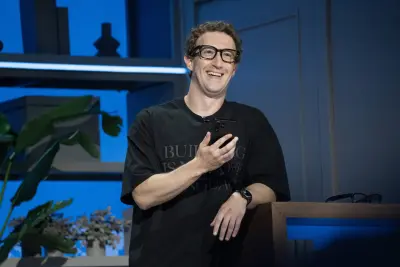
Palmer Luckey, the billionaire founder of defense technology company Anduril, has a blunt warning for America: your universities are losing the AI race to China, and the damage is already visible in hollowed-out companies.
The warning that should shake American higher education
Speaking earlier this year in a conversation with the Hoover Institution at Stanford University, Luckey didn't mince words. "American companies have been hollowed out because our companies feed these colleges a whole bill of goods on what they should be teaching people," he said. "Basically, we're not teaching engineers how to be engineers anymore."
Why this matters for every Indian student and professional
For Indian readers watching the US-China tech rivalry, this isn't just an American problem. India sends thousands of students to US universities every year for engineering and AI programs. If American institutions are losing their edge, Indian students—and the companies that hire them—will feel the impact directly. The quality of education determines the quality of talent available globally.
What Luckey actually said—and what it means
The 33-year-old defense tech leader argued that the real battle with China isn't just over who builds the best AI models or the fastest chips. It's about who trains the best students. China, he suggested, is producing graduates who can actually build things, while American universities focus on theory at the expense of practical skills.
The hollowing out of American companies
Luckey's phrase "hollowed out" is striking. He's describing a scenario where companies can't find engineers who can actually engineer—so they either hire from abroad, move operations overseas, or simply fail to compete. The result is a slow erosion of America's industrial and technological base, masked by the success of a few giant tech firms that can afford to import talent.
What the Hoover Institution conversation revealed
The full conversation, hosted by Peter Robinson on Uncommon Knowledge, explored whether America is falling behind China in technology and manufacturing. Luckey's critique of higher education was part of a broader argument about national competitiveness. He didn't just blame universities—he blamed companies for demanding the wrong skills and universities for delivering them.
The deeper problem: theory over practice
Luckey's complaint echoes a long-standing criticism of American engineering education: too much abstract math and theory, not enough hands-on building. In contrast, Chinese universities are reportedly more focused on producing graduates who can immediately contribute to manufacturing, AI development, and hardware production. The gap isn't just about funding—it's about philosophy.
Confirmed facts vs what remains unclear
What's confirmed: Luckey made these statements in a recorded conversation with the Hoover Institution. He explicitly said US companies are "hollowed out" and that universities aren't teaching practical engineering. What remains unclear: whether this critique applies equally across all US universities, how Chinese engineering education compares in specific metrics, and whether Luckey's view represents a broader consensus among tech leaders.
Why Anduril's founder carries weight on this issue
Anduril is a defense technology company that builds AI-powered drones, surveillance systems, and autonomous weapons for the US military. Luckey, who previously sold Oculus to Facebook for $2 billion, knows what it takes to build hardware and software at scale. His company competes directly with Chinese defense tech firms. When he says American education is failing, he's speaking from experience as an employer who can't find the talent he needs.
The risks and counterarguments
Critics might argue that US universities still produce world-class researchers and that China's education system has its own problems—rigid curricula, political indoctrination, and a lack of creative thinking. Others point out that America's top engineering schools like MIT and Stanford remain global leaders. Luckey's critique may apply more to mid-tier universities than elite institutions. Still, the warning deserves attention.
A pattern of concern among tech leaders
Luckey is not alone. Elon Musk, Steve Jobs, and numerous Silicon Valley figures have criticized American education for failing to produce practical engineers. The difference now is the urgency: China is not just catching up—it's leading in areas like 5G, electric vehicles, and AI deployment. The talent pipeline is becoming a national security issue.
What students and professionals should do now
For Indian students considering US universities: research programs that emphasize hands-on projects, internships, and industry partnerships. Don't assume a prestigious name guarantees practical skills. For professionals: focus on building real products, contributing to open-source projects, and learning by doing. The market will reward those who can actually build, not just those who have degrees.
What happens next in the US-China talent war
If Luckey's warning is heeded, US universities may face pressure to reform curricula, increase industry partnerships, and emphasize practical training. If ignored, the hollowing out could accelerate. China, meanwhile, will continue producing graduates who can build AI systems, drones, and advanced manufacturing lines. The next decade will determine which model wins.
Our take
Luckey's critique is uncomfortable but necessary. American higher education has long prided itself on producing thinkers, not just doers. But in a world where AI and advanced manufacturing determine economic and military power, the ability to build matters as much as the ability to theorize. India, too, should watch this debate closely—because the same pressures apply to Indian universities and companies competing globally.
Frequently Asked Questions
What did Palmer Luckey say about US colleges and China?
Luckey said American universities are not teaching practical engineering skills, leaving US companies "hollowed out" while China produces graduates who can actually build AI systems and advanced technology.
Why is Palmer Luckey's warning important?
As founder of Anduril, a major defense tech company, Luckey knows firsthand the talent shortage in engineering. His warning highlights a national security and economic competitiveness issue.
Is China really ahead of the US in AI education?
China produces more STEM graduates annually and its universities focus heavily on practical, industry-ready skills. However, US institutions still lead in research output and innovation at elite levels.
What should Indian students learn from this debate?
Indian students should prioritize programs with strong industry connections, hands-on projects, and practical training—whether in the US, India, or elsewhere. The ability to build real products matters more than university prestige.