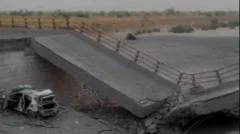
The United States has launched new strikes against Iran, escalating a conflict that is now drawing in civilian infrastructure. Tehran has reported that the strikes hit bridges, marking a significant expansion of the target set. Simultaneously, the US Navy has boarded a ship in the Strait of Hormuz, a move that threatens to disrupt one of the world's most critical maritime chokepoints.
What Tehran Says Was Hit
Iranian officials have stated that the US strikes targeted civilian infrastructure, specifically bridges. This represents a departure from previous strikes that were primarily focused on military or proxy targets. The damage to bridges could disrupt supply chains and civilian movement within Iran, raising the humanitarian stakes of the conflict.
Why the Strait of Hormuz Matters Right Now
The US boarding of a ship in the Strait of Hormuz is a significant escalation. This narrow waterway handles about 20% of the world's oil supply. Any disruption here could send global oil prices soaring, affecting fuel costs for millions of people in India and around the world. The move signals that the US is willing to project naval power directly in Iran's backyard.
How the Situation Has Developed
The strikes and the naval boarding appear to be part of a coordinated US response. While the exact trigger for this latest round of strikes is not yet clear, the pattern suggests a deliberate strategy to increase pressure on Tehran. The targeting of bridges, in particular, indicates a shift towards degrading Iran's internal infrastructure rather than just its military assets.
Who Is Affected by This Escalation
For ordinary Iranians, the damage to bridges means longer travel times, disrupted trade routes, and potential shortages of goods. For the global economy, the Strait of Hormuz boarding raises the risk of a supply shock. For Indian consumers, this could mean higher petrol and diesel prices if the situation worsens. The conflict is no longer just a military affair—it is becoming a daily reality for civilians and global markets.
Official Responses and What Has Been Confirmed
Iran has publicly confirmed that civilian infrastructure, including bridges, was hit. The US has not yet issued a detailed statement on the specific targets. The boarding of the ship in the Strait of Hormuz has been confirmed by maritime security sources. Both sides are now in a dangerous game of escalation, with no clear off-ramp.
What This Means for the Broader Conflict
The targeting of bridges is a tactical shift. In previous rounds of strikes, the US focused on military bases, drone facilities, and proxy group positions. Hitting bridges suggests a strategy to degrade Iran's ability to move supplies and personnel internally. It also risks drawing Iran into a more direct confrontation, as the regime may feel compelled to respond to attacks on its national infrastructure.
Confirmed Facts vs What Remains Unclear
What is confirmed: The US launched new strikes. Iran says bridges were hit. A US ship boarded a vessel in the Strait of Hormuz. What remains unclear: The exact number of casualties, the full extent of the damage, the reason for the ship boarding, and whether this is a one-off escalation or the start of a sustained campaign.
Risks and Balanced View
The risks are severe. Escalation could lead to a wider regional war, drawing in proxies in Iraq, Syria, and Yemen. The Strait of Hormuz boarding could provoke Iran to mine the waterway or attack US naval assets. Critics of the US strategy argue that targeting civilian infrastructure violates international law and could radicalize the Iranian population. Supporters say the US is responding to Iranian aggression and must degrade its capabilities.
Wider Pattern of US-Iran Tensions
This latest escalation fits a pattern of tit-for-tat strikes that have defined US-Iran relations for decades. The difference now is the scale and the targeting of civilian infrastructure. The Strait of Hormuz boarding is a reminder that this conflict has global economic implications, not just regional military ones.
What Readers Should Watch For
For those following this story, watch for: Iran's response, which could come via proxies or direct military action; the impact on oil prices; and any diplomatic efforts to de-escalate. If the Strait of Hormuz is disrupted, expect immediate price hikes at the pump.
Future Outlook
The immediate future is uncertain. Both sides appear dug in. The US seems determined to maintain pressure, while Iran may feel compelled to retaliate. The Strait of Hormuz incident could be a flashpoint. A diplomatic resolution seems distant, meaning the conflict could continue to escalate in the coming days and weeks.
Our Take
This is a dangerous moment. The targeting of civilian infrastructure marks a new phase in the US-Iran conflict. For the average person, the most immediate impact will be economic, through higher oil prices. For the region, the risk of a wider war is now higher than it has been in years. Both sides need to step back, but neither appears willing to do so.
Frequently Asked Questions
Did the US strike bridges in Iran?
Yes, according to Iranian officials, the US strikes hit civilian infrastructure, including bridges. The US has not confirmed specific targets.
What happened in the Strait of Hormuz?
The US Navy boarded a ship in the Strait of Hormuz, a critical waterway for global oil shipments. The reason for the boarding has not been fully disclosed.
How will this affect oil prices?
Any disruption in the Strait of Hormuz could cause oil prices to spike. India, which imports most of its oil, would be particularly affected.
Is this an escalation of the US-Iran conflict?
Yes, the targeting of civilian infrastructure and the naval boarding represent a significant escalation. The situation remains highly volatile.