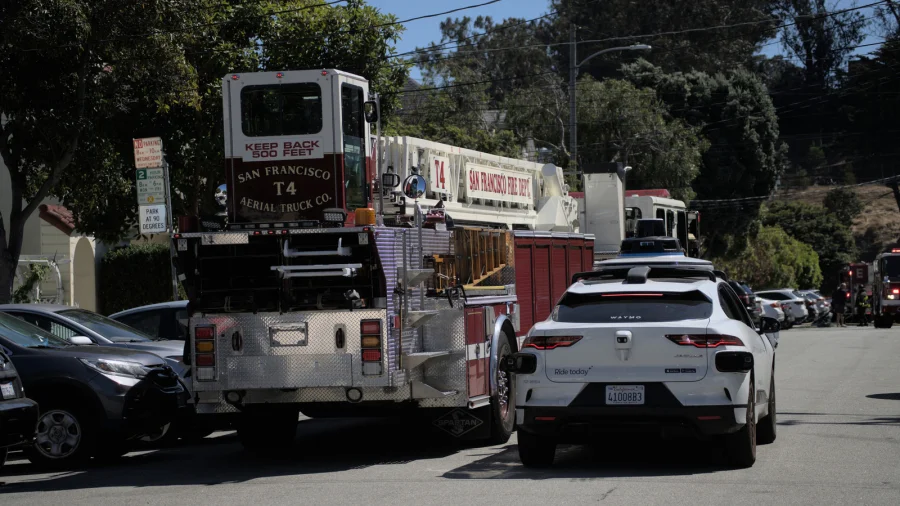
Imagine a fire truck racing to a burning building, sirens blaring — only to find a driverless car stopped in the middle of the road, refusing to move. That scenario is no longer hypothetical. The US National Highway Traffic Safety Administration (NHTSA) says it has documented a troubling pattern of autonomous vehicles interfering with emergency responders, and it is now demanding action from AV makers.
NHTSA documents pattern of AV interference with emergency scenes
Jonathan Morrison, who heads NHTSA, sent a letter to the autonomous vehicle industry this week detailing multiple incidents where driverless cars created dangerous situations for first responders. According to the letter, AVs have driven into active emergency scenes, blocked the paths of ambulances and fire trucks, and failed to recognize or respond to basic emergency signals.
Why this matters for public safety
Every second counts when emergency vehicles are responding to fires, medical emergencies, or accidents. An autonomous vehicle that cannot understand or yield to emergency signals doesn't just cause inconvenience — it can cost lives. Firefighters, paramedics, and police officers rely on the assumption that other vehicles will move out of the way. AVs that fail this basic test undermine public trust in the technology.
How the situation developed
Autonomous vehicles have been operating in several US cities, including San Francisco, Phoenix, and Austin, with companies like Waymo and Cruise leading deployment. While regulators have focused on general safety, the specific issue of emergency vehicle interaction has emerged as a critical gap. Reports from first responders in these cities have accumulated over months, prompting NHTSA to escalate its concern from informal discussions to a formal demand.
Who is affected and why it matters to real people
For residents in cities where AVs operate, the risk is immediate. A blocked ambulance could mean delayed medical care. A fire truck unable to reach a burning building could lead to greater property damage or loss of life. For first responders, the unpredictability of autonomous vehicles adds a new layer of danger to an already hazardous job. For the broader public, this raises a fundamental question: are driverless cars safe enough to share roads with emergency vehicles?
NHTSA's demand to AV makers
Morrison's letter is not a suggestion — it is a directive. The agency is requiring AV manufacturers to propose solutions that ensure their vehicles can detect, understand, and appropriately respond to emergency vehicles in all scenarios. This includes recognizing lights, sirens, hand signals from traffic officers, and the dynamic nature of emergency scenes where normal traffic rules may be suspended.
What this means for the autonomous vehicle industry
This is a significant regulatory moment for the AV sector. NHTSA has generally taken a hands-off approach to autonomous vehicle regulation, allowing companies to innovate with limited federal oversight. This letter signals a shift: the agency is now actively monitoring specific safety failures and demanding accountability. For companies like Waymo, Cruise, and Amazon's Zoox, this means investing in better sensor fusion, more sophisticated AI decision-making, and potentially redesigning how their vehicles interpret emergency situations.
Confirmed facts vs what remains unclear
Confirmed: NHTSA has documented multiple instances of AVs interfering with first responders. The agency sent a formal letter demanding solutions. The letter was signed by NHTSA head Jonathan Morrison.
Unclear: The exact number of incidents documented. Which specific AV companies were involved. Whether any incidents resulted in injuries or fatalities. The timeline for when AV makers must respond.
Company moat: Why AV technology matters
Autonomous vehicle technology represents one of the most ambitious engineering challenges of our time. Companies like Waymo (owned by Alphabet) have spent over a decade and billions of dollars developing sensor systems, AI models, and mapping technologies that allow cars to navigate without human drivers. The moat lies in proprietary sensor fusion technology, high-definition mapping, and the massive datasets required to train AI for edge cases like emergency vehicle interaction. Solving the first responder problem is not just a regulatory requirement — it is a technical moat that separates serious players from aspirants.
Risks and balanced view
While NHTSA's concerns are valid, AV companies argue that autonomous vehicles are already safer than human drivers in many metrics. Human drivers also fail to yield to emergency vehicles — sometimes intentionally, sometimes due to distraction. The difference is that AV failures are documented and scrutinized, while human errors often go unrecorded. Critics, however, point out that AVs should be held to a higher standard precisely because they are marketed as safer. The technology must prove it can handle edge cases, not just routine driving.
Wider trend: Regulators catching up with AV deployment
This NHTSA action is part of a broader pattern of regulators worldwide grappling with the real-world implications of autonomous vehicles. From California's DMV suspending Cruise's permits after safety incidents to European regulators demanding better cybersecurity, the era of unchecked AV testing is ending. The first responder issue is likely just the first of many specific safety requirements that will shape how AVs are designed and deployed.
What residents in AV cities should know
If you live in a city with autonomous vehicles, be aware that they may not always behave predictably around emergency vehicles. If you see an AV blocking an emergency vehicle, report it to local authorities and note the vehicle's identification number. For now, human drivers should remain vigilant and be prepared to take evasive action if an AV behaves unexpectedly near an emergency scene.
What happens next
AV companies are expected to respond to NHTSA's letter with concrete proposals. The agency could then issue formal safety guidelines or, if responses are inadequate, pursue enforcement actions. This could include fines, mandatory software updates, or restrictions on AV operations in certain areas. The timeline remains uncertain, but the message is clear: the status quo is no longer acceptable.
Our take
NHTSA's intervention is overdue but welcome. Autonomous vehicles have enormous potential to reduce traffic deaths and improve mobility, but that potential will never be realized if the technology cannot handle basic emergency situations. The first responder problem is not a niche edge case — it is a fundamental test of whether AVs can operate safely in the real world. The companies that solve this problem will earn public trust. Those that don't will face increasing regulatory scrutiny and, ultimately, market rejection.
Frequently Asked Questions
What did NHTSA say about autonomous cars and first responders?
NHTSA head Jonathan Morrison sent a letter to AV manufacturers documenting a pattern of driverless vehicles interfering with emergency responders, including driving into active scenes and blocking ambulances and fire trucks. The agency is demanding solutions.
Why are autonomous vehicles interfering with emergency vehicles?
AVs rely on sensors and AI to interpret their environment. Emergency scenes involve unusual situations — flashing lights, sirens, traffic officers giving hand signals, vehicles moving unpredictably — that current AV systems may not fully understand or respond to correctly.
Which autonomous vehicle companies are affected by this?
NHTSA's letter was sent to the broader AV industry. Companies operating in US cities include Waymo (Alphabet), Cruise (GM), Zoox (Amazon), and Aurora. The specific companies involved in the documented incidents have not been disclosed.
Can autonomous vehicles be fixed to handle emergency situations better?
Yes, but it requires significant technical work. AV companies need to improve sensor fusion to better detect emergency vehicles, enhance AI decision-making for unusual scenarios, and potentially add dedicated communication systems that allow emergency vehicles to signal AVs directly.