The United States launched fresh military strikes on Iran on Monday, targeting Iranian Revolutionary Guard Corps (IRGC) positions after Tehran declared the Strait of Hormuz closed to shipping. The move has sent shockwaves through global energy markets and raised fears of a broader conflict in the Gulf.
What Triggered the US Strikes on Iran?
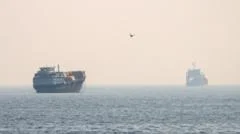
The escalation began when IRGC forces fired on a Cyprus-flagged commercial vessel traveling through the Strait of Hormuz. In response, Iran’s military announced the closure of the waterway — a choke point through which about 20% of the world’s oil passes daily.
US Central Command (CENTCOM) confirmed that American forces struck Iranian naval vessels, including minelayers, and port facilities used by the IRGC. The strikes are the most significant direct US military action against Iran in years.
Why the Strait of Hormuz Closure Threatens Global Oil Supply
The Strait of Hormuz is the world’s most important oil transit chokepoint. Any sustained closure risks sending crude prices skyrocketing, hitting economies from India to Europe. For Indian consumers, this could mean higher petrol and diesel prices, as India imports over 80% of its crude oil — much of it from the Gulf region.
Analysts warn that even a temporary disruption could push oil above $100 per barrel, straining household budgets and widening the trade deficit.
How the Crisis Escalated: A Timeline
The crisis unfolded rapidly over the past 48 hours. First, a Cyprus-flagged tanker was attacked near the strait. Iran’s IRGC then declared the waterway closed, citing security concerns. Within hours, the US launched precision strikes on Iranian military assets near the Strait of Hormuz and along the Persian Gulf coast.
Gulf nations including the UAE, Qatar, and Bahrain issued maritime security alerts, advising vessels to avoid the area. The US Navy’s Fifth Fleet, based in Bahrain, has been placed on high alert.
Who Is Affected by the Iran-US Military Escalation
The immediate impact is being felt by shipping companies, oil traders, and millions of ordinary consumers worldwide. In India, fuel prices are already under pressure. For Gulf states, the closure threatens their own exports and regional stability. For the US, the strikes represent a major military commitment in a region already tense after years of proxy conflicts.
Iranian civilians, already facing severe economic sanctions, now confront the prospect of direct military confrontation.
US and Iran Official Statements on the Strikes
US Central Command said in a statement that the strikes were “defensive in nature” and aimed at “restoring freedom of navigation in international waters.” The Pentagon declined to comment on future operations but warned of further action if necessary.
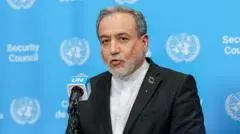
Iran’s IRGC issued a statement calling the US strikes “an act of aggression” and warning that the Strait of Hormuz would remain closed until “security is guaranteed.” Iran’s Foreign Ministry has called for an emergency UN Security Council meeting.
What the Strait of Hormuz Closure Means for Global Security
The closure of the Strait of Hormuz is not just an economic issue — it is a direct challenge to international maritime law. The US and its allies have long guaranteed freedom of navigation through the waterway. Iran’s move tests that commitment and could set a dangerous precedent for other chokepoints worldwide.
Experts say the crisis could draw in other nations, including China and Russia, both of which have economic and strategic interests in the region.
Confirmed Facts vs What Remains Unclear
Confirmed: US launched strikes on Iranian IRGC vessels and port facilities. Iran closed the Strait of Hormuz. A Cyprus-flagged vessel was attacked. Gulf nations issued alerts.
Unclear: The extent of damage from US strikes. Whether Iran will attempt to reopen the strait under pressure. The status of the attacked vessel and its crew. Whether diplomatic backchannels are active.
Note: Some details remain unverified due to the rapidly evolving situation.
Why the Strait of Hormuz Is a Strategic Chokepoint
The Strait of Hormuz connects the Persian Gulf to the Gulf of Oman and the open ocean. Roughly 17 million barrels of oil pass through it daily — about a fifth of global consumption. Any disruption immediately affects global prices. For countries like India, Japan, and South Korea, which rely heavily on Gulf oil, the stakes are existential.
Iran has threatened to close the strait in the past, but this is the first time it has actually done so.
Risks and Concerns: What Could Go Wrong
The biggest risk is miscalculation. A single errant missile or accidental engagement could spiral into a full-scale war. Oil markets could panic, triggering a global recession. Humanitarian concerns are also mounting — any blockade could prevent food and medicine from reaching Iran, worsening its humanitarian crisis.
Critics of the US strikes argue that military action without a clear diplomatic off-ramp could entrench the conflict. Supporters say the US had no choice but to respond to the closure of a vital waterway.
Wider Pattern: US-Iran Tensions Under the Trump Administration
The strikes are the latest escalation in a long-running confrontation between Washington and Tehran. Since the US withdrew from the nuclear deal in 2018, tensions have flared repeatedly — from the killing of General Qasem Soleimani in 2020 to ongoing proxy conflicts in Yemen and Syria. The current crisis marks a dangerous new phase: direct military engagement over a strategic waterway.
What Should Indian Consumers and Investors Do Now
For Indian consumers, the immediate concern is fuel prices. The government may need to consider excise duty cuts or other relief measures if oil crosses $100 per barrel. Investors should watch crude oil futures and the rupee’s movement closely. For students and professionals in the Gulf region, it is advisable to stay informed through official embassy channels and avoid travel to affected areas.
What Happens Next: Possible Scenarios
Three scenarios are possible. First, diplomatic pressure — possibly through the UN or Gulf mediators — could lead to a de-escalation and reopening of the strait. Second, the US could launch further strikes, leading to a prolonged military standoff. Third, Iran could retaliate asymmetrically, targeting US allies or oil infrastructure in the region.
Much depends on whether both sides see a path to negotiation.
Our Take
This is not just another Middle East crisis. The closure of the Strait of Hormuz is a direct assault on the global economic order. While the US strikes were predictable, the absence of a clear diplomatic strategy is worrying. For India, the crisis underscores the urgent need to diversify energy sources and build strategic oil reserves. For the world, it is a reminder that the cost of confrontation in the Gulf is borne by everyone — at the pump, in the markets, and in the fragile peace of the region.
Frequently Asked Questions
Why did the US strike Iran?
The US launched strikes after Iran’s IRGC closed the Strait of Hormuz following an attack on a Cyprus-flagged vessel. The US says the strikes are defensive and aimed at restoring freedom of navigation.
What is the Strait of Hormuz and why is it important?
The Strait of Hormuz is a narrow waterway between Iran and Oman through which about 20% of the world’s oil passes. Its closure threatens global oil supplies and prices.
How will this affect oil prices in India?
Oil prices are expected to rise sharply, potentially crossing $100 per barrel. This could lead to higher petrol, diesel, and LPG prices in India, impacting household budgets and the economy.
Is there a risk of a full-scale war between the US and Iran?
While the situation is dangerous, both sides have historically avoided all-out war. However, the risk of miscalculation is high, and diplomatic channels remain unclear.