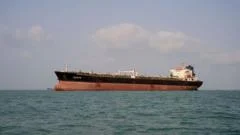
The United States military has confirmed it struck three Iranian oil tankers, a dramatic escalation that comes just hours after Washington claimed its Navy warships were fired upon in the region. The move signals a dangerous new phase in the ongoing confrontation between the two nations — one that now directly targets Iran's economic lifeline at sea.
Why the US military says it launched the strikes
US Central Command, the Pentagon's operational arm for the Middle East, said the attacks were a direct response to an earlier provocation. According to the statement, Iran launched ballistic missiles at two US Navy warships operating in the area.
The tankers were not merely intercepted or warned — they were actively hit, marking a clear shift from defensive posturing to offensive retaliation. The choice of target is significant: oil tankers are the backbone of Iran's export economy and a key source of revenue for the state.
What this means for regional stability and oil markets
Any direct military action against oil infrastructure in the Persian Gulf carries immediate global consequences. Traders are likely to react sharply, with oil prices potentially spiking on fears of supply disruption through the Strait of Hormuz, a chokepoint through which a fifth of the world's oil passes.
For ordinary citizens, the ripple effect could be felt at the fuel pump within days. For the region, the risk of a wider maritime conflict has just increased substantially.
The sequence of events leading to this moment
The timeline, as described by CENTCOM, begins with the Iranian missile launch targeting US warships. The US military has not specified the exact location or time of the initial attack, nor has it detailed the type of missiles used.
Following the reported missile fire, the US command authorized strikes on the three oil tankers. It remains unclear whether the tankers were military-flagged, civilian vessels, or a mix — and whether they were actively involved in the missile attack or simply chosen as strategic targets.
Who is affected by this escalation
The immediate impact falls on the crews of the targeted tankers, whose fate has not been disclosed. Beyond them, the strike affects global shipping insurers, oil traders, and the broader international community that relies on stable energy flows.
Iranian state revenues will also take a hit if the tankers were carrying crude. This is not just a military exchange — it is an economic weapon aimed at Tehran's primary source of income.
What US Central Command has officially said
In its public statement, CENTCOM framed the strikes as a defensive measure, asserting the right to protect US forces from attack. The command has not yet released imagery, damage assessments, or casualty figures.
Iranian state media has not yet issued a formal response, and it is unclear whether Tehran will retaliate directly or through its regional proxies. The lack of an immediate Iranian statement leaves a critical information gap.
Reading between the lines: why tankers, why now
Targeting oil tankers rather than military assets sends a distinct message. It signals that the US is willing to impose tangible economic costs on Iran, not just military ones. It also raises the stakes for any future Iranian provocation at sea.
Analysts will be watching whether this was a one-time punitive strike or the beginning of a sustained campaign against Iranian shipping. The choice of target suggests Washington is prepared to hit where it hurts most — Iran's ability to sell its oil.
Confirmed facts versus what remains unclear
Confirmed: The US military says it struck three Iranian oil tankers. The US military says the strikes were in response to Iranian ballistic missiles fired at two US Navy warships.
Unclear: The exact location of the strikes. The condition of the tankers and their crews. Whether Iran will retaliate. Whether the tankers were civilian or military assets. The type and origin of the ballistic missiles reportedly fired.
All information currently available comes from the US military's account. Independent verification is not yet possible.
Risks and the case for caution
Critics of the strike will argue that targeting commercial vessels, even those linked to an adversary, risks civilian casualties and could be viewed as an act of escalation rather than defense. International maritime law generally protects civilian shipping, and any deviation from that norm invites legal and diplomatic scrutiny.
Supporters of the US action will counter that a nation has the right to respond to attacks on its warships, and that allowing Iranian missile fire to go unanswered would embolden further aggression. The balance between deterrence and escalation has rarely been more delicate.
A pattern of rising tensions in the Gulf
This incident fits a broader pattern of recent confrontations in the region, where tanker seizures, drone attacks, and missile launches have become increasingly common. The US and Iran have traded blows indirectly for years, but direct military exchanges remain relatively rare.
This strike may represent a threshold crossing — from shadow conflict to open confrontation at sea. The international community will be watching closely to see if this becomes a new norm or an isolated incident.
What should you watch for next
For those following the story, the key indicators in the coming hours will be: any statement from Tehran, satellite imagery of the affected area, changes in oil prices, and any UN or international maritime body response. Shipping companies operating in the region may also issue advisories.
If you are invested in energy markets or simply concerned about regional stability, this is a story that demands close attention.
Future outlook: escalation or de-escalation
The immediate future hinges on Iran's response. A measured diplomatic protest would suggest Tehran seeks to avoid a wider war. A retaliatory strike on US assets or allied shipping would indicate a cycle of escalation is underway.
Neither outcome can be predicted with certainty at this stage. What is clear is that the status quo has been broken, and the Gulf's waters have become a more dangerous place.
Our Take
This strike represents a significant moment in US-Iran relations, moving conflict from the shadows into direct action. The choice to target oil tankers rather than purely military targets suggests a calculated effort to impose economic pain while avoiding direct casualties on Iranian military personnel.
The lack of independent verification and the absence of an Iranian response make this a fluid situation. What is certain is that the risk of miscalculation has risen, and the cost of this confrontation will be borne not just by the two nations involved, but by a global economy that depends on the free flow of oil.
Frequently Asked Questions
Why did the US strike Iranian oil tankers?
US Central Command says the strikes were a direct response to Iran launching ballistic missiles at two US Navy warships. The tankers were targeted as part of the US military's retaliation.
Were the Iranian oil tankers civilian or military vessels?
This has not been confirmed. The US military has not specified whether the tankers were civilian commercial vessels or military-flagged ships. Independent verification is not yet available.
What could happen next after this US strike on Iranian tankers?
Iran may retaliate militarily, respond through diplomatic channels, or take action via regional proxies. Oil prices may also react to the potential for supply disruption in the Strait of Hormuz.
How will this affect oil prices and global markets?
Any military action near the Strait of Hormuz typically raises concerns about supply disruption. Traders may push oil prices higher in response to this escalation, which could eventually affect fuel prices for consumers.