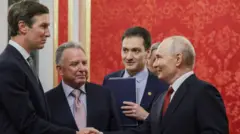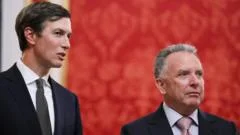
The diplomatic shuttle between Washington, Moscow, and Kyiv just moved one step closer to a potential breakthrough. US envoys Steve Witkoff and Jared Kushner have left the Russian capital after a meeting with President Vladimir Putin, and their next stop is Ukraine — where they hope to replicate what they described as "equally productive meetings."
Moscow Meeting Ends With a Note of Cautious Optimism
The closed-door session in Moscow has concluded, and the tone from the US side suggests the conversation was substantive rather than ceremonial. Witkoff and Kushner are now carrying that message to Kyiv, where Ukrainian officials will be watching closely to see whether Washington is bringing real leverage or just another round of diplomatic pleasantries.
Why This Ukraine Visit Could Be Different From Previous Rounds
This is not the first time US intermediaries have shuttled between the two capitals, but the sequencing matters. By going to Moscow first and then Kyiv, the envoys are effectively testing whether Russia's stated positions can survive contact with Ukraine's red lines. For Ukrainians, the key question is whether any framework discussed in Moscow respects their territorial integrity and security guarantees.
The Diplomatic Trail: How We Got Here
The visit follows months of stalled negotiations and escalating battlefield pressure. The decision to send senior envoys directly to Moscow signals a renewed push from Washington to find an off-ramp. The original report confirms the Moscow leg is complete, and the Ukraine leg is now underway — a sign that both sides are at least willing to keep talking.
What This Means for Ukrainians on the Ground
For ordinary Ukrainians, diplomatic movements in distant capitals can feel abstract. But the stakes are immediate: energy infrastructure under threat, families displaced, and a economy struggling to function under wartime conditions. Any credible step toward de-escalation could translate into tangible relief — but only if the talks produce concrete commitments, not just statements of intent.
Kremlin's Position and Washington's Calculations
The Kremlin has not released an official readout of the meeting, and US officials have kept details tightly guarded. What is clear is that Washington sees value in maintaining direct communication with Moscow even as it arms Kyiv. The envoys' stated hope for "equally productive meetings" in Ukraine suggests they believe Moscow is at least listening — whether that translates into concessions remains unknown.
Reading Between the Lines of the Envoys' Statement
The phrase "equally productive" is carefully chosen diplomatic language. It signals that the Moscow meeting produced something worth building on, without overcommitting to outcomes. For analysts, the real test will come in Kyiv: if Ukrainian leaders emerge from the talks with a similar assessment, the process gains credibility. If not, the Moscow leg may be remembered as a diplomatic dead end.
Confirmed Facts vs What Remains Unclear
Confirmed: Witkoff and Kushner met Putin in Moscow and have departed for Ukraine. The envoys expressed hope for productive talks in Kyiv.
Unclear: The specific topics discussed, any proposals on the table, and whether Putin offered any new concessions. No official statements from the Kremlin or the Ukrainian government have been released yet. All assessments of the talks' substance remain speculative at this stage.
The Broader Push for a Ceasefire Framework
This shuttle diplomacy fits into a wider pattern of renewed international efforts to find a negotiated settlement. European allies are watching closely, and any US-brokered framework would likely need multilateral support to hold. The coming days will reveal whether this round produces a roadmap or simply another chapter in a long and frustrating process.
What Should Observers Watch For in the Kyiv Talks
For those following the story, the key signals from the Ukraine leg will be: whether Ukrainian officials describe the talks as constructive, whether any joint statement emerges, and whether there are signs of a concrete timeline for next steps. The absence of a readout is not necessarily a bad sign — sensitive negotiations often stay quiet until a framework is ready.
What Happens Next in the Peace Process
The immediate next step is the Kyiv meeting itself. Beyond that, much depends on whether the two sides can agree on a mechanism for verification and implementation. Diplomatic history suggests that ceasefires without enforcement mechanisms tend to collapse — the question now is whether this round can produce something more durable.
Our Take
The fact that US envoys are moving directly from Moscow to Kyiv is itself a signal. It suggests Washington believes there is a narrow window for progress, and it is willing to invest senior-level attention to test it. But the gap between Russian and Ukrainian positions remains wide, and shuttle diplomacy alone cannot close it. The real work will come in the details — and those details are still hidden behind closed doors.
Frequently Asked Questions
Who are the US envoys traveling to Ukraine?
Steve Witkoff and Jared Kushner are the US envoys who met with President Putin in Moscow and are now heading to Ukraine for follow-up talks.
What did the envoys say after the Moscow meeting?
The envoys expressed hope for "equally productive meetings" in Ukraine, according to the original report, suggesting the Moscow talks were constructive.
Why is the US sending envoys to both Russia and Ukraine?
The shuttle diplomacy aims to test whether a negotiated framework is possible by hearing both sides directly and identifying areas of potential agreement.
Has any official statement been released about the talks?
No detailed official readouts have been released yet by the Kremlin, the White House, or the Ukrainian government. Details of the discussions remain confidential.