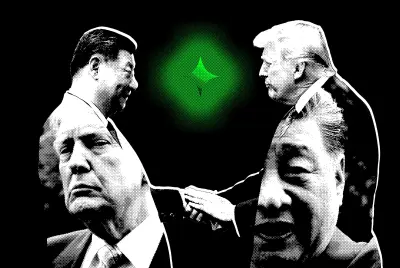
The world’s two AI superpowers are talking. But as Donald Trump and Xi Jinping prepare to meet, experts warn that the very mindset driving the talks—the "AI race"—could be the biggest threat to global safety.
A Fragile First Step Toward AI Safety
This week, the US and China began discussions aimed at preventing AI catastrophes. Treasury Secretary Scott Bessent announced that both sides had discussed setting up a new AI safety notification mechanism. If China agrees, it would create an open line for either country to alert the other when their AI systems pose threats or behave unpredictably.
It’s a rare moment of potential cooperation between fierce rivals. But whether it leads to a reliable global governance framework depends on how much they are actually willing to work together.
Why the "AI Race" Narrative Is Dangerous
Experts say framing AI development as a race—where one country must beat the other—undermines safety. It encourages speed over caution, secrecy over transparency, and competition over cooperation. That, they warn, could endanger the US and the world.
The same channel Bessent described could also allow the countries to share information and reduce the risk of accidental conflict. But only if both sides see it as a safety tool, not a strategic advantage.
How We Got Here: A Timeline of Tension
The US and China have spent years competing for AI dominance. Each has accused the other of stealing technology, restricting access to chips, and militarizing AI. Trust is low. Yet the risks of unchecked AI—from autonomous weapons to misinformation—are too great to ignore.
Trump has publicly downplayed the rivalry, saying talks are going well. But behind the scenes, officials on both sides remain cautious.
Who Is Affected—and Why It Matters
Every country, company, and citizen using AI has a stake in these talks. A breakdown in cooperation could lead to an unregulated AI arms race, with unpredictable consequences. A successful agreement could set global standards for safety, transparency, and accountability.
For now, the world is watching two leaders who rarely agree on anything—and hoping they can agree on this.
What Officials Are Saying—and What They’re Not
Bessent confirmed the notification mechanism is under discussion but offered no details on enforcement or timelines. Chinese officials have not publicly commented on the proposal. The White House has not released a formal statement.
Experts caution that without verification measures, any mechanism could be ignored in a crisis.
The Real Test: Cooperation Over Competition
The talks may be a breakthrough—or a photo opportunity. The difference lies in whether both sides can set aside the "AI race" mindset and prioritize safety. That means sharing data, agreeing on red lines, and building trust.
It’s a tall order for two rivals. But as one expert put it, "The alternative is a world where AI is developed in secret, with no guardrails, by countries that don’t trust each other."
Confirmed Facts vs What Remains Unclear
Confirmed: The US and China have discussed an AI safety notification mechanism. Trump and Xi will meet Thursday and Friday. Bessent announced the talks.
Unclear: Whether China will agree to the mechanism. How it would be enforced. Whether it covers military AI. What happens if a country fails to notify.
Risks and Balanced View
Critics argue the talks are too little, too late. Some say the US should not share AI safety data with a strategic rival. Others warn that without China, any global AI rules are meaningless. The truth is, both sides have reasons to cooperate—and reasons to cheat.
A Wider Pattern: AI Governance in a Divided World
The US-China talks reflect a broader challenge: how to govern AI when no single country controls it. The EU has its own AI Act. The UN has called for global rules. But without US-China agreement, any framework is incomplete.
This meeting could set a precedent—or expose how far apart the two powers remain.
What Readers Should Watch For
Look for concrete commitments, not just rhetoric. A joint statement with specific safety measures would be a breakthrough. Silence or vague promises would signal business as usual. Also watch for China’s response—if they reject the mechanism, the talks may stall.
Future Outlook
If the talks succeed, they could lead to a permanent AI safety hotline, joint research, and shared red lines. If they fail, the AI race will accelerate—with each side trusting the other less. The stakes could not be higher.
Our Take
This story is bigger than Trump or Xi. It’s about whether humanity can manage its most powerful technology. The "AI race" delusion—that one country must win—is a recipe for disaster. Cooperation is not weakness; it’s survival. The talks are a start, but only if both sides mean it.
Frequently Asked Questions
What is the AI safety notification mechanism?
It’s a proposed channel where the US and China would alert each other if their AI systems pose threats or behave unpredictably. It aims to prevent accidents and reduce mistrust.
Why are experts worried about the "AI race"?
Because it prioritizes speed over safety. Countries may cut corners, hide risks, and refuse to cooperate—making AI disasters more likely.
What happens if China says no?
The talks could collapse. Without China, global AI rules would be incomplete, and the risk of an unregulated arms race would grow.
How does this affect ordinary people?
AI affects jobs, privacy, security, and democracy. If the US and China don’t cooperate, everyone faces more risk from unchecked AI.