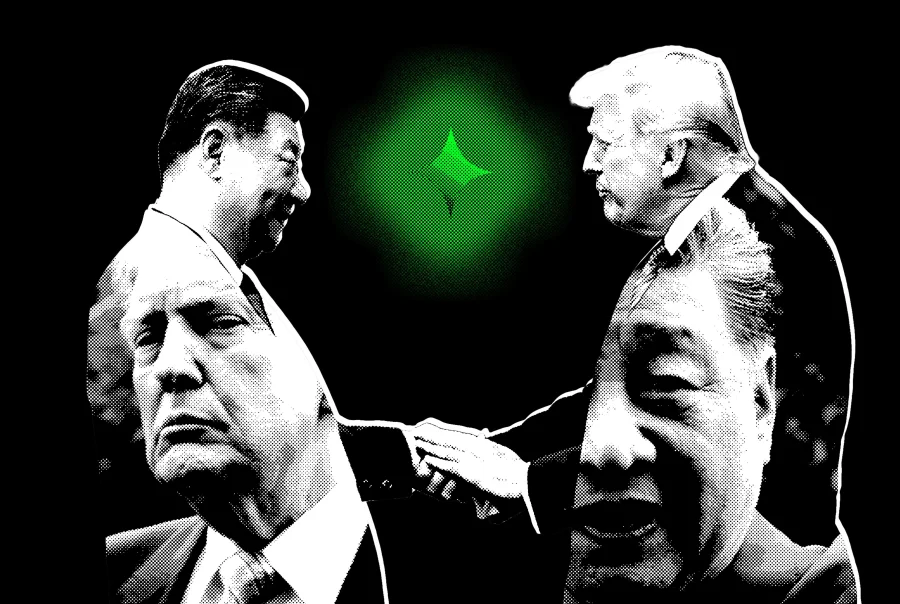
Washington and Beijing are trying to build a direct line to prevent AI from becoming the next flashpoint in their rivalry. But that line — a dedicated hotline for AI-related national security issues — is not ready yet. And the delay itself tells a story about how difficult it is to separate competition from communication.
Why the World's Two Biggest AI Powers Want a Direct Line
The US and China are the undisputed leaders in artificial intelligence research, deployment, and military application. Both governments have acknowledged — at least privately — that without a reliable channel to communicate, a misunderstanding or accident involving AI systems could escalate dangerously fast.
A hotline would serve as a crisis-communication tool, similar to the Cold War-era nuclear risk reduction line. The difference: AI moves faster, and the rules are far less defined.
What's Actually Delaying the AI Hotline
According to the original report, the hotline is still being figured out. That phrasing matters. It suggests the two sides have not yet agreed on the technical format, the scope of issues it would cover, or who would be on the other end of the line.
AI national security is a broad category — it includes military AI, chip export controls, data security, and autonomous systems. Deciding what falls under a hotline's mandate is a diplomatic challenge in itself.
Why This Matters Beyond Washington and Beijing
For the rest of the world, a US-China AI hotline is not just a bilateral issue. It is a signal of whether the two AI superpowers can manage their rivalry without dragging the global economy or global security into a spiral.
Countries in Southeast Asia, Europe, and the Global South are watching closely. Many are caught between US-led tech alliances and China's growing AI ecosystem. A functioning hotline would offer at least some reassurance that the competition has guardrails.
How We Got Here: The Slow Path to AI Dialogue
The US and China have held sporadic talks on AI safety, including discussions on autonomous weapons and AI risk at multilateral forums. But a dedicated, always-available communication channel is a different level of commitment.
Previous efforts to establish military hotlines between the two countries have historically been slow to materialize and uneven in their use. The AI hotline appears to be following a similar pattern — intent exists, but implementation lags.
Who Is Affected by the Delay
Tech companies operating in both markets, researchers collaborating across borders, and militaries deploying AI-enabled systems all have a stake in this. Without a hotline, there is no rapid way to clarify intent if an AI-related incident occurs — whether it's a drone misidentification, a cyber operation, or a misinterpreted algorithm.
For ordinary citizens, the impact is indirect but real. AI is already embedded in financial systems, healthcare, and infrastructure. A US-China AI crisis would not stay contained to their borders.
What Officials Have Said — and What They Haven't
Neither government has issued a joint statement confirming a timeline for the hotline. The original report notes that the countries "appear to be figuring out ways to communicate" — language that suggests ongoing, behind-the-scenes discussions rather than a finalized agreement.
Officials have not publicly committed to a launch date, and there is no confirmed framework for how the hotline would operate in practice.
Reading Between the Lines: Competition and Communication Can Coexist
The delay does not mean the effort has failed. It means the two countries are trying to do something genuinely difficult: build a crisis-communication tool while simultaneously competing for AI dominance.
That tension is the story. The US wants to maintain its lead in AI while reducing the risk of accidental conflict. China wants the same — on its own terms. A hotline requires enough trust to share a phone number, but not enough trust to share technology.
Confirmed Facts vs What Remains Unclear
Confirmed: The US and China are discussing a communication mechanism for AI national security issues. The hotline is not yet ready.
Unclear: The exact scope, technical format, participating agencies, and timeline for the hotline remain unspecified. No joint public statement has confirmed operational details.
Speculation: Analysts may speculate on whether the hotline will cover military AI only or extend to commercial AI risks. That has not been confirmed by either government.
Risks and the Balanced View
A hotline is not a solution to US-China AI rivalry. It is a risk-management tool. Critics may argue that it could create a false sense of security or be used by either side for propaganda purposes.
Supporters see it as a necessary first step — a way to prevent small incidents from becoming large crises. Both views have merit. The hotline's value will depend entirely on whether both sides actually use it when it matters.
The Wider Trend: AI Diplomacy Is Still in Its Infancy
The US-China hotline effort is part of a broader global push to create rules of the road for AI. The EU has its AI Act. The UN has held discussions on autonomous weapons. But bilateral crisis communication between the two biggest AI powers is a unique and critical piece of the puzzle.
If the hotline eventually becomes operational, it could serve as a model for other AI-heavy nations. If it stalls indefinitely, it may signal that AI competition is outpacing AI diplomacy.
What Readers Should Take Away
For now, there is no hotline to call. That means the risk of miscommunication remains. For businesses, investors, and policymakers, the takeaway is simple: do not assume that US-China AI tensions will be managed smoothly. Build contingency plans for a world where AI-related disputes can escalate without a direct off-ramp.
Future Outlook
The hotline could be finalized in the coming months — or it could remain in limbo. Much depends on the broader trajectory of US-China relations, which have see-sawed between engagement and confrontation.
What is clear is that both sides recognize the need for some form of communication. The question is whether they can agree on how to build it before an AI-related incident forces their hand.
Our Take
The delay in establishing a US-China AI hotline is not just a bureaucratic hiccup. It reflects the core dilemma of the AI era: the technology is advancing faster than the institutions meant to govern it. A hotline will not solve the AI race, but its absence leaves a dangerous gap. The world's two AI superpowers are trying to build a safety net while still competing on the high wire. That is a difficult act — and the clock is ticking.
Frequently Asked Questions
What is a US-China AI hotline?
It is a proposed direct communication channel between the US and Chinese governments to discuss AI-related national security issues, similar to nuclear risk reduction hotlines. It is not yet operational.
Why is the AI hotline delayed?
The two countries are still figuring out the scope, format, and technical details. No official timeline has been announced, and both sides have not yet agreed on how the hotline would function.
Does this mean US-China AI cooperation is failing?
Not necessarily. The hotline is a risk-management tool, not a cooperation agreement. The delay suggests dialogue is ongoing but complex. Both nations continue to compete on AI while exploring ways to prevent accidental escalation.
What happens if there is no AI hotline?
Without a direct channel, AI-related incidents — such as military miscommunications or cyber operations — could escalate faster because there is no rapid way to clarify intent. The risk of miscalculation increases.