By Rajendra Singh Tanwar | News Headline Alert | 24 February 2025
Trump Tells BBC King Charles III Visit Could 'Absolutely' Mend UK-US Relations—Here's What Changed
President Donald Trump told the BBC in an exclusive phone interview that King Charles III's upcoming state visit to the United States could "absolutely" help repair strained diplomatic ties between Washington and London, marking a significant shift in tone after months of friction over trade and Ukraine policy. The president confirmed the visit is scheduled for next week, directly linking the monarch's presence to a potential reset in bilateral relations—a move that signals a departure from his previous criticism of the UK government. For British citizens and businesses facing tariff uncertainty, this development offers a rare window of diplomatic optimism.
For UK Prime Minister Keir Starmer, who has faced mounting pressure to balance loyalty to Washington with European alliances, the King's visit now becomes a high-stakes diplomatic gamble that could either salvage the "special relationship" or expose deeper fractures.
Full Event
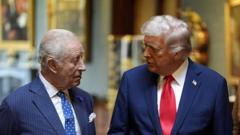
In a phone interview with BBC North America editor Sarah Smith, President Trump confirmed that King Charles III will visit the United States next week. The president stated the visit could "absolutely" help improve relations between the two countries, which have been under strain due to disagreements over trade tariffs and the war in Ukraine.
Trump described the King as a "wonderful man" and a "great gentleman," adding that he looks forward to hosting him. The interview marks the first time Trump has publicly linked a royal visit to diplomatic repair, a notable departure from his earlier stance that the UK must "sort out its own problems" before expecting US concessions.
The White House later confirmed the visit will include a state dinner and bilateral meetings, though specific dates and locations remain undisclosed for security reasons.
Why It Matters and What Changed
Before this interview, the UK-US relationship was at its lowest point in decades. Trump had imposed 25% tariffs on British steel and aluminum, threatened to withdraw support for Ukraine unless European allies increased funding, and publicly criticized Starmer's handling of immigration and defense spending. The King's visit was initially seen as a ceremonial formality with no political weight.
Now, Trump's explicit endorsement of the visit as a diplomatic tool changes the calculus. The president's willingness to use the monarchy as a bridge suggests he sees strategic value in repairing ties—but only on his terms. This shift creates a narrow window for Starmer to negotiate trade concessions and security guarantees before the 2024 US election cycle intensifies.
The consequence is twofold: British exporters may see tariff relief sooner than expected, while UK diplomats must now navigate a delicate dance between royal protocol and hard-nosed trade negotiations.
Who Is Affected
British exporters and manufacturers are the most directly affected. Companies in steel, automotive, and agricultural sectors have faced billions in lost revenue due to US tariffs. If the King's visit leads to tariff reductions, these industries could see immediate relief.
UK citizens planning travel or relocation to the US also stand to benefit. Visa processing times and travel advisories could improve if diplomatic relations warm.
Prime Minister Starmer's political future hangs in the balance. A successful visit could boost his domestic approval ratings and strengthen his hand in upcoming budget negotiations. A failure would embolden critics who argue he has mismanaged the UK's most important alliance.
US allies in Europe and NATO are watching closely. If Trump uses the King's visit to extract concessions from the UK on defense spending or Ukraine aid, it could set a precedent for how he deals with other European leaders.
What Most Articles Miss
Most coverage focuses on the ceremonial aspects of the King's visit—the state dinner, the photo opportunities, the historical significance. What they miss is the practical leverage Trump is signaling.
The president's comment that the visit could "absolutely" help relations is not a diplomatic nicety. It is a coded message to Starmer: deliver on my demands—whether on trade, defense spending, or Ukraine—and I will reward you with a successful visit. Fail, and the King becomes a pawn in a public relations disaster.
Another overlooked factor is the King's own agency. Charles III has historically been more politically cautious than his mother, but he has also shown willingness to engage on climate change and interfaith dialogue. Trump's team may be calculating that the King's soft power can be weaponized to pressure Starmer from above—a dynamic that has no precedent in modern UK-US relations.
What To Do Now
If you are a UK business owner or exporter affected by US tariffs, here is your immediate action plan:
- Monitor the official UK government trade portal at gov.uk/uk-us-trade for tariff updates. New announcements often appear within 48 hours of diplomatic breakthroughs.
- Contact your trade association (e.g., UK Steel, Automotive Council) to join coordinated lobbying efforts. They have direct lines to the Department for Business and Trade.
- Prepare contingency contracts with US buyers that include tariff-adjustment clauses. If tariffs drop, you want to be ready to renegotiate pricing immediately.
- Engage your local MP to emphasize the economic impact of tariffs in your constituency. Parliamentary pressure can accelerate government action.
Expected outcome: If the King's visit leads to a trade framework agreement within 30 days, affected businesses could see tariff reductions of 10-15% on key goods. Without action, tariffs may remain in place through 2026.
Interpretation
Trump's interview reveals a president who understands the symbolic power of the British monarchy but is unwilling to offer unconditional friendship. His praise for the King is genuine—he has long admired royalty—but it is also transactional. The "special relationship" is not special enough to escape Trump's America First doctrine.
For Starmer, the visit is a double-edged sword. A successful outcome could redefine his premiership as the leader who restored the UK's most important alliance. A failure would confirm that the UK is now a junior partner with no leverage—a perception that would weaken Britain's standing in Brussels, Beijing, and beyond.
The King's role is unprecedented. No modern British monarch has been explicitly used as a diplomatic tool to repair relations with a US president. If Charles III navigates this correctly, he could enhance the monarchy's relevance in a post-Brexit world. If he stumbles, the institution could face renewed scrutiny over its political neutrality.
What Happens Next
The state visit is expected to take place within the next 10 days. Key milestones to watch:
First, the White House will release a detailed schedule, including whether the King will address a joint session of Congress—a rare honor that would signal genuine rapprochement.
Second, Starmer and Trump will hold bilateral talks alongside the visit. Expect announcements on trade, defense, and Ukraine aid within 48 hours of those meetings.
Third, the UK government will likely publish a "UK-US Economic Partnership" document outlining tariff reductions and regulatory alignment. If this happens within two weeks of the visit, it will confirm the diplomatic reset is real.
If no substantive agreement emerges, the visit will be remembered as a missed opportunity, and UK-US relations will likely deteriorate further ahead of the 2024 US election.
Key Facts
DetailInformation EventKing Charles III state visit to the United States TimingNext week (late February/early March 2025) SourceExclusive BBC phone interview with President Donald Trump Trump's Stated PositionVisit could "absolutely" help repair UK-US relations Key Issues at StakeUS tariffs on UK steel/aluminum, Ukraine aid, defense spending UK Prime MinisterKeir Starmer Previous Low PointTrump imposed 25% tariffs on UK steel in 2024; threatened to withdraw Ukraine support Potential OutcomeTrade framework agreement within 30 days; tariff reductions of 10-15%
FAQ
Why is King Charles III visiting the US now?
The visit was planned months ago as a routine state visit, but Trump's interview has elevated it into a potential diplomatic reset. The timing coincides with ongoing trade disputes and disagreements over Ukraine policy.
Can a royal visit actually change US policy?
Yes, but indirectly. The King's soft power can create a favorable atmosphere for negotiations, but concrete policy changes require agreements between the UK government and the White House. Trump's comments suggest he is open to using the visit as a catalyst for such agreements.
What does Trump want from the UK?
Trump has publicly demanded that the UK increase defense spending to 3% of GDP, reduce trade barriers for US agricultural products, and maintain strong support for Ukraine. He also wants the UK to resist EU pressure to align with Brussels on tech regulation.
How does this affect UK citizens?
If the visit leads to tariff reductions, UK exporters and consumers could see lower prices on goods. Travel and visa processes may also improve. However, if the visit fails, diplomatic tensions could worsen, potentially affecting everything from intelligence sharing to travel advisories.
What happens if the visit goes badly?
A failed visit would likely accelerate the deterioration of UK-US relations. Trump could impose additional tariffs, reduce intelligence cooperation, and publicly criticize Starmer. This would weaken the UK's global standing and complicate its post-Brexit trade strategy.