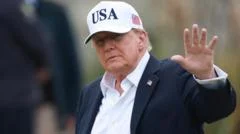
US President Donald Trump has pushed back on warnings about artificial intelligence, calling the people raising them "negative forces" and saying they were warning about "things that won't happen." The remark lands at a moment when governments worldwide are still trying to work out how dangerous AI actually is.
What Trump Actually Said — And Why the Wording Matters
According to the original account, Trump characterised AI risk warnings as the work of "negative forces" and dismissed the concerns as predictions of "things that won't happen."
The phrasing is significant. It doesn't just question specific AI risks — it questions the motives of the people raising them. That's a different argument, and a harder one to walk back.
Why the China Angle Changes the Conversation
Trump tied the AI debate to the US rivalry with China. That framing reframes AI safety from a technical question into a geopolitical one.
If AI is viewed primarily as a race, then caution can look like slowing down. That logic has real consequences for how rules get written — or don't.
How the AI Safety Debate Reached This Point
For several years, researchers, former officials, and tech leaders have warned about risks ranging from misinformation and job displacement to misuse of powerful AI systems.
Those warnings have shaped draft regulations in multiple countries. Trump's remarks suggest a different priority: speed and competitive advantage over precaution.
Who Feels the Impact of This Framing
Tech companies stand to gain from a lighter regulatory touch. Safety researchers and civil-society groups may find their warnings harder to place on the agenda.
For ordinary users, the practical effect shows up later — in what safeguards exist, and what happens when something goes wrong.
The Official Position — And What's Still Unclear
The source material contains only Trump's public remarks. No new executive order, agency guidance, or legislative proposal has been confirmed alongside them.
It is also unclear whether his comments reflect a formal policy shift or a broader rhetorical stance. Those are different things, and the distinction matters.
Confirmed Facts vs What Remains Unclear
Confirmed: Trump described AI risk warnings as coming from "negative forces" and about "things that won't happen," and linked the issue to rivalry with China.
Unclear: Whether this translates into specific policy changes, and how it interacts with existing US AI initiatives.
Risks and the Balanced View
Supporters of Trump's position argue that excessive caution can hand advantages to competitors and slow useful innovation. That argument has genuine backing in the tech industry.
Critics counter that dismissing safety warnings outright removes the space for measured precaution — and that the costs of being wrong about AI are not easily reversed.
The Wider Pattern: AI as a Geopolitical Contest
Trump's framing fits a broader shift. AI is increasingly discussed not just as a technology but as a strategic asset in US–China competition.
Once that frame takes hold, safety debates tend to get squeezed. The question becomes who moves faster, not who moves more carefully.
What Readers Should Take From This
Watch for concrete signals: new agency guidance, funding decisions, or legislative language. Rhetoric sets the tone; policy documents set the rules.
For anyone following AI regulation, the gap between what leaders say and what governments actually do is where the real story usually sits.
What Could Happen Next
If the framing holds, expect US AI policy to lean toward acceleration and competitive positioning. Pushback from safety-focused researchers and some lawmakers is likely.
How that tension resolves will shape not just American AI rules, but the global baseline others react to.
Our Take
Trump's remarks are less about AI itself and more about how the debate gets framed. By casting warnings as the work of "negative forces," he shifts the burden of proof onto those raising concerns.
That's a politically effective move. Whether it's a technically sound one is a separate question — and one that won't be answered by rhetoric alone.
Frequently Asked Questions
What did Trump say about AI risks?
He downplayed warnings about AI risks, describing critics as "negative forces" raising concerns about "things that won't happen."
Why did he mention China?
He framed the AI debate around the US rivalry with China, suggesting the focus should be on competition rather than caution.
Does this mean US AI rules will change?
Not confirmed. The remarks are public statements; no specific policy change has been verified in the source material.
Why does this matter for ordinary people?
Because the tone set at the top influences what safeguards get built — and what happens when AI systems cause harm.