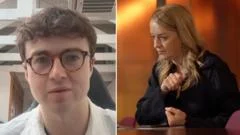
In a rare moment of candour from inside the AI industry, a former researcher at one of the world's leading AI labs has said that the people building the technology are "genuinely frightened" about what it could do to humanity. Jacob Coxon, who worked at Anthropic, told the BBC that there is a strong chance AI could end humanity if its development is not reined in.
A Warning From Inside the Lab, Not Outside It
Coxon's comments carry weight because they come from someone who was part of the AI development process, not a distant critic. He described a culture of deep unease among staff, using the phrase "genuinely frightened" to convey that this is not abstract philosophy but a real, present concern for those closest to the technology.
Why This Warning Lands Differently
For years, warnings about AI's existential risks have often been dismissed as science fiction or the domain of outsiders. When someone with direct experience at a frontier lab speaks in such terms, it challenges the assumption that safety concerns are overblown. It also raises uncomfortable questions for investors, policymakers, and the public about how much weight to give these fears.
The Context: A Growing Chorus of Concern
Coxon's interview is not an isolated event. In recent years, a number of current and former employees at major AI companies have publicly voiced worries about the pace of development and the adequacy of safety measures. While the specifics of Coxon's claims are not yet fully detailed, his remarks fit into a broader pattern of internal dissent and whistleblowing that has gradually gained public attention.
Who Is Affected by This Debate?
The stakes are not limited to tech companies. If the risks are as serious as Coxon suggests, the consequences would touch every person on the planet. For now, the immediate impact is on public perception and policy: comments like these can influence how regulators, lawmakers, and the public view the industry's own confidence in its creations.
What Anthropic and Others Have Said
Anthropic has not issued a public response to Coxon's specific comments in the source material. The company has previously stated that it takes AI safety seriously and has invested in research on alignment and responsible scaling. However, the absence of a direct reply leaves room for interpretation about how the company views a former employee's stark warning.
Reading Between the Lines of Coxon's Warning
Coxon's use of the phrase "strong chance" is notable. It suggests he does not see the risk as a remote possibility but as a plausible outcome if current trends continue. His call to "rein in" development implies that he believes the current pace is unsafe and that voluntary or regulatory guardrails are necessary. The interview does not specify what those guardrails should look like, leaving that as an open question.
Confirmed Facts vs What Remains Unclear
Confirmed: Jacob Coxon is a former Anthropic researcher. He told the BBC that AI staff are "genuinely frightened" and that AI could end humanity if development is not controlled.
Unclear: The exact number of staff who share this fear, whether Anthropic has an internal policy on such warnings, and what specific measures Coxon advocates. These remain open questions.
Risks and a Balanced View
It is important to note that not everyone in the AI field shares this level of alarm. Some researchers argue that existential risk is overstated and that focusing on it distracts from more immediate harms like bias, misinformation, and job displacement. Others believe that slowing down development could cede leadership to less safety-conscious actors. Coxon's warning is a serious contribution to the debate, but it is not the only perspective.
A Wider Pattern of Insider Unease
Coxon's interview is part of a larger trend of AI insiders speaking out. From open letters calling for pauses on certain research to resignations over ethical concerns, the industry is experiencing a period of internal tension. This pattern suggests that the question of AI safety is not just a public relations issue but a genuine source of conflict within the labs themselves.
What Should Readers Take Away?
For the general public, the key takeaway is that the people closest to AI are not uniformly optimistic. It is worth following the debate, asking questions, and supporting informed discussion about how AI should be governed. For policymakers, the warning adds urgency to ongoing efforts to create sensible regulations. For those in the industry, it is a reminder that safety concerns are not going away.
What Could Happen Next
It is difficult to predict how this will unfold. Anthropic or other AI companies may respond publicly. Regulators may cite Coxon's comments in hearings. More insiders may come forward. What is clear is that the conversation about AI's existential risks is becoming harder to ignore, and the voices raising them are increasingly from within the field itself.
Our Take
Jacob Coxon's warning is a sobering reminder that the AI revolution is not just a story of progress but also of profound uncertainty. When someone who helped build the technology says they are frightened, it deserves attention. It does not mean the fears will materialise, but it does mean the debate over how to develop AI safely is far from settled. The responsible path is to listen, scrutinise, and demand transparency from those in charge.
Frequently Asked Questions
Who is Jacob Coxon?
Jacob Coxon is a former researcher at Anthropic, an AI safety and research company. He recently told the BBC that AI staff are "genuinely frightened" about humanity's future.
What did he say exactly?
He said there is a strong chance AI could end humanity if the rate of development is not reined in, and that people working in the field are genuinely frightened.
Has Anthropic responded?
No official response from Anthropic was included in the source material. The company has previously stated it takes AI safety seriously.
Should we be worried?
The warning is serious, but it is one perspective among many. Experts disagree on the likelihood of existential risk. It is a signal to pay attention to the debate, not a prediction set in stone.