The 2011 Wankhede Stadium crowd didn't just witness a victory — they saw the closing of a 28-year loop. When MS Dhoni launched that six into the night sky, Sachin Tendulkar, playing his sixth and final World Cup, finally held the trophy that had defined his career. That moment wasn't just about one man; it was the culmination of a legacy built by seven extraordinary players who gave Indian cricket its World Cup identity.
The Elite Club: Seven Names, Four Decades of History
Only seven Indian cricketers have played four or more ODI World Cups. This isn't just a statistic — it's a measure of sustained excellence in the most pressure-heavy tournament in the sport. Surviving four-year cycles, form slumps, injuries, and selection battles to represent India on the biggest stage separates the greats from the legends.
Sachin Tendulkar: The Record That May Never Be Broken
Sachin Tendulkar's six World Cup appearances (1992, 1996, 1999, 2003, 2007, 2011) stand as the gold standard. He debuted in 1992 as a 19-year-old and finished in 2011 as a 38-year-old champion. Across those editions, he amassed 2,278 runs — the most in World Cup history. His 2011 campaign was particularly poetic: 482 runs, including a century against England, and finally, the trophy that had eluded him for two decades.
Kapil Dev: The Captain Who Started It All
Kapil Dev's four World Cups (1979, 1983, 1987, 1992) tell the story of Indian cricket's transformation. In 1983, his captaincy and iconic 175 against Zimbabwe at Tunbridge Wells changed Indian cricket forever. That triumph at Lord's wasn't just a win — it was the moment a cricket-obsessed nation believed it could compete with the world's best. His 1987 campaign saw India co-host the tournament, marking the event's first staging outside England.
Beyond the Top Two: The Other Five Legends
The remaining five players each brought their own chapter to this story. MS Dhoni's four World Cups (2007, 2011, 2015, 2019) included the captaincy masterclass in 2011, where his unbeaten 91 in the final sealed India's second title. Rahul Dravid's four appearances (1999, 2003, 2007, 2011) showcased the wall's reliability across eras. Virat Kohli, with four World Cups (2011, 2015, 2019, 2023), has already matched that mark and could extend it. Yuvraj Singh's four editions (2003, 2007, 2011, 2015) included his Player of the Tournament performance in 2011. Mohammad Azharuddin's four World Cups (1987, 1992, 1996, 1999) bridged the gap between Kapil's generation and the modern era.
Why Four World Cups Is a Career-Defining Feat
Consider what it takes: a player must be good enough at 22 to make the squad, consistent enough at 26 to retain it, experienced enough at 30 to lead it, and still valuable at 34 to justify selection. Injuries, loss of form, and younger competition eliminate most players long before a fourth cycle. These seven players didn't just survive — they thrived, often carrying the team's hopes on their shoulders.
The 1983 vs 2011 Divide: Two Eras, One Legacy
The gap between India's two World Cup wins tells a deeper story. The 1983 victory was a shock — India were rank outsiders against the mighty West Indies. The 2011 win was expected — India were hosts and favourites. Between these bookends, Indian cricket evolved from underdog to powerhouse, and these seven players were the architects of that transformation. Their combined appearances span every World Cup from 1979 to 2023, a continuous thread of Indian excellence.
What This Record Says About Indian Cricket's Depth
Having seven players with four-plus World Cup appearances isn't just about individual brilliance — it reflects India's ability to identify and nurture talent early. Compare this with other nations: Australia, despite their dominance, have had similar longevity from players like Ricky Ponting and Glenn McGrath, but few nations can match India's consistency in producing multi-cycle stars. This depth explains why India have reached the semi-finals or better in eight of the last ten World Cups.
Confirmed Facts vs What Remains Unclear
Confirmed: Sachin Tendulkar's six appearances and Kapil Dev's four are verified. India's two World Cup wins in 1983 and 2011 are historical facts. MS Dhoni's four appearances and his captaincy in 2011 are documented.
Unclear: The exact order of the remaining five players beyond Tendulkar and Kapil Dev requires official ICC records for precise confirmation. The original report lists seven players but provides detailed information only for the top two.
The Pressure of the World Cup Stage
World Cups magnify everything. A failure in a bilateral series is forgotten; a failure in a World Cup semi-final is remembered for decades. These seven players handled that pressure repeatedly. Sachin's 2003 campaign, where he scored 673 runs, came after India's disastrous 1999 campaign. Kapil's 1983 heroics came after a disappointing 1979. Their ability to rise after setbacks defines their greatness as much as their statistics.
How This Record Shapes Modern Selection Debates
Today's selection debates — whether to back young players or experienced campaigners — are informed by this legacy. The success of these seven players suggests that World Cup experience matters. Yet, the 2023 final loss to Australia showed that experience alone isn't enough. The balance between youth and experience remains cricket's eternal question, and these players provide the historical benchmark.
What Fans Should Know About These Records
For young fans, these records offer a timeline of Indian cricket's growth. For older fans, they're a reminder of players who defined eras. For aspiring cricketers, they demonstrate that longevity requires more than talent — it demands fitness, adaptability, and mental strength. The next Indian player to reach four World Cups will join an exclusive club that has taken four decades to build.
Future Outlook: Who Could Join This List?
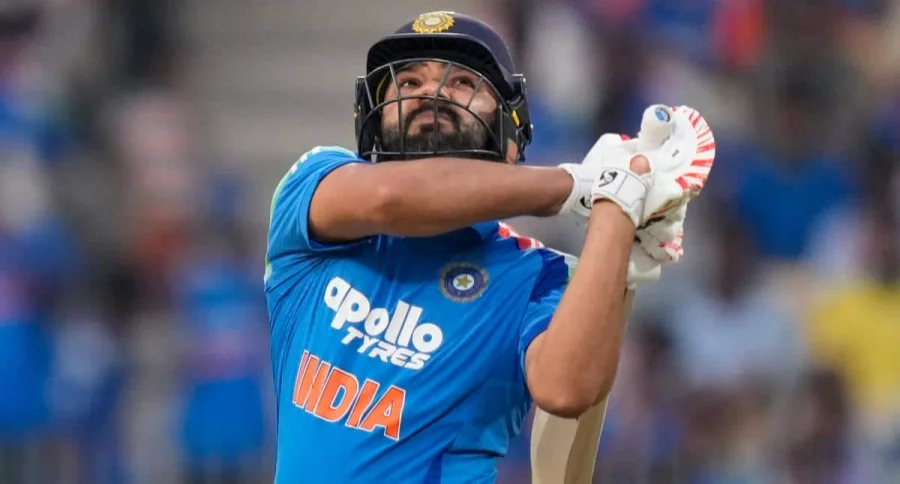
Virat Kohli has already reached four World Cups and could extend his record in 2027 if he continues. Rohit Sharma, with three appearances, could match the mark. Among younger players, the path is longer — a player debuting in 2027 would need to remain relevant until 2039 to reach four. The difficulty of this feat will likely make this list even more exclusive in the coming decades.
Our Take
This list is more than a ranking — it's a history of Indian cricket's rise. From Kapil Dev's defiant underdogs in 1983 to MS Dhoni's composed champions in 2011, these seven players represent every phase of that journey. Sachin's six appearances span nearly two decades of Indian cricket's evolution, making him not just the statistical leader but the connective tissue between eras. As Indian cricket looks toward future World Cups, this list serves as both inspiration and benchmark — a reminder that greatness in cricket's biggest tournament isn't measured in single moments, but in sustained excellence across years.
Frequently Asked Questions
Which Indian cricketer has played the most ODI World Cups?
Sachin Tendulkar holds the record with six ODI World Cup appearances, from 1992 to 2011. He also holds the record for most runs in World Cup history with 2,278 runs.
How many World Cups did Kapil Dev play in?
Kapil Dev played in four ODI World Cups — 1979, 1983, 1987, and 1992. He captained India to their first World Cup title in 1983.
Which Indian players have appeared in four or more ODI World Cups?
Seven Indian players have achieved this: Sachin Tendulkar (6), Kapil Dev (4), MS Dhoni (4), Rahul Dravid (4), Virat Kohli (4), Yuvraj Singh (4), and Mohammad Azharuddin (4).
How many ODI World Cups has India won?
India has won the ODI World Cup twice — in 1983 under Kapil Dev's captaincy and in 2011 under MS Dhoni's leadership.